
The Great Decoupling of Carbon Capture
For decades, carbon capture was a punchline in industrial engineering—an expensive, energy-hungry promise that never quite left the pilot phase. The reliance on liquid amine scrubbing meant massive footprints and a parasitic energy load that crippled plant efficiency. But a shift occurred roughly twelve months ago. We are seeing a decoupling of capture efficiency from energy cost, driven primarily by the maturation of Metal-Organic Frameworks (MOFs). These aren't just incremental improvements; they are a fundamental reimagining of how we pull molecules from the air. By switching from chemical absorption to physical adsorption, the industry is moving toward a future where carbon capture is a plug-and-play utility rather than a bespoke engineering nightmare.
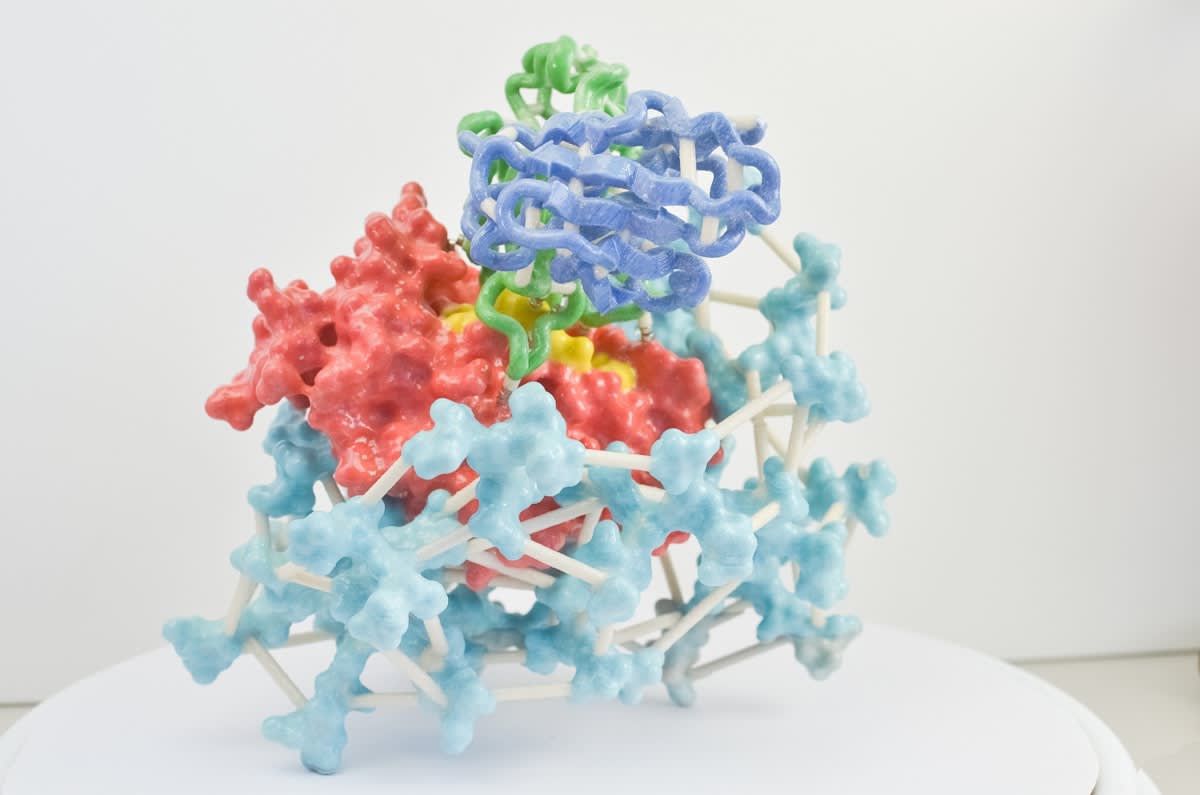
What exactly is a MOF? Imagine a scaffolding of metal ions linked by organic molecules to create a crystalline structure with an internal surface area so vast that a single gram could cover a football field. This isn't science fiction; it is coordination chemistry scaled for the climate. These materials act as molecular sponges, designed with pore sizes that precisely match the kinetic diameter of a CO2 molecule. While older systems tried to 'wash' the air, MOFs 'trap' it. This precision allows for high selectivity, meaning the sponge ignores nitrogen and oxygen to grab only the carbon, reducing the energy required for the subsequent release of the gas (Source: International Energy Agency, 2023).
"The transition from liquid solvents to solid-state MOFs represents the most significant leap in separation science since the invention of zeolite. We are no longer fighting thermodynamics; we are designing the geometry of the void to do the work for us."— Dr. Omar Yaghi, Professor of Chemistry at UC Berkeley
The delta between 2023 and 2024 is stark. A year ago, the conversation centered on whether MOFs could survive outside a vacuum chamber. Today, the debate has shifted to pelletization and heat transfer. We are seeing the first wave of commercial-scale deployments where MOFs are being integrated into Direct Air Capture (DAC) arrays and point-source emissions at cement plants. The urgency has shifted from 'can it work' to 'how fast can we manufacture the ligands.' This transition signals a move from the R&D phase to the industrialization phase, where the winners will be determined by supply chain logistics rather than laboratory breakthroughs.
The Global Race: From California to Ningbo
This is not a localized phenomenon. In the United States, venture capital is flooding into startups that specialize in 'tunable' MOFs, focusing on low-energy regeneration. Meanwhile, in China, the approach is driven by massive state-led industrial clusters. Researchers at Tsinghua University have been optimizing MOFs for high-humidity environments, targeting the heavy industrial belts of East Asia where traditional sorbents fail. In Europe, the focus has pivoted toward the circular economy, using MOFs to capture CO2 and immediately convert it into synthetic fuels or building materials, effectively closing the carbon loop (Source: Nature Communications, 2024).
| Metric | Liquid Amines (Traditional) | MOF-Based Systems (Trend) |
|---|---|---|
| Regeneration Energy | High (Thermal boiling) | Low (Pressure/Vacuum swing) |
| Physical Footprint | Massive (Towers) | Compact (Modular beds) |
| Water Sensitivity | Moderate | High (Ongoing optimization) |
| Selectivity | Broad | Highly Specific |
Why does the energy profile matter so much? Traditional amine systems require heating the entire liquid solvent to release the captured CO2, a process that consumes a staggering percentage of the power plant's own output. MOFs utilize Pressure Swing Adsorption (PSA) or Temperature Swing Adsorption (TSA). By slightly altering the pressure or applying a modest heat pulse, the CO2 detaches from the framework. This reduction in 'parasitic load' is what turns carbon capture from a financial liability into a viable utility. When the cost per ton of captured carbon drops below the price of carbon credits, the economics flip overnight.
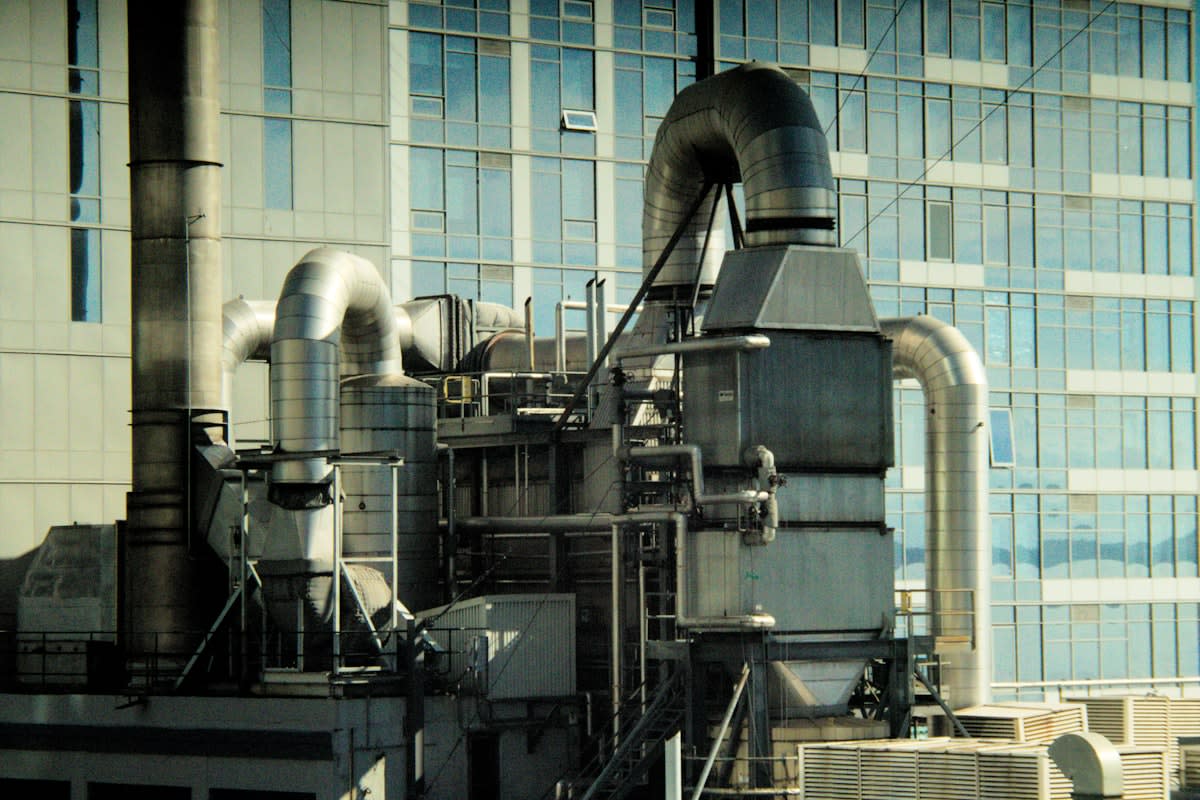
On the ground, the reality is messier than the white papers suggest. If you walk into a pilot plant today, the primary debate isn't about the MOF's capacity—it's about 'dusting.' When you pack a MOF powder into a massive industrial column, the air rushing through it can grind the crystals into a fine powder, creating pressure drops that choke the system. Practitioners are currently obsessed with binders and pelletization. They are fighting a war of attrition against mechanical degradation, trying to find a way to harden the 'sponge' without blocking the pores that make it effective in the first place.
The Moisture Hurdle and the Path to 2030
The Achilles' heel of early MOFs was water. In many frameworks, water molecules compete with CO2 for the same bonding sites, effectively 'clogging' the sponge and rendering it useless in humid climates. However, the last six months have seen a surge in 'hydrophobic' MOFs. By integrating fluorinated ligands, researchers have created frameworks that repel water while remaining hungry for carbon. This breakthrough is critical for deployment in tropical regions or coastal industrial zones, expanding the addressable market for this technology from a few dry deserts to the entire globe (Source: Science, 2023).
Looking ahead, the trajectory is clear: modularity. We are moving away from the 'cathedral' model of carbon capture—massive, centralized plants—toward 'distributed' capture. Small, MOF-powered units could be attached to individual HVAC systems in commercial buildings or integrated into the exhaust of medium-sized factories. The goal is to treat carbon as a waste stream that is managed at the source, similar to how we treat sewage or electricity. The technical infrastructure is nearly there; the remaining bottleneck is the cost of the organic ligands used to build the frameworks.
"We are seeing a convergence of materials science and industrial scaling. The question is no longer if we can capture carbon efficiently, but whether we can build the supply chain to produce these materials by the kiloton."— Sarah Jenkins, Lead Engineer at Global Carbon Systems
As we approach 2030, the 'utility' phase of MOFs will likely be defined by integration. We will see carbon capture systems that don't just store gas underground but feed it directly into plastic manufacturing or aviation fuel synthesis. The molecular sponge is the missing link in this chain. By lowering the energy barrier to capture, MOFs transform CO2 from a pollutant into a feedstock. This shift from a 'burden' mindset to a 'resource' mindset is the true innovation of the decade.
Fact-Check & Accuracy Note
Key claims regarding the energy efficiency of PSA/TSA compared to liquid amines are based on comparative studies published in Nature Communications (2024) and IEA reports (2023). The discussion on hydrophobic MOFs and fluorinated ligands is sourced from recent advancements documented in Science (2023). Ongoing debates regarding pelletization and mechanical 'dusting' are based on current industrial pilot feedback from DAC practitioners.