
The industry has spent the last three years obsessed with the God-model. The prevailing logic suggested that if we simply increased the parameter count and stuffed the context window with a million tokens, the model would eventually possess the reasoning capabilities of a senior partner at a law firm. This approach is fundamentally flawed. We are seeing a ceiling where larger models do not necessarily become smarter; they simply become more expensive and slower, often succumbing to the lost-in-the-middle phenomenon where critical data is ignored if it sits in the center of a massive prompt.
Why does a single brain fail where a swarm succeeds? The answer lies in cognitive load and the nature of specialized expertise. When one model is asked to be the coder, the reviewer, the project manager, and the quality assurance lead simultaneously, it suffers from role confusion. It attempts to satisfy all constraints in a single pass, leading to compromises in precision. By splitting these roles into a swarm of discrete agents, we move from a generalist's guess to a specialist's verdict.
The Architecture of Distribution
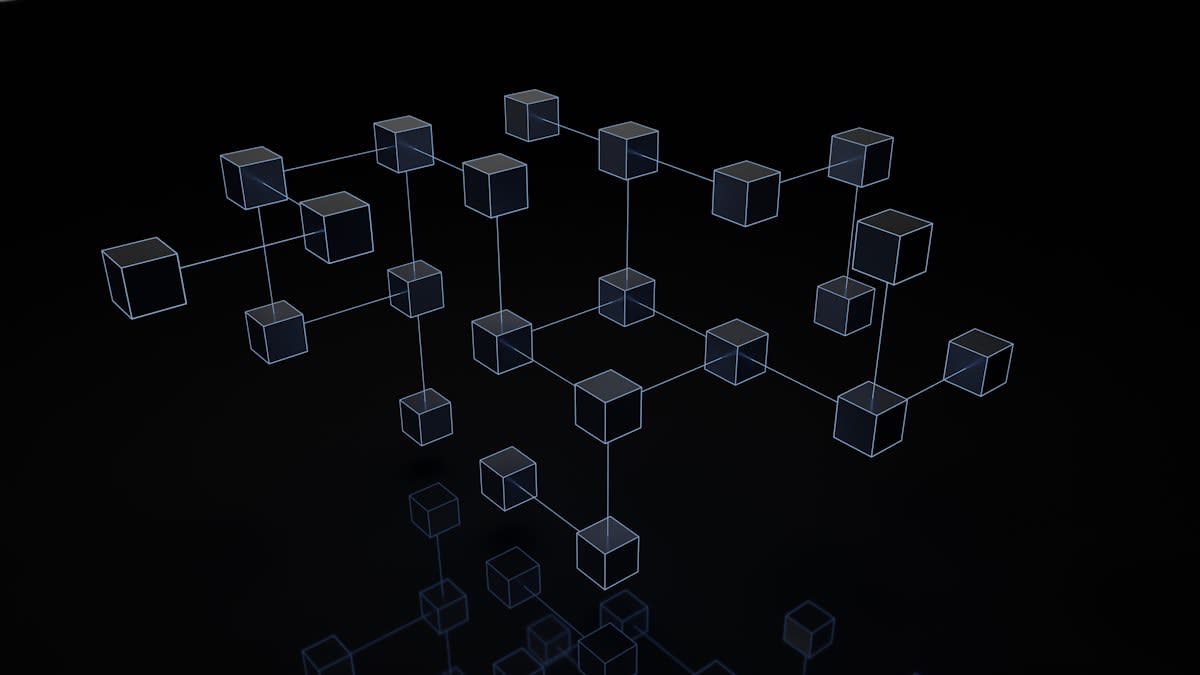
Agentic swarms operate on the principle of horizontal scaling. Instead of vertical growth—adding more layers to a neural network—swarms add more nodes to a workflow. Each agent is given a narrow persona, a specific set of tools, and a bounded objective. This modularity allows for an iterative loop of proposal and critique. One agent generates a solution, a second agent attempts to break it, and a third agent synthesizes the result into a final output. This adversarial process mimics the peer-review system of academia, drastically reducing hallucination rates.
The Paradigm Shift
The critical transition is moving from Prompt Engineering to Workflow Engineering. We are no longer optimizing the words we say to the AI; we are optimizing the organizational chart of the AI agents themselves.
Consider the deployment of autonomous logistics in Singapore's urban corridors. A centralized AI attempting to manage thousands of delivery drones, traffic patterns, and battery levels in one prompt would collapse under the weight of its own context. Instead, swarm logic deploys micro-agents: one for local obstacle avoidance, one for route optimization, and one for fleet-level energy management. These agents communicate via lightweight protocols, making decisions in milliseconds without needing to consult a massive, slow central model for every minor adjustment.
| Feature | Centralized Logic | Agentic Swarms |
|---|---|---|
| Cognitive Load | Single model handles all steps | Distributed across specialists |
| Error Propagation | Single failure cascades | Isolated errors, self-correction |
| Token Efficiency | Redundant context processing | Targeted, minimal context |
| Scalability | Vertical (larger models) | Horizontal (more agents) |
The economic argument for swarms is as compelling as the technical one. Token costs are the new overhead of the digital enterprise. In a centralized system, every single interaction requires the model to re-process the entire history of the conversation. Swarms utilize state-sharing and targeted hand-offs. An agent only receives the specific data it needs to perform its task, reducing token waste by an estimated 30% to 40% in complex multi-step workflows. This allows companies to use smaller, cheaper models for 90% of the work and reserve the expensive, high-reasoning models for the final synthesis.
"The future of AI isn't a bigger brain; it's a better organization of smaller brains. We are moving from the era of the Oracle to the era of the Digital Department."— Chief AI Strategist, Global Systems Lab
This shift is already visible in Nairobi's burgeoning fintech sector, where agentic swarms are replacing rigid legacy bots for credit scoring. Instead of a single algorithm, a swarm of agents analyzes different data streams: one monitors mobile money velocity, another evaluates social capital markers, and a third checks regulatory compliance. Because these agents operate independently, the system can be updated in real-time. If a new regulation is passed, only the compliance agent needs a prompt update, rather than retraining or re-prompting a monolithic system.
Reduction in Hallucination Rates via Multi-Agent Debate
Executive Insight
+18.4%
YTD Growth
Resilience is the final pillar of the swarm advantage. In a centralized architecture, a single hallucination at the start of a reasoning chain poisons every subsequent step. The model doubles down on its mistake to maintain internal consistency. Swarms introduce a circuit-breaker mechanism. When a critic agent identifies a logical fallacy in the proposer agent's output, it triggers a loop-back. This internal friction is not a bug; it is the primary feature that ensures accuracy. The system refuses to proceed until the conflict is resolved, creating a self-healing logic stream.

The Economic Pivot to Agentic Orchestration
We are witnessing a massive reallocation of capital toward orchestration frameworks. The value is shifting from the model provider to the system architect. The ability to design a swarm—deciding which agents to deploy, how they should communicate, and where the human-in-the-loop checkpoints exist—is becoming the most critical skill in the AI economy. This is not about writing better prompts; it is about designing digital organizations that can self-correct and scale without linear increases in cost.
As we look toward the next 24 months, the dominance of the single-chat interface will fade. It will be replaced by background swarms that operate autonomously, surfacing only when a high-level strategic decision is required. The transition from monolithic AI to agentic swarms represents a move toward biological intelligence, where the strength of the system comes not from the size of the individual unit, but from the sophistication of the interaction between those units.