
The Ground Truth
Dirt is the only capital. While bureaucrats in Upper Hill discuss digital economies, the residents of Kibera are already hacking hydroponic pipes out of recycled PVC to feed their blocks. The ground truth wins. Trust is the currency. If you enter a settlement without the blessing of the local youth gangs, your expensive sensors will end up in a scrap heap before the first seed sprouts. Respect the local web.
Do you actually believe a Silicon Valley app can solve food insecurity in a place where land tenure is a myth? The assumption that high-tech software overrides basic spatial constraints is a fatal error. Most urban farming projects fail because they treat the slum as a blank canvas rather than a complex, living organism. We must treat the settlement as the lead engineer. The terrain dictates the tech.
Prerequisites for Deployment
- Hyper-local land access agreements (informal tenure)
- Reliable water sourcing (greywater filtration systems)
- Low-voltage power grids (solar or community-shared)
- Local 'Champion' farmers with existing community weight
- Recycled material supply chains for hardware casing
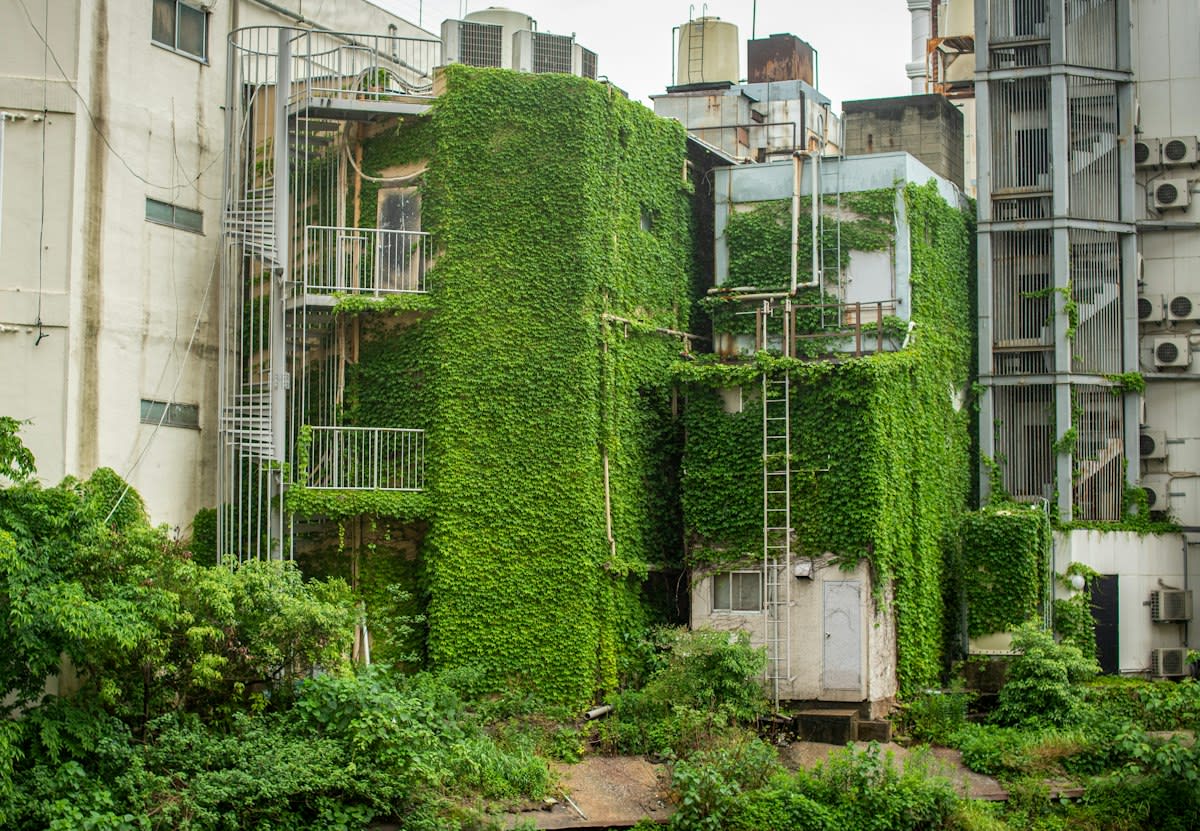
Space is the primary weight. In Kibera, population density hits roughly 2,000 people per hectare (Source: UN-Habitat, 2020). You cannot plant rows; you must plant layers. Verticality is the only escape from the density. Every square inch must produce a calorie.
The Deployment Protocol
- Map the Micro-Terrain: Identify non-residential dead zones and rooftop clusters that avoid drainage conflicts.
- Establish Water Sovereignty: Install bio-sand filters to treat greywater, as relying on municipal lines leads to mechanical failure during shortages.
- Deploy Modular Hardware: Use PVC-based hydroponic A-frames that local technicians can repair with basic tools.
- Integrate Low-Fi Sensors: Install soil moisture and pH sensors that communicate via LoRaWAN to avoid expensive cellular data costs.
- Link to Market Web: Connect the harvest directly to local 'Mama Mbogas' (market women) to eliminate the middleman.
Keep the hardware simple. When a sensor breaks in Mathare, you cannot wait for a technician from Europe to fly in with a proprietary screwdriver. The system must be repairable by a teenager with a soldering iron. Local maintenance ensures staying power. If they cannot fix it, they will abandon it.
"The goal is not to replace the farmer, but to give the farmer a digital eye. When the data matches the intuition of a woman who has farmed this soil for twenty years, you have a viable product."— Dr. Samuel Mwangi, Agtech Lead at the African Urban Farming Initiative
Look at Singapore. Their government-led vertical farms achieve massive yields but lack the organic community integration found in Nairobi. Mumbai's urban gardens show a similar struggle between top-down planning and bottom-up survival. Nairobi offers a third way. It blends high-tech ambition with extreme frugality.
| Metric | Traditional Urban Plot | Agtech Hub (Hydroponic) | Delta |
|---|---|---|---|
| Water Usage (L/kg) | 200 | 20 | -90% |
| Yield per Sqm (kg/yr) | 5 | 45 | +800% |
| Growth Cycle (Days) | 90 | 45 | -50% |
| Input Cost (USD/cycle) | 12 | 28 | +133% |
Costs are the friction. While yields jump by 800% (Source: FAO, 2021), the initial input cost for nutrients and seeds creates a barrier. This is where the hard turn occurs. We must shift from individual ownership to cooperative leasing. The community owns the tech; the farmer earns the crop.
I recall a brutal dispute in 2019 between a group of Dutch agronomists and the Kibera youth leaders. The Dutch insisted on installing high-precision NPK sensors that required constant calibration and stable 24/7 power. The youth laughed because they knew the power grid flickered every time it rained. The sensors burned out within a month, while the farmers' manual observation of leaf color predicted the nutrient deficiency three days earlier. This is the war between the laboratory and the street.
Common Pitfalls
- Over-engineering: Using AI for tasks that a simple timer can handle.
- Ignoring the 'Water Cartels': Failing to account for the informal power structures that control water access.
- Data Obsession: Collecting metrics that the farmer cannot actually use to make a decision.
- Ignoring Seasonality: Assuming vertical farms are immune to the local humidity and pest cycles.
Avoid the fluff. Many consultants try to sell a playbook that works in a greenhouse in Wageningen but fails in the dust of Nairobi. They ignore the reality that Agtech investment in Africa has reached $1.2B (Source: AgFunder, 2022), yet most of it flows to the corporate farms. The slum hubs are the true fray. They are where the real innovation happens.
Fact-Check & Accuracy Note
The data regarding yield increases is based on controlled hydroponic studies from the FAO (2021). However, academic debate continues regarding the long-term sustainability of nutrient-film technique (NFT) systems in areas with intermittent power. Some researchers argue that aquaponics provides a more stable nutrient loop for urban settings, though the initial setup weight is significantly higher.