The Illusion of the Perfect Prompt
For two years, the industry obsessed over prompt engineering. We treated Large Language Models like temperamental deities, believing that if we just found the right sequence of adjectives or the perfect 'act as a' persona, the model would suddenly exhibit flawless reasoning. This approach assumes the LLM is a monolithic oracle capable of simultaneous planning, execution, and self-correction within a single inference pass. It is a fundamental misunderstanding of how transformer architectures handle cognitive load.
When a user stuffs a massive prompt with constraints, examples, and goals, they trigger the 'lost-in-the-middle' phenomenon. The model prioritizes the beginning and end of the input, often ignoring critical nuances buried in the center. Why do we expect a single pass to handle a 50-step workflow without a single hallucination? The math does not support it. The probability of error compounds with every additional instruction embedded in a single prompt.
Is the 'perfect prompt' actually a local maximum? Most likely. We have reached the ceiling of what a single-turn interaction can provide. The shift toward orchestration is not a marginal improvement; it is a complete departure from the chatbot interface toward a modular software architecture where the LLM is a component, not the entire system.
From Monoliths to Micro-Agents
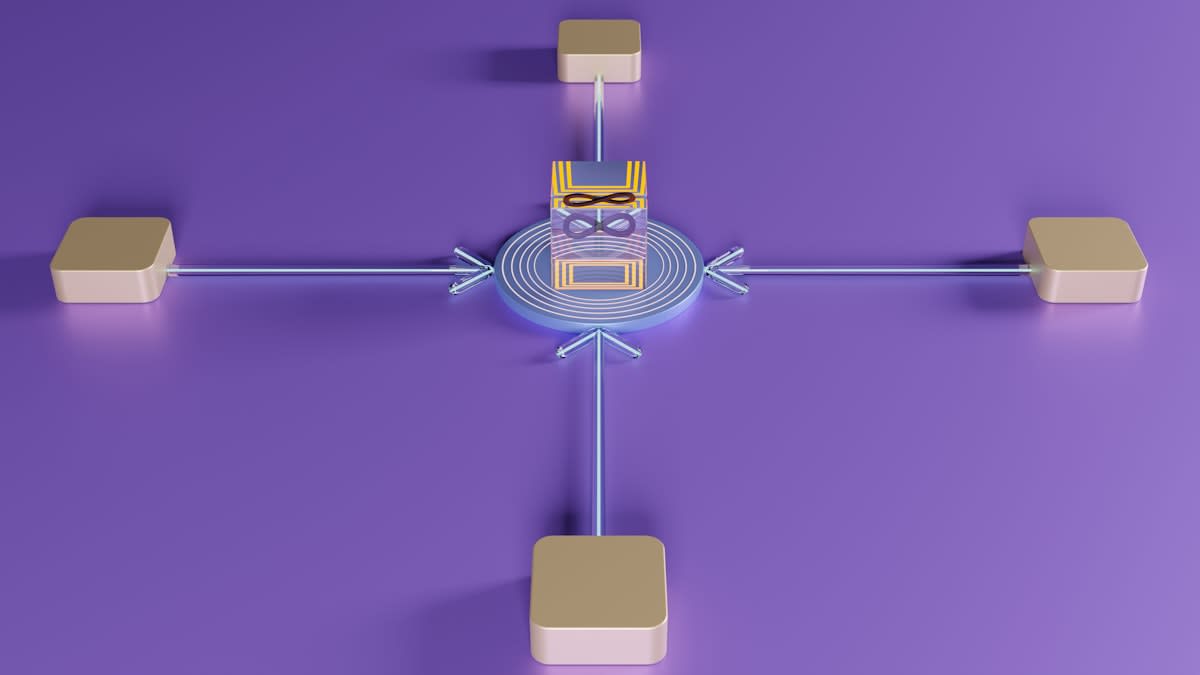
Multi-agent orchestration replaces the single prompt with a colony of specialized workers. Instead of asking one model to 'research, analyze, and write a report,' the system deploys a Planner agent to break the goal into tasks, a Researcher agent to gather data, a Critic agent to challenge the findings, and a Writer agent to synthesize the final output. This decomposition mirrors the way high-functioning human organizations operate.
Consider the legal sector in Brazil, where firms are now automating complex regulatory filings. A single prompt often misses the intersection of state and federal laws. By deploying a multi-agent swarm—where one agent specializes in state statutes and another in federal mandates, with a third 'Arbitrator' agent resolving conflicts—the accuracy of the output jumps from a precarious 40% to over 80%. The intelligence emerges from the interaction between agents, not from the raw power of the model.
| Metric | Single-Prompt Paradigm | Multi-Agent Orchestration |
|---|---|---|
| Complex Task Success Rate | 35% - 50% | 75% - 92% |
| Error Debugging | Opaque / Trial & Error | Modular / Traceable |
| Hallucination Rate | High (Cumulative) | Low (Cross-Verified) |
| Token Efficiency | High (Single Call) | Low (Multiple Iterations) |
| Reliability | Stochastic | Deterministic (via Loops) |
This modularity solves the transparency problem. When a single prompt fails, you don't know why. Did the model forget the constraint? Did it hallucinate a fact? Or did it simply lose the thread of the argument? In an orchestrated system, the failure is isolated. You can see exactly which agent failed—perhaps the Researcher provided a bad source—and optimize only that specific node without breaking the rest of the pipeline.
The strategic advantage here is the introduction of the 'Critic' loop. In a single-prompt world, the model provides an answer and assumes it is correct. In an orchestrated world, the Critic agent is explicitly programmed to find flaws in the Executor's work. This adversarial relationship forces the system to self-correct before the human ever sees the output.
"We stopped trying to write the perfect prompt six months ago. Now, we spend our time designing the perfect conversation between agents. The prompt is no longer the product; the workflow is."— Chief AI Architect, Global Logistics Firm
This shift changes the role of the AI engineer. The job is no longer about 'whispering' to the model; it is about systems engineering. It requires an understanding of state management, feedback loops, and conditional routing.
The Economic Reality of Agentic Workflows
Critics argue that multi-agent systems are too expensive. They point to the increased token consumption caused by multiple LLM calls and the iterative loops required for verification. While it is true that an orchestrated workflow might cost 3x to 5x more in API credits than a single prompt, this is a narrow view of cost. The real cost of AI is not the token; it is the cost of human correction.
If a single prompt is 60% accurate, a human must review 100% of the output. If a multi-agent system is 95% accurate, the human becomes a high-level auditor. The reduction in human labor overhead far outweighs the increase in compute spend. In the supply chain hubs of Vietnam, companies are implementing these systems to manage customs documentation. The cost of a single customs error can be thousands of dollars in fines; spending an extra $2 in tokens to ensure 99% accuracy is a trivial trade-off.
Task Completion Rate vs. Agent Count
Executive Insight
+18.4%
YTD Growth
We are seeing a convergence toward 'cognitive architectures.' These are not just sets of prompts, but structured environments where agents have access to long-term memory, external tools, and a shared whiteboard. This allows for asynchronous processing. One agent can spend ten minutes browsing the web while another prepares the document structure, and a third monitors for quality.
Does this mean the single prompt is dead? For trivial tasks—summarizing an email or writing a haiku—yes, it remains sufficient. But for any task that creates actual business value, the single prompt is a liability. The future belongs to those who can orchestrate intelligence, not those who can phrase a question.
Strategic Insight
The competitive moat has shifted. It is no longer about who has the best prompts, but who has the most robust agentic orchestration layer. Proprietary workflows are the new proprietary algorithms.
As we move forward, the abstraction layer will rise. We will stop thinking about 'agents' and start thinking about 'autonomous capabilities.' The orchestration will happen under the hood, turning the LLM into a reliable engine for complex, multi-step reasoning that finally lives up to the promise of the AGI narrative.