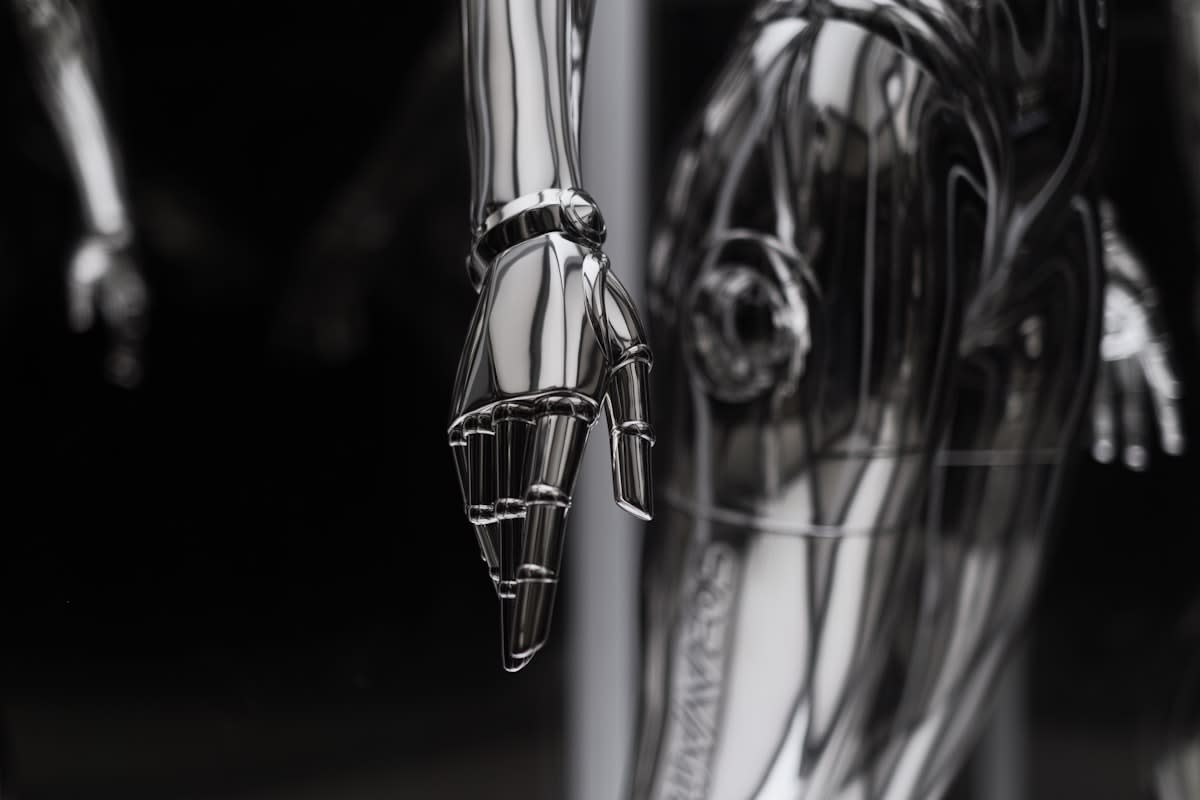
The Death of the Scripted Motion
For thirty years, industrial robotics operated on a lie: the assumption that the environment is static. We built massive cages around robotic arms because the cost of a scripted machine hitting an unexpected obstacle was catastrophic. This 'Robotics 1.0' era relied on precise coordinates and rigid timing, meaning a shift of two centimeters in a part's position could trigger a total system failure. The bottleneck wasn't the hardware; it was the cognitive rigidity of the software. We were trying to solve the physical world with a spreadsheet, and it failed the moment reality became unpredictable.
Physical AI 2.0 represents a fundamental departure from this deterministic approach. Instead of writing lines of code to define every joint movement, engineers are now deploying end-to-end neural networks that map raw sensory input directly to motor torques. This is the 'pixels-to-actions' pipeline. By treating robotic movement as a prediction problem rather than a programming problem, machines are beginning to exhibit a fluidity that was previously the sole domain of biological organisms. The robot no longer asks 'Where is the object located in X, Y, Z coordinates?' but instead perceives 'How do I manipulate this shape based on a million similar examples?'
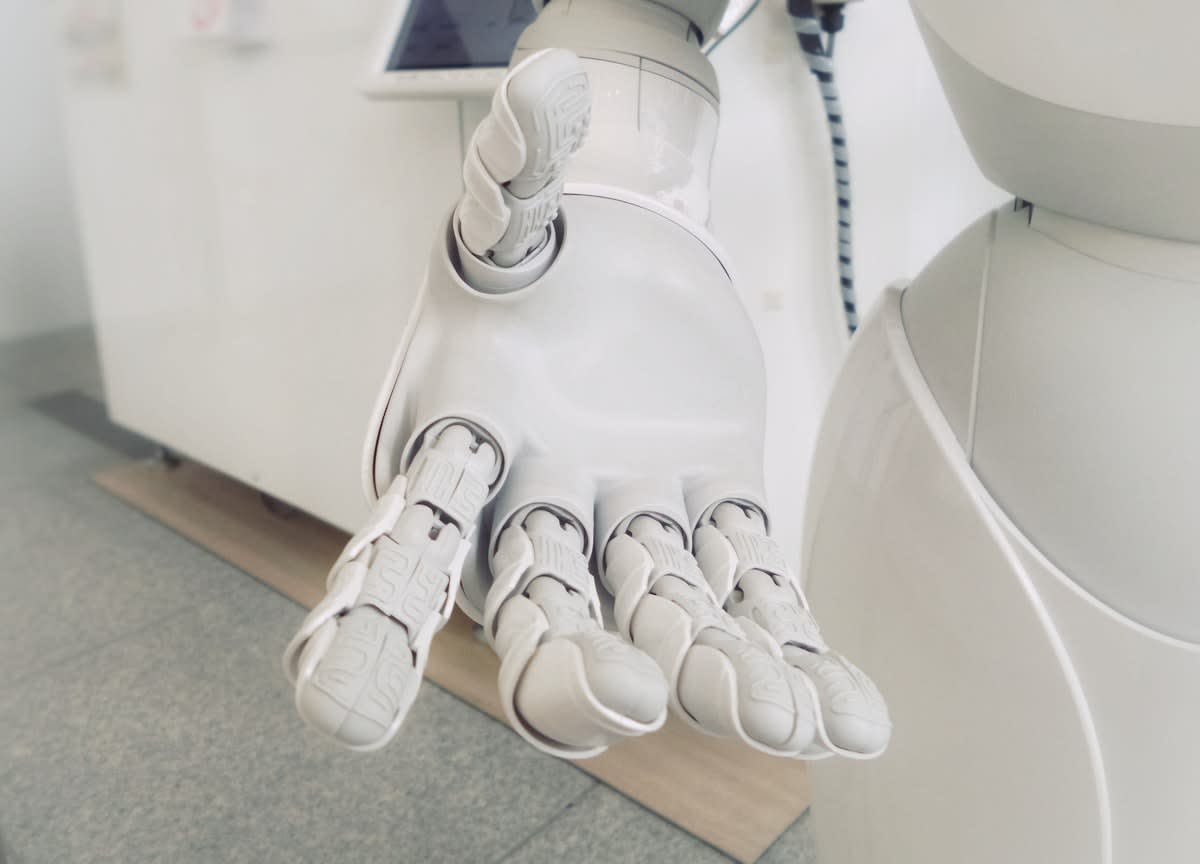
Why is this happening now? The convergence of three specific triggers: the scaling laws of Transformers, the availability of high-fidelity physics simulators, and the rise of Vision-Language-Action (VLA) models. VLA models allow a robot to understand a high-level command like 'pick up the dinosaur toy' by leveraging the semantic knowledge of a Large Language Model (LLM) and translating it into precise physical coordinates. We are seeing the marriage of the 'brain' (LLM) and the 'body' (actuators), effectively bypassing the need for manual trajectory planning.
The Cognitive Gap
Moravec's Paradox states that high-level reasoning requires very little computation, but low-level sensorimotor skills require enormous computational resources. Physical AI 2.0 is the first credible attempt to solve the 'hard' part of this paradox at scale.
The primary obstacle has always been the 'Data Wall.' Unlike LLMs, which can scrape the entire internet for text, robots cannot scrape the physical world for movement data. You cannot download a billion hours of a robot folding laundry because those robots didn't exist. This scarcity created a ceiling for robotic intelligence. To break it, the industry has pivoted toward Sim-to-Real transfer. By creating digital twins of factories and warehouses in environments like NVIDIA Omniverse, developers can run thousands of robots in parallel, simulating years of experience in a matter of hours.
| Feature | Robotics 1.0 (Deterministic) | Physical AI 2.0 (Probabilistic) |
|---|---|---|
| Programming | Hard-coded scripts / If-Then | End-to-end Neural Networks |
| Environment | Controlled / Static | Unstructured / Dynamic |
| Learning | Manual Tuning | Sim-to-Real / Reinforcement Learning |
| Generalization | Single-task specific | Cross-task adaptability |
This shift is not merely theoretical; it is manifesting in the rapid deployment of humanoid platforms across diverse geographies. In the logistics hubs of Vietnam and the automotive plants of Mexico, the goal is no longer to build a robot that can weld one specific door frame. The goal is a general-purpose agent that can be dropped into any warehouse and learn the layout through observation and trial. The efficiency gain is staggering. Early iterations of task-specific robots required weeks of calibration; current VLA-driven systems can adapt to new objects in minutes.
"We are moving from the era of the 'Tool' to the era of the 'Agent'. A tool does exactly what it is told; an agent achieves a goal regardless of the obstacles."— Lead Robotics Architect, Foundation Models Division
When we compare the current state of the art to 12 months ago, the 'Delta' is evident in the success rates of open-vocabulary manipulation. A year ago, if you asked a robot to 'find the snack that is healthy,' it would fail because 'healthy' is a semantic concept, not a geometric one. Today, by integrating VLMs (Vision-Language Models), the robot can reason that an apple is healthier than a bag of chips and execute the grasp. This leap from geometric recognition to semantic understanding is the 'quiet' solution to the robotics bottleneck.
Reduction in Training Time for Complex Manipulation Tasks
Executive Insight
+18.4%
YTD Growth
The hardware is finally catching up to the software. The rise of high-torque density actuators and tactile sensing—essentially 'electronic skin'—provides the high-resolution feedback loops necessary for Physical AI to function. Without this sensory fidelity, a neural network is flying blind. With it, the robot can feel the slip of an object in real-time and adjust its grip force dynamically, mimicking the subconscious adjustments humans make thousands of times a day.
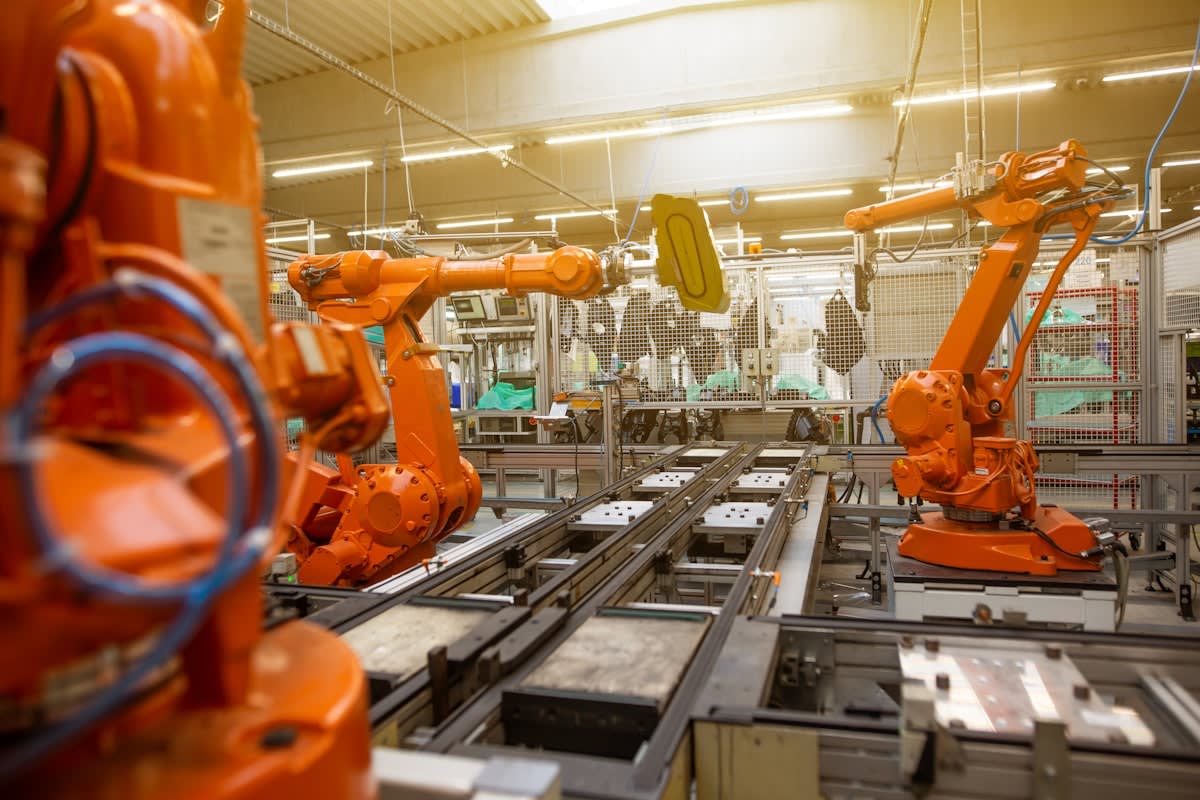
As we look toward the next 24 months, the focus will shift from single-agent performance to multi-agent coordination. The same foundation models that allow one robot to fold a shirt will allow a fleet of robots to coordinate a complex assembly line without a central controller. We are witnessing the emergence of a 'Physical Internet,' where movement data is shared across a cloud of robots, allowing a machine in Tokyo to instantly benefit from a lesson learned by a machine in Berlin.
The economic implication is a total decoupling of productivity from labor availability. In regions facing acute demographic collapse, such as Japan or South Korea, Physical AI 2.0 is not a luxury but a systemic necessity. The ability to deploy general-purpose robots that require zero manual coding means that small-to-medium enterprises (SMEs) can finally automate, breaking the monopoly that only the largest corporations with massive engineering teams previously held.
Ultimately, the robotics bottleneck was never about the metal or the motors. It was about the fragility of the logic. By embracing the probabilistic nature of neural networks and the scale of synthetic data, Physical AI 2.0 has turned the physical world into a solvable data problem. The transition is quiet, occurring in labs and pilot plants, but the result will be the most significant shift in industrial capacity since the introduction of the assembly line.