
The threat is not a future event; it is a current vulnerability. State actors are actively engaging in Harvest Now, Decrypt Later (HNDL) attacks, capturing massive volumes of encrypted sensitive data today with the explicit intent of decrypting it once a Cryptographically Relevant Quantum Computer (CRQC) becomes available. This creates a retroactive security breach where today's secrets are already compromised if they are meant to remain confidential for more than a decade. The clock is not ticking; it is racing. For critical infrastructure, the vulnerability window is already open.
The August Pivot
August 13, 2024, marked the definitive end of the observation phase. The National Institute of Standards and Technology (NIST) finalized the first three post-quantum cryptography (PQC) standards: FIPS 203 (ML-KEM), FIPS 204 (ML-DSA), and FIPS 205 (SLH-DSA). This transition transforms PQC from a series of candidate algorithms into a mandated operational baseline. Organizations can no longer justify waiting for further research; the blueprints for the new security architecture are now official and enforceable.
The Silent Threat
SNDL (Store Now, Decrypt Later) refers to the strategy where adversarial entities intercept and store encrypted communications today, anticipating that future quantum computers will be able to break current RSA and ECC encryption in minutes.
Comparing the current environment to twelve months ago reveals a stark delta in institutional urgency. In 2023, the discourse was dominated by theoretical risk assessments and the search for viable candidates. Today, the conversation has shifted to implementation timelines and cryptographic agility. We have moved from asking if we need post-quantum resistance to asking how quickly we can rip and replace legacy hardware that cannot support the larger key sizes required by lattice-based cryptography.
| Metric | Classical (RSA/ECC) | Post-Quantum (ML-KEM/DSA) |
|---|---|---|
| Hardness Assumption | Integer Factorization/Discrete Log | Module Lattice-Based |
| Quantum Resistance | Zero | High |
| Key Size | Small to Medium | Significantly Larger |
| Computational Overhead | Low | Moderate to High |
The technical shift is profound. Classical encryption relies on the difficulty of factoring large primes or solving discrete logarithms—problems that Shor's algorithm can solve efficiently on a quantum computer. ML-KEM and its counterparts utilize lattice-based problems, which involve finding the shortest vector in a high-dimensional grid. These problems remain computationally expensive for both classical and quantum machines, providing a necessary shield for the next several decades of digital commerce.
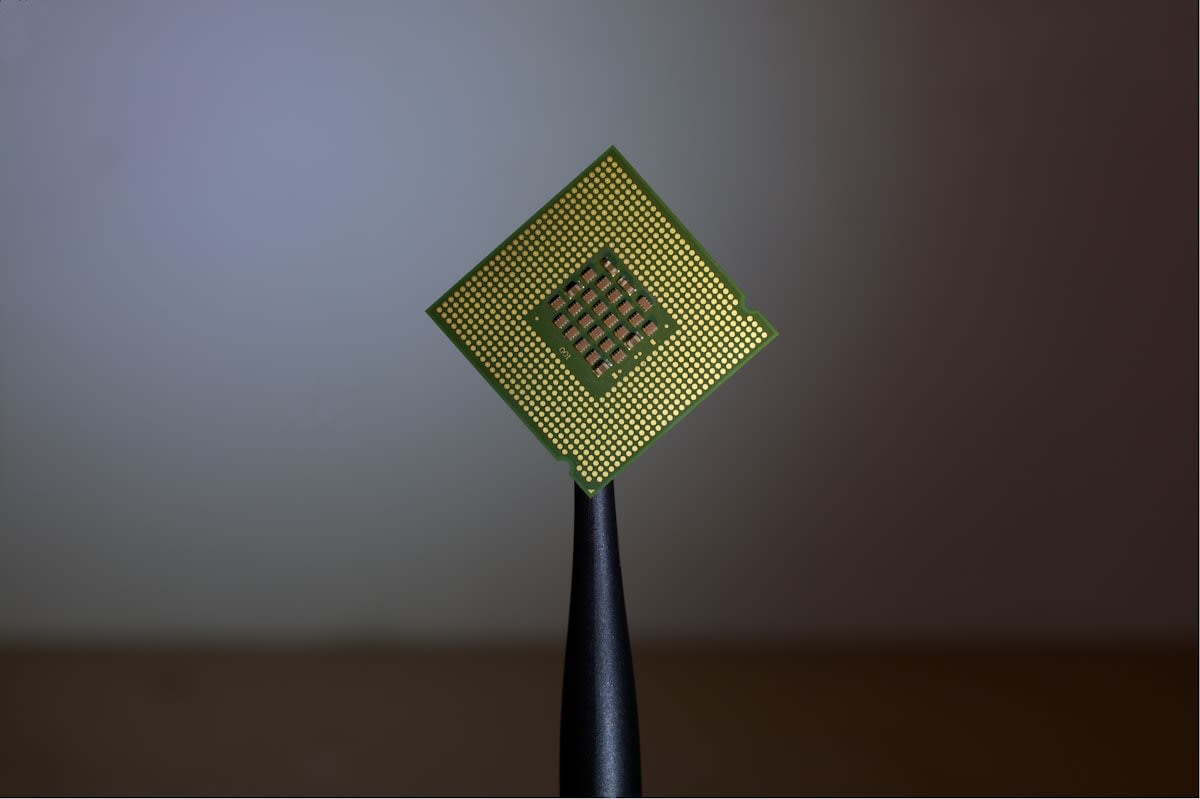
Global adoption is manifesting in diverse, non-traditional hubs. Singapore has emerged as a leader with its National Quantum-Safe Network (NQSN), creating a living laboratory to test PQC implementation across government and financial services. By treating the migration as a regional infrastructure project rather than a software update, Singapore is mitigating the risk of systemic failure in its high-density digital economy. This approach provides a blueprint for other city-states facing similar concentrations of critical data.
"The migration to post-quantum standards is the largest coordinated update to the global security plumbing in the history of computing."— Industry Strategic Analyst
In the United States, the Commercial National Security Algorithm Suite 2.0 (CNSA 2.0) has set hard deadlines for National Security Systems. The mandate requires a transition to PQC by 2030 for most systems, with some timelines extending to 2035. This is not a suggestion; it is a requirement for any vendor wishing to maintain contracts with the federal government. The ripple effect is forcing private sector suppliers to accelerate their roadmaps to maintain interoperability.
Much of this migration is happening quietly, beneath the user interface. Apple has already integrated the PQ3 protocol into iMessage, providing a level of quantum resistance to end-to-end encryption that far exceeds industry averages. Similarly, Google Chrome has begun deploying hybrid key exchange mechanisms, combining X25519 with Kyber. Users are unaware that their browser handshakes are now being hardened against future threats, illustrating the shift toward invisible, systemic resilience.
PQC Adoption Readiness (Industry Delta)
Executive Insight
+18.4%
YTD Growth
The most significant bottleneck is not the software, but the hardware. Many legacy Hardware Security Modules (HSMs) and Trusted Platform Modules (TPMs) lack the memory or processing power to handle the larger keys and signatures of PQC. This creates a hidden liability for banks and utilities that rely on embedded systems with 20-year lifecycles. Replacing these components requires physical access and significant capital expenditure, turning a software problem into a logistics nightmare.
The European Union is treating PQC as a matter of digital sovereignty. Through ENISA, the EU is pushing for implementations that do not rely solely on US-led standards, fearing that any undiscovered backdoor in the NIST-approved algorithms could become a geopolitical lever. This fragmented approach to standardization risks creating a 'cryptographic divide,' where different regions use incompatible PQC standards, complicating global trade and secure communications.
Brazil is integrating quantum resistance into its national cybersecurity strategy, focusing specifically on energy and water infrastructure. By prioritizing the protection of industrial control systems (ICS), Brazil is acknowledging that the impact of a quantum breach is not just about data theft, but about operational sabotage. The goal is to ensure that the commands controlling the power grid cannot be forged by a quantum-enabled adversary.
Financial networks, particularly those managing cross-border settlements like SWIFT, face a systemic risk. A single point of failure in the encryption of global payment instructions could trigger a liquidity crisis if trust in the integrity of those transactions vanishes. The financial sector is now moving toward hybrid modes, where data is encrypted with both a classical and a PQC algorithm. This ensures that even if the new PQC standards are found to have flaws, the classical layer still provides the existing baseline of security.
The concept of cryptographic agility has become the new gold standard for infrastructure design. Agility is the ability to swap out encryption algorithms without rewriting the entire application stack. Organizations that hard-coded RSA into their systems a decade ago are now finding themselves in a precarious position. The future of infrastructure is modular, where the algorithm is a pluggable component rather than a fixed foundation.
The window for a controlled transition is closing. As quantum hardware continues to scale, the gap between the time required to deploy PQC across a global network and the time required to build a CRQC is shrinking. If the deployment takes ten years but the computer arrives in five, the result is a permanent loss of confidentiality for all intercepted data. The mandate is no longer about preventing a future crisis, but about limiting the damage of an ongoing harvest.
The finality of this move cannot be overstated. Once the world transitions to PQC, the classical era of encryption will be viewed as a period of extreme vulnerability. Those who fail to migrate will not just be outdated; they will be transparent. In the new landscape, quantum resistance is the only metric of true security.