Quantization-Aware Healing: a compressed, 4-bit model that outperforms its full-precision original
Source Entity
Hugging Face - Blog
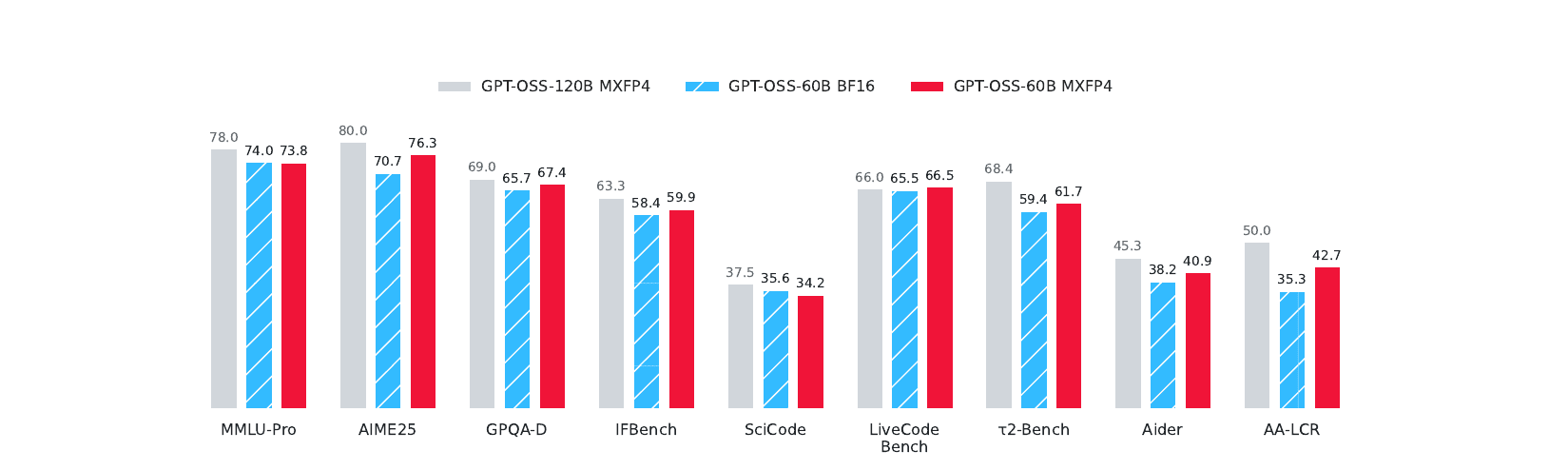
Researchers have introduced 'Quantization-Aware Healing,' a method to maintain high performance in compressed 4-bit language models. This technique mitigates the typical capability degradation found in traditional compression pipelines, ensuring that reasoning and coding skills remain intact.
The Compression-Performance Paradox
For years, the standard paradigm for deploying Large Language Models (LLMs) has been fraught with a difficult trade-off: size versus intelligence. As models grow in parameter count, they become prohibitively expensive to run on standard hardware. Developers have traditionally relied on a two-step recipe—pruning layers, heads, or neurons to reduce the architecture, followed by quantization to shrink weights to 4-bit precision. While these steps drastically reduce the memory footprint and computational overhead required for inference, they systematically erode the model's high-level cognitive functions, specifically in domains like complex reasoning, mathematical problem-solving, and code generation.
The Role of 'Healing' in Modern Pipelines
To combat this degradation, the industry has adopted a recovery phase known as 'healing.' This process involves fine-tuning or recalibrating the compressed model to regain the performance lost during the aggressive reduction of its parameters. Current state-of-the-art models, including NVIDIA’s Nemotron family, the open-weight gpt-oss models, and the Hypernova 60B, all incorporate some form of this compress-then-heal methodology. The necessity of this step underscores a fundamental truth in machine learning: you cannot simply strip away data without consequence, as the intricate relationships between weights are essential for emergent capabilities.
Quantization-Aware Healing: A Paradigm Shift
The latest research into 'Quantization-Aware Healing' suggests a more integrated approach. Rather than treating compression and healing as sequential, disconnected tasks, this new methodology embeds the recovery process directly into the quantization phase. By being 'aware' of the eventual 4-bit constraint during the healing process, the model can better preserve the structural integrity of its reasoning pathways. This shift is significant because it allows for a 4-bit model to not just match, but potentially outperform its full-precision original, effectively defying the conventional wisdom that smaller models must be less capable.
Implications for AI Deployment
This breakthrough has profound implications for the future of edge computing and resource-constrained environments. If developers can reliably create 4-bit models that retain the intelligence of their full-precision counterparts, the barrier to entry for running sophisticated AI on local devices—such as mobile phones, laptops, and edge servers—will drop precipitously. This reduces reliance on massive, centralized cloud GPU clusters, which are both expensive and environmentally taxing to maintain.
Future Trends and Conclusion
The move toward Quantization-Aware Healing signals a maturation in model optimization. As we move away from the 'bigger is always better' mentality, the focus is shifting toward architectural efficiency. We can expect future deployment pipelines to move toward even more aggressive quantization levels, potentially moving toward 2-bit or mixed-precision formats, provided that the 'healing' mechanisms can keep pace with the compression. Ultimately, this research provides a roadmap for sustainable AI, proving that through clever engineering, we can maximize the utility of our models without needing an infinite supply of hardware resources.