Apple’s new Mac Mini has fresh M6 and M5 Pro chip offerings — and higher prices
Source Entity
Antonio G. Di Benedetto
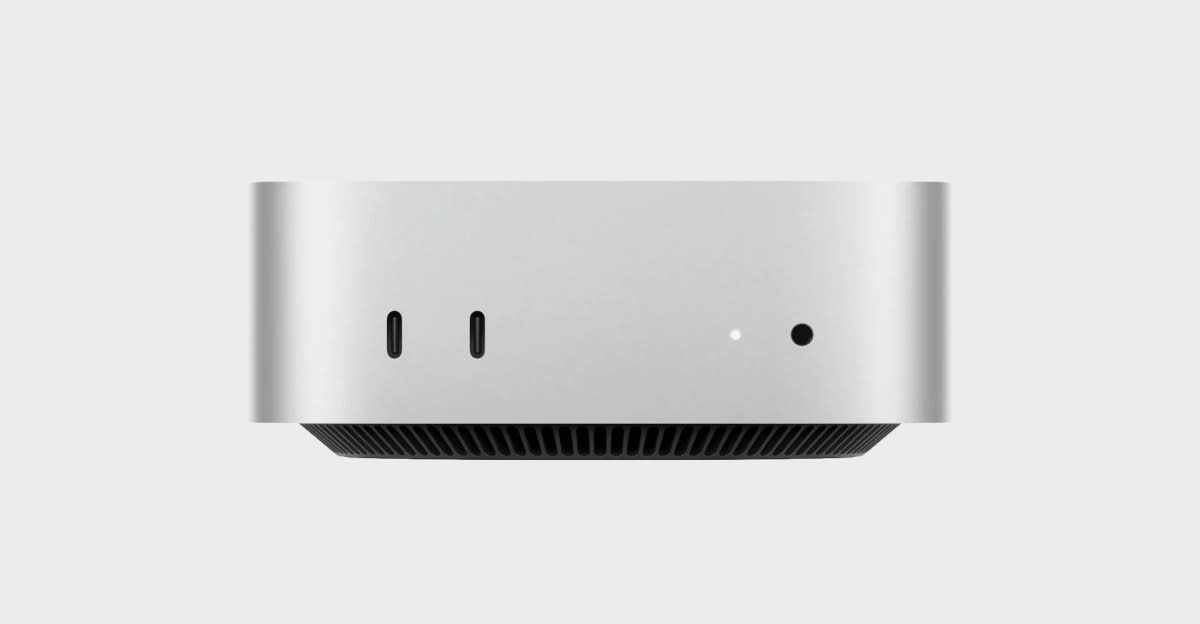
Apple has unveiled updated Mac Mini and Mac Studio models featuring the new M6 and M5 Ultra processors, available for preorder starting at $899 and $2,499 respectively. These refreshed machines retain their familiar compact designs while offering significant performance internal upgrades and faster ethernet connectivity. Additionally, Apple has introduced a price reduction for its official polishing cloth, now retailing for $9.
Apple Unveils Next-Generation Mac Hardware
Apple has officially expanded its silicon-based computing lineup with the announcement of updated Mac Mini and Mac Studio models. Central to these updates are the introduction of the M6 and M5 Ultra processors, marking another iterative leap in Apple's proprietary silicon strategy. These machines are currently available for preorder, with shipping for the majority of configurations scheduled to commence on September 22nd, 2026.
Performance and Design Continuity
The new Mac Mini maintains the iconic, compact footprint established by the 2024 M4 models, ensuring that users can easily integrate these new units into existing desktop setups. Despite the familiar exterior, the internal architecture has seen substantial revisions. The new Mac Mini is available in two distinct configurations: a base model utilizing the M6 chip and a higher-end variant equipped with the M5 Pro. Beyond the silicon upgrades, these systems feature enhanced internal components and improved ethernet port speeds, catering to power users who require high-bandwidth networking.
Pricing Strategy and Market Positioning
Apple’s pricing structure for this release reflects a strategic shift in hardware costs. The M6-equipped Mac Mini starts at $899, representing a $300 increase over the base M4 model from 2024. The M5 Pro version enters the market at $1,699, while the Mac Studio, powered by the M5 Ultra, retains the $2,499 starting price point of its predecessor. These adjustments suggest that Apple is positioning its silicon-based desktop line as premium hardware, emphasizing performance gains that justify the higher entry costs for consumers.
The Role of the M5 Ultra and M6 Chips
The integration of the M5 Ultra and M6 chips signals Apple's ongoing commitment to optimizing performance-per-watt ratios across its ecosystem. By deploying the M5 Pro and M5 Ultra in desktop environments, Apple continues to bridge the gap between portable laptop performance and stationary workstation power. This modular approach to chip deployment allows the company to maintain a unified software experience across the macOS environment while providing hardware scaling options for different user demographics.
Broader Implications and Accessory Updates
Interestingly, the hardware refresh coincides with a subtle adjustment in Apple’s accessory ecosystem. While the computers have seen price hikes, Apple has simultaneously reduced the price of its signature polishing cloth from $19 to $9. This accessory, which remains functionally identical to previous versions, serves as a minor but notable counterpoint to the broader trend of rising costs in the main product categories.
Future Trends and Conclusion
Looking forward, the September 22nd, 2026, release date positions these machines to arrive just ahead of Apple's typical annual iPhone event schedule. This timing suggests that Apple is aiming to capture early-adopter interest before the media cycle shifts toward mobile hardware. The continued reliance on the established compact form factor confirms that Apple intends to keep the Mac Mini as a primary option for professional-grade computing in small spaces, while the M-series evolution ensures that these machines remain competitive against traditional desktop alternatives in the long term.
Multiple Citing Sources