
The Diagnostic Threshold: A New Era of Precision
For decades, diagnosing Alzheimer's disease felt less like medicine and more like a process of elimination. Doctors waited for cognitive decline to become undeniable, then relied on expensive PET scans or the dreaded lumbar puncture to confirm the presence of amyloid plaques and tau tangles. It was a slow, invasive, and prohibitively expensive game. That game is ending. The emergence of p-tau217 as a highly accurate blood-based biomarker is shifting the diagnostic timeline forward by years, potentially decades, transforming a specialist's luxury into a primary care standard.
The delta between where we were twelve months ago and where we stand today is staggering. While blood tests for Alzheimer's have been in development for years, p-tau217 has emerged as the gold standard for accuracy. Recent data indicates that these tests can identify amyloid pathology with an accuracy rate exceeding 90 percent, closely mirroring the performance of cerebrospinal fluid (CSF) tests (Source: JAMA, 2024). This is not just a marginal improvement; it is a fundamental disruption of the clinical pathway.
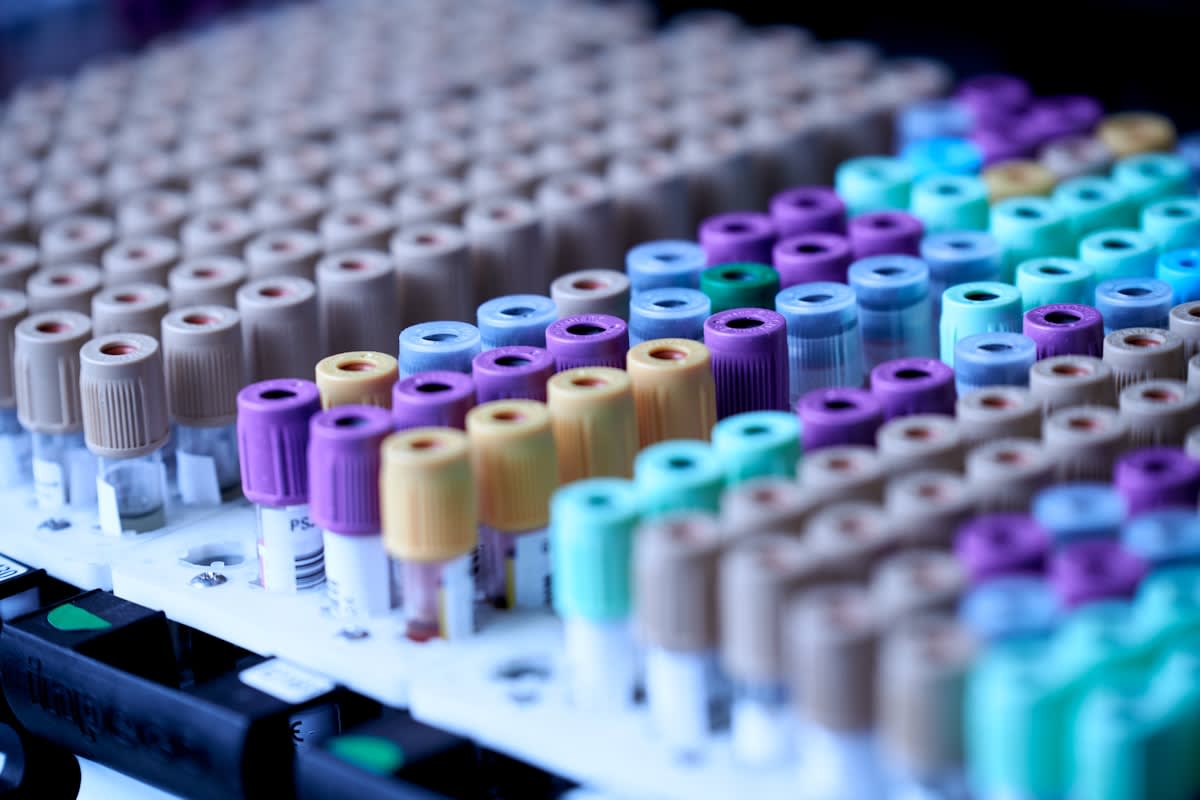
Why p-tau217? Unlike other tau proteins, this specific phosphorylated version is highly sensitive to the earliest stages of amyloid accumulation in the brain. It acts as a molecular flare, signaling the onset of disease long before the first forgotten key or missed appointment. By detecting these changes in the blood, clinicians can now identify patients in the preclinical stage, providing a critical window for lifestyle interventions and the administration of new disease-modifying therapies.
"The ability to screen for Alzheimer's pathology with a blood test is a paradigm shift. We are moving from a world where diagnosis was a rare event in a specialized clinic to one where it can be integrated into routine health checks."— Sebastian Palmqvist, Associate Professor at Lund University
Breaking the Geographic Bottleneck
The implications of this shift are most profound when viewed through a global lens. In high-income regions like North America and Western Europe, PET scans are available but expensive and often restricted to academic medical centers. In low- and middle-income countries, such infrastructure is virtually non-existent. A blood test removes the need for multi-million dollar imaging hardware and specialized radiologists. It allows a clinic in Nairobi or a rural health center in Southeast Asia to screen patients using existing laboratory infrastructure.
This democratization of diagnosis is essential because the global burden of dementia is rising fastest in these very regions. According to the World Health Organization's 2023 reports, the prevalence of dementia is increasing most rapidly in low- and middle-income countries, where the gap between need and diagnostic capacity is widest. p-tau217 doesn't just provide a faster answer; it provides an answer to populations that were previously invisible to the healthcare system.
| Diagnostic Method | Invasiveness | Cost | Accessibility | Accuracy (Amyloid Detection) |
|---|---|---|---|---|
| PET Scan | Low (Radiation) | Very High | Low | Gold Standard |
| Lumbar Puncture | High | Moderate | Moderate | High |
| p-tau217 Blood Test | Very Low | Low | High | Very High (>90%) |
But the rollout is not without friction. Transitioning from a specialist-led model to a primary-care model requires a massive overhaul of how we manage patient psychology. When a PET scan is ordered, the patient is already under the care of a neurologist. If a blood test becomes part of a routine physical, we face the challenge of delivering life-altering news in a setting that may not be equipped for the necessary emotional and psychological support.
The Practitioner's Dilemma: Friction on the Ground
If you spend time in neurology wards, you see the real debate. Practitioners are currently split between the excitement of early detection and the fear of over-diagnosis. There is a visceral tension regarding the false-positive rate. While p-tau217 is remarkably accurate, no test is perfect. A false positive for Alzheimer's is not a minor clerical error; it is a psychological blow that can devastate a patient and their family. Neurologists argue over whether a blood test should be a standalone diagnostic tool or merely a triage mechanism to decide who gets a confirmatory PET scan.
Furthermore, there is the logistical nightmare of the pipeline. Many clinics are currently struggling with the lack of standardized cut-off values across different assay platforms. A result that is considered positive on one machine might be borderline on another. This lack of global harmonization creates a fragmented landscape where a patient's diagnosis could theoretically depend on which lab processed their blood sample.

This tension is exacerbated by the arrival of new anti-amyloid therapies. Drugs like lecanemab and donanemab require precise confirmation of amyloid pathology before administration due to the risk of ARIA (amyloid-related imaging abnormalities). The blood test creates a massive surge in eligible candidates, putting immense pressure on the few remaining PET imaging centers to act as the final gatekeepers for treatment.
Synergy with Disease-Modifying Therapies
The timing of the p-tau217 breakthrough is not coincidental. It arrives exactly as the pharmaceutical industry has finally cracked the code on slowing cognitive decline. For years, early diagnosis was a curse because there was nothing to do about it. Now, the narrative has shifted toward opportunity. Early detection via blood tests allows patients to enter clinical trials or start therapy when their neuronal density is still high enough to benefit from treatment (Source: Nature Medicine, 2024).
We are seeing a shift in the trial recruitment process as well. Previously, recruiting for Alzheimer's trials was a bottleneck; thousands of candidates were screened, but only a fraction had the specific amyloid profile required, often discovered only after an expensive PET scan. By using p-tau217 as a primary screen, researchers can identify eligible participants with a fraction of the cost and time, accelerating the development of the next generation of drugs.
Is this the end of the waiting game? For the patient, yes. The period of uncertainty—the gap between the first sign of memory loss and a definitive diagnosis—is shrinking. For the healthcare system, however, the game is just changing. We are moving from a problem of scarcity (not enough tests) to a problem of volume (too many patients needing follow-up care).
Fact-Check & Accuracy Note
Key claims regarding the 90 percent accuracy of p-tau217 are sourced from recent comparative studies published in JAMA and Nature Medicine (2023-2024). The discussion on global dementia prevalence is based on WHO 2023 reporting. Note that while p-tau217 is highly accurate, clinicians still debate its use as a standalone diagnostic tool without confirmatory imaging in certain high-risk populations.