Vande Bharat train manufactured in Punjab completes 180 kmph trial on Mathura-Nagda section
Source Entity
Anish Mondal
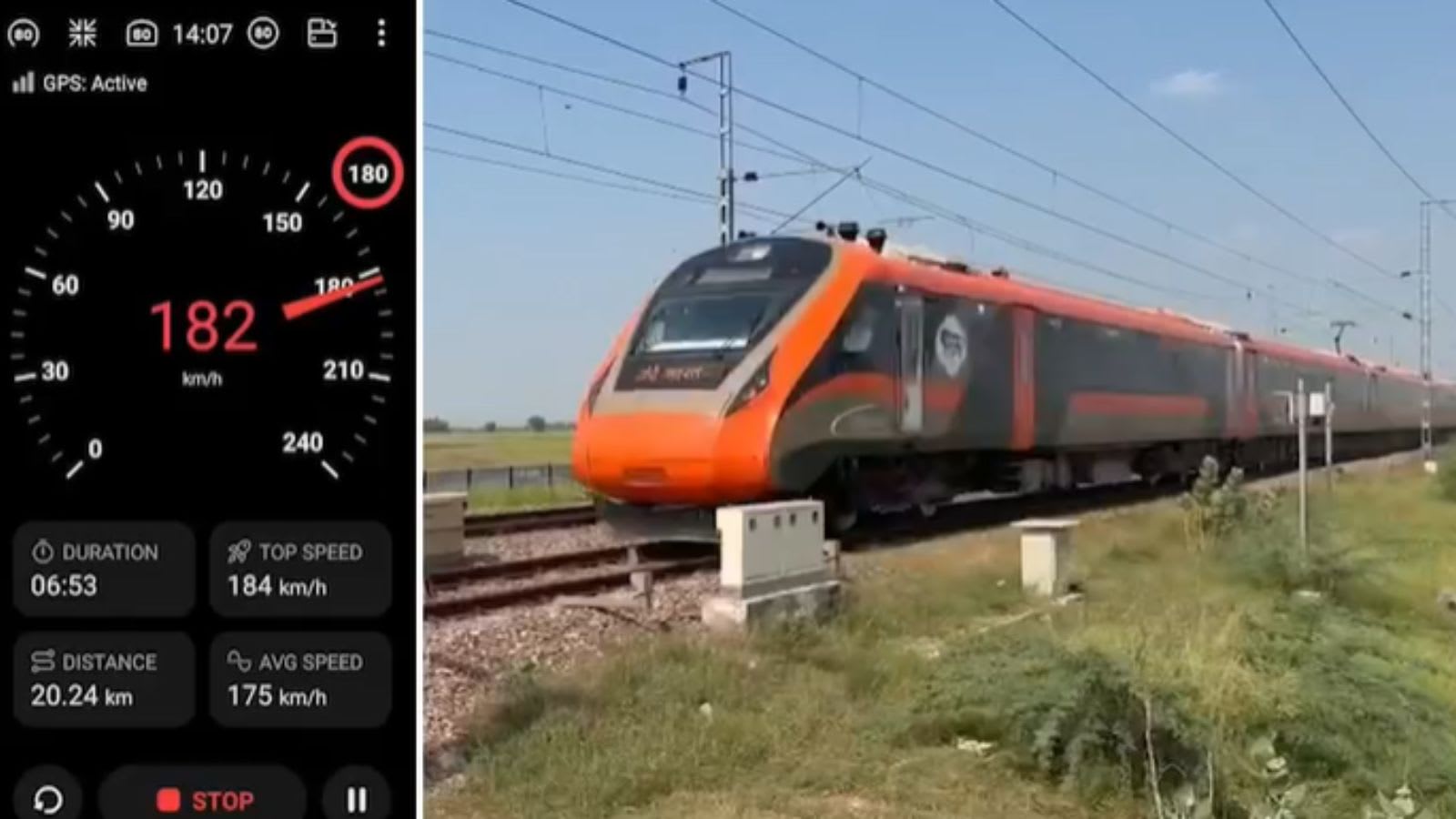
The new Vande Bharat 16-coach trainset, manufactured in Kapurthala, successfully completed a 180 kmph speed trial on the Mathura-Nagda section. Supervised by the Chief Commissioner of Railway Safety, the test confirms the train's operational efficiency and safety for high-speed rail integration in India.
A Milestone for Indian Rail Infrastructure
The successful high-speed trial of the latest Vande Bharat trainset on the Mathura-Nagda section marks a significant evolution in India’s railway modernization program. By hitting a sustained speed of 180 kmph, the 16-coach Chair Car trainset, manufactured at the Rail Coach Factory (RCF) in Kapurthala, Punjab, demonstrates the domestic capability to design and deploy high-performance rolling stock capable of meeting modern global standards.
Rigorous Safety and Performance Standards
On October 8, 2026, the trial was conducted under the direct supervision of the Chief Commissioner of Railway Safety (CCRS). This oversight is critical, as it ensures that the train’s mechanical integrity, braking systems, and aerodynamic stability are verified under strenuous conditions. The focus remains on validating that these trainsets can maintain high-speed operations without compromising the safety parameters essential for passenger travel on India's dense rail network.
The Role of Domestic Manufacturing
Manufacturing these trainsets at the Rail Coach Factory in Kapurthala is a testament to the success of the 'Make in India' initiative within the transport sector. By localizing the production of high-speed trainsets, the Indian Railways is reducing dependency on foreign technology imports, fostering local engineering expertise, and optimizing supply chain logistics. This shift is vital for the long-term scalability of the Vande Bharat fleet across the country.
Technical Implications of the Mathura-Nagda Corridor
Choosing the Mathura-Nagda section for this trial is strategically significant. This corridor provides the necessary infrastructure and track conditions required to test high-speed dynamics safely. The data gathered from this run provides essential feedback on track interaction, vibration control, and power consumption at higher velocities, which will inform future designs and track maintenance protocols.
Future Trends in High-Speed Rail
As India moves toward faster transit corridors, the Vande Bharat platform serves as the backbone of this transition. The ability to operate at 180 kmph suggests that the network is inching closer to true high-speed rail categories. Moving forward, the integration of these trainsets into major commercial routes will likely reduce travel times significantly, providing a sustainable and efficient alternative to short-haul aviation and road travel.
Conclusion
The successful 180 kmph trial is more than just a speed test; it is a validation of the technical maturity of India’s railway engineering. With the oversight of the CCRS confirming the train's performance, the Vande Bharat series is well-positioned to continue its role as the flagship of modern Indian rail travel, promising a future of faster, safer, and more efficient intercity connectivity.