
The digital keys guarding your bank account, your encrypted messages, and your biometric identity are built on a foundation of randomness. For decades, we have settled for a convenient lie: Pseudo-Random Number Generators (PRNGs). These algorithms use mathematical formulas to produce sequences of numbers that look random but are actually deterministic. If an attacker discovers the initial seed—often something as simple as a system timestamp or a thermal sensor reading—the entire sequence becomes predictable. In a world of escalating compute power, this predictability is a catastrophic vulnerability.
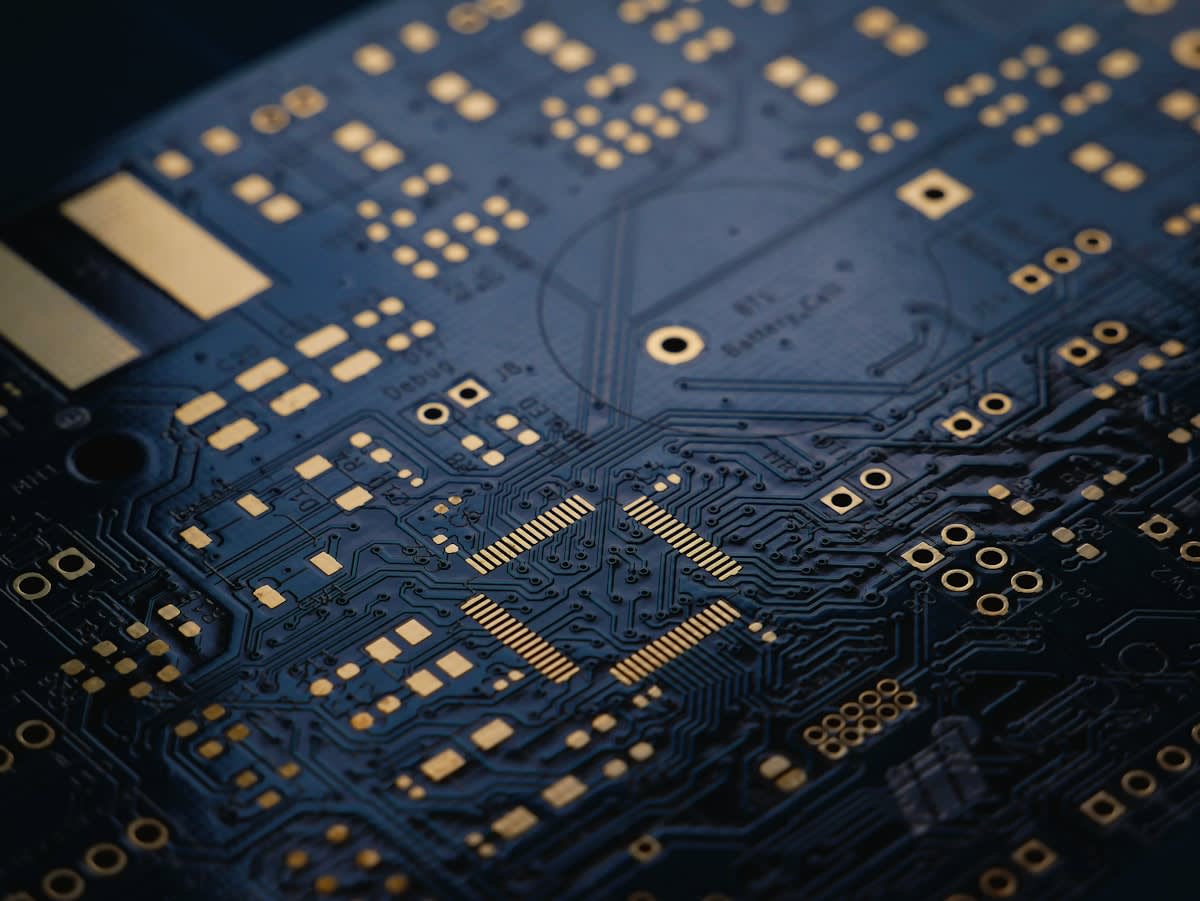
The delta between 2023 and 2024 is not merely incremental; it is a shift in the physics of trust. Twelve months ago, True Random Number Generators (TRNGs) based on quantum mechanics were largely confined to high-end server racks in government facilities or niche experimental devices. Today, we are seeing the aggressive miniaturization of Quantum Random Number Generators (QRNGs) into silicon footprints smaller than 5mm x 5mm, allowing them to be integrated directly into the mobile SoC (System on a Chip) or as a companion security chip. This transition moves the source of entropy from a predictable software loop to the chaotic, irreducible behavior of subatomic particles.
The Entropy Gap
To understand why this matters, one must examine the entropy gap. Entropy, in the context of information theory, is the measure of unpredictability. A PRNG provides high-speed output but zero true entropy because the output is a function of the input. A QRNG, however, harvests entropy from quantum phenomena, such as the arrival time of single photons or the tunneling of electrons across a barrier. These events are not just hard to predict; they are fundamentally probabilistic. There is no hidden variable or secret formula that can reveal the next bit in a quantum sequence.
This shift is particularly urgent given the trajectory of quantum computing. While a full-scale cryptographically relevant quantum computer (CRQC) may still be years away, the 'harvest now, decrypt later' strategy is already in play. Adversaries are collecting encrypted data today, betting that they can break the PRNG-based keys of the past using future quantum algorithms. By integrating QRNGs now, manufacturers are ensuring that the entropy used for current session keys is robust enough to withstand both classical and quantum-assisted brute-force attacks.
"The move to quantum entropy is the difference between a lock that is very complex and a lock that is physically impossible to pick because the key changes its shape every time you look at it."— Industry Lead, Quantum Security Research
The South Korean Blueprint
The most aggressive deployment of this technology has emerged from South Korea, where the Samsung Galaxy Quantum series, developed in partnership with ID Quantique, served as the global proof-of-concept. By embedding a dedicated QRNG chip, these devices moved beyond the standard Android security model. Instead of relying on the kernel's entropy pool, which can be starved or manipulated, the hardware generates a continuous stream of pure randomness. This has created a new standard for digital wallets and mobile banking apps in the region, where the security of the transaction is tied to a physical quantum event rather than a software algorithm.
| Feature | Pseudo-Random (PRNG) | Quantum Random (QRNG) |
|---|---|---|
| Source | Mathematical Algorithm | Quantum Tunneling/Photonics |
| Predictability | Deterministic (if seed is known) | Fundamentally Unpredictable |
| Entropy Level | Low/Simulated | Maximum (True Entropy) |
| Vulnerability | Seed Compromise | Hardware Tampering |
The success in the Korean market is now triggering a ripple effect across other tech hubs. In Singapore and throughout the Nordic regions, where digital IDs and sovereign cloud initiatives are paramount, there is a growing demand for hardware-level entropy. These governments are realizing that software-based security is a facade if the underlying randomness is flawed. The goal is no longer just 'strong encryption' but 'provable randomness,' where the security of the device can be audited through the laws of physics rather than the opacity of a proprietary algorithm.
Technical Clarification
It is vital to distinguish between Quantum Key Distribution (QKD) and QRNG. QKD is about how you send a key securely over a distance; QRNG is about how you create that key in the first place. You cannot have secure QKD without a high-quality QRNG to start the process.
The integration process is moving toward the SoC level. Rather than adding a separate chip that consumes precious board space, engineers are integrating quantum entropy sources into the Secure Enclave or the Trusted Execution Environment (TEE). This reduces the attack surface by eliminating the bus between the QRNG chip and the processor, preventing 'man-in-the-middle' attacks where a hacker might attempt to intercept the random stream before it is used to generate a key.
The implications for the cryptocurrency and decentralized finance (DeFi) sectors are profound. Most mobile wallets rely on a seed phrase generated by the device's PRNG. If that PRNG is flawed—as has happened in several high-profile wallet drains—the funds are gone regardless of how strong the subsequent encryption is. QRNG-enabled devices eliminate this single point of failure, ensuring that every private key generated is unique and entirely decoupled from any predictable system state.
- Elimination of seed-based predictability in encryption keys
- Hardening of mobile biometric authentication against replay attacks
- Provable entropy for high-value digital asset wallets
- Reduction in the success rate of quantum-assisted brute force attacks
- Standardization of hardware-level trust for sovereign digital IDs
We are witnessing the death of the 'good enough' approach to randomness. For years, the industry assumed that the complexity of PRNGs was sufficient to thwart attackers. But as we move toward a post-quantum world, the margin for error has vanished. The integration of QRNGs into smartphones is the first step in a broader realignment of the global security stack, where trust is no longer granted to the programmer, but to the universe itself.
Ultimately, the 'so what' is simple: the hardware in your pocket is becoming a fortress. By leveraging the inherent chaos of the quantum realm, smartphones are transforming from potential liabilities into the most secure endpoints in the network. The transition from mathematical randomness to physical randomness is not just a technical upgrade; it is a fundamental shift in how we define security in an age of infinite compute.