
For decades, the 'No Service' indicator on a smartphone was a definitive boundary. It marked the edge of civilization, the start of the dangerous, or the simply unreachable. Whether it was a hiking trail in the Canadian Rockies or a remote village in the Congolese rainforest, the lack of a terrestrial cell tower meant total digital isolation. That boundary is currently dissolving. We are witnessing a fundamental shift from niche, bulky satellite phones to Direct-to-Cell connectivity, where the satellite acts not as a separate system, but as a tower in the sky that your existing iPhone or Android device can see.
The delta between where we were eighteen months ago and where we are today is staggering. In 2023, satellite-to-phone capabilities were largely limited to low-bandwidth emergency SOS features, as seen in Apple's partnership with Globalstar (Source: Apple Newsroom, 2022). Today, the industry has pivoted toward full-scale SMS, voice, and eventually data services. The goal is no longer just saving lives during a disaster; it is about ensuring that a professional in the Australian Outback or a researcher in the Atacama Desert has the same baseline connectivity as someone in downtown Tokyo.
The Technical Leap: Brute-Forcing the Link Budget
Why did this take so long? The physics are brutal. A standard smartphone is designed to talk to a tower a few kilometers away, not a satellite orbiting at 550 kilometers. To bridge this gap, companies like SpaceX and AST SpaceMobile are essentially building massive antennas in space. These arrays must be sensitive enough to pick up the faint 'whisper' of a handheld device and powerful enough to beam a signal back through the atmosphere without causing interference with existing terrestrial networks. It is a high-stakes game of link-budget optimization.

The industry has rallied around 3GPP Release 17 and 18 standards, which officially integrate Non-Terrestrial Networks (NTN) into the 5G ecosystem (Source: 3GPP, 2023). This standardization is the catalyst. It means that connectivity is no longer a proprietary trick played by one hardware manufacturer, but a global architectural shift. When the protocol is baked into the 5G standard, the 'dead zone' stops being a geographical fact and starts being a temporary configuration issue.
"The integration of satellite connectivity into the 5G standard is the final piece of the puzzle for universal coverage. We are moving from a world of 'connected pockets' to a seamless blanket of connectivity that ignores borders and terrain."— Industry Analyst, Telecommunications Infrastructure Report
But how does this actually play out on the ground? For a network engineer, this is a nightmare of interference management. The debate currently raging in the halls of the FCC and other global regulators centers on 'spectrum leakage.' If a satellite uses the same frequency as a terrestrial carrier, can it drown out the local tower? Practitioners are arguing over the precise guard bands and timing offsets required to ensure that a satellite signal doesn't crash a city's LTE network while trying to provide a text message to a hiker in the woods.
Global Implications: Beyond the Luxury of the Hiker
While the Western narrative focuses on adventure and safety, the real impact is socio-economic. In regions like Sub-Saharan Africa and Southeast Asia, the cost of laying fiber or building towers in rugged terrain is prohibitive. Satellite-to-cell skips the infrastructure phase entirely. According to the International Telecommunication Union, approximately 2.6 billion people remain offline as of 2023 (Source: ITU, 2023). Direct-to-cell technology offers a path to leapfrog the traditional grid, providing basic financial services and government communication to the most isolated populations on Earth.
| Capability | Legacy Sat-Phones | Early Direct-to-Cell | Next-Gen NTN (2025+) |
|---|---|---|---|
| Hardware | Proprietary Handset | Standard Smartphone | Standard Smartphone |
| Primary Use | Specialized/Industrial | Emergency SOS | SMS, Voice, Low-Band Data |
| Deployment | High Cost/Slow | Limited Partnerships | Global Carrier Roaming |
| Latency | High (GEO) | Medium (LEO) | Low (LEO/MEO) |
Consider the logistics of a maritime disaster in the South China Sea or a landslide in the Andes. Previously, rescue depended on the presence of a satellite phone—a device rarely carried by the average traveler. Now, the phone in the victim's pocket is the beacon. This shift transforms the smartphone from a consumer gadget into a critical piece of safety infrastructure, effectively erasing the concept of 'out of range' for emergency services.
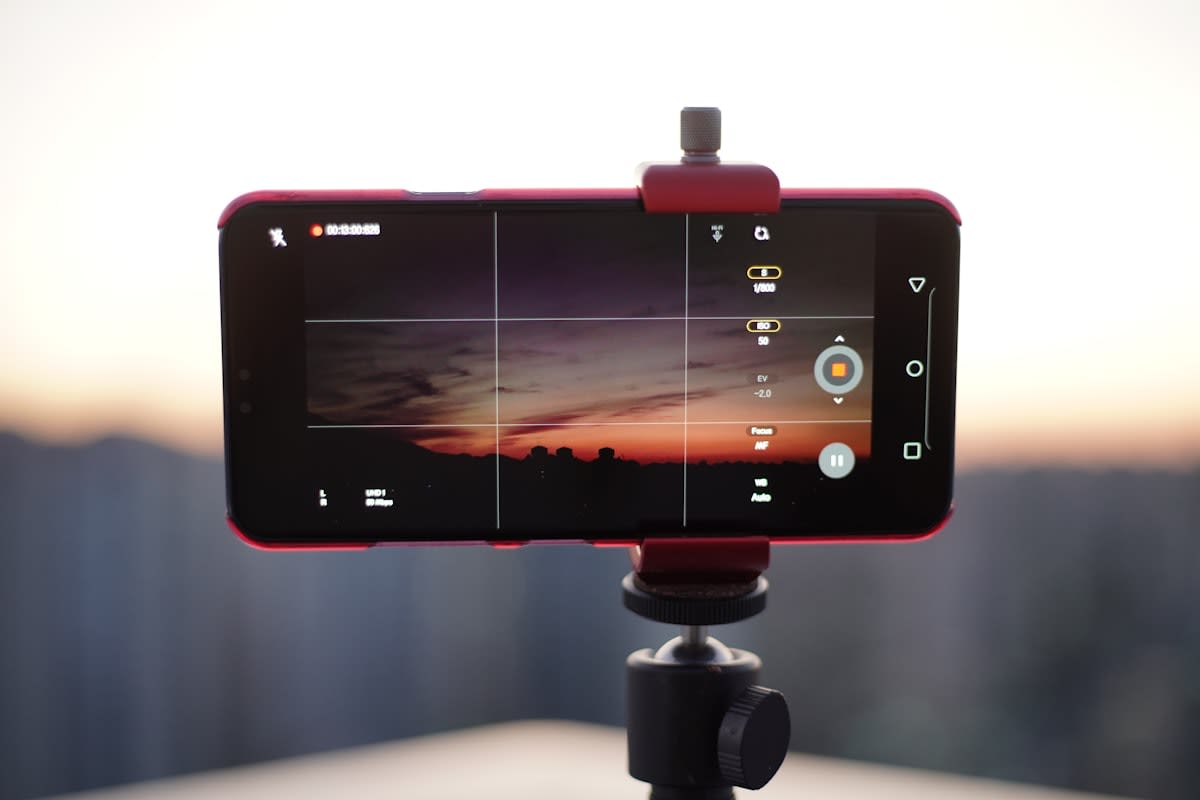
The competition is fierce. SpaceX's Starlink, in partnership with T-Mobile, aims to eliminate dead zones across North America and eventually the globe (Source: SpaceX/T-Mobile, 2023). Meanwhile, AST SpaceMobile is deploying massive arrays to provide broadband-like speeds directly to unmodified phones. The friction here isn't just technical; it's a land grab for orbital slots and spectrum rights. Whoever controls the 'sky-tower' controls the gateway to the unconnected.
The Resilience Paradigm
We must also look at this through the lens of resilience. Terrestrial networks are fragile. Hurricanes, earthquakes, and political instability can wipe out towers in minutes. Satellite-to-cell provides a redundant layer that is immune to ground-level disasters. When the towers fall, the sky remains. This isn't just a convenience; it's a systemic upgrade to how humanity maintains coordination during crises.
- Elimination of 'No Service' zones for critical emergency communications.
- Reduction in capital expenditure for rural connectivity in developing nations.
- Creation of a global, redundant communication layer independent of ground infrastructure.
- Integration of IoT devices in remote agriculture and mining without expensive gateways.
Is this the end of privacy? Perhaps. The ability to track and communicate with any device, anywhere, removes the last remaining sanctuary of silence. But for the vast majority of the world, the trade-off is an absolute bargain. The ability to call for help or check a bank balance in the middle of the Sahara outweighs the nostalgic desire for a dead zone.
Fact-Check & Accuracy Note
Key claims regarding 3GPP Release 17/18 and ITU connectivity statistics are sourced from official technical specifications and the International Telecommunication Union's 2023 reports. The timeline for full voice/data rollout is based on current SpaceX and AST SpaceMobile public filings, though actual deployment speeds may vary based on regulatory approvals in individual sovereign nations.