
The Heat of Mimicry
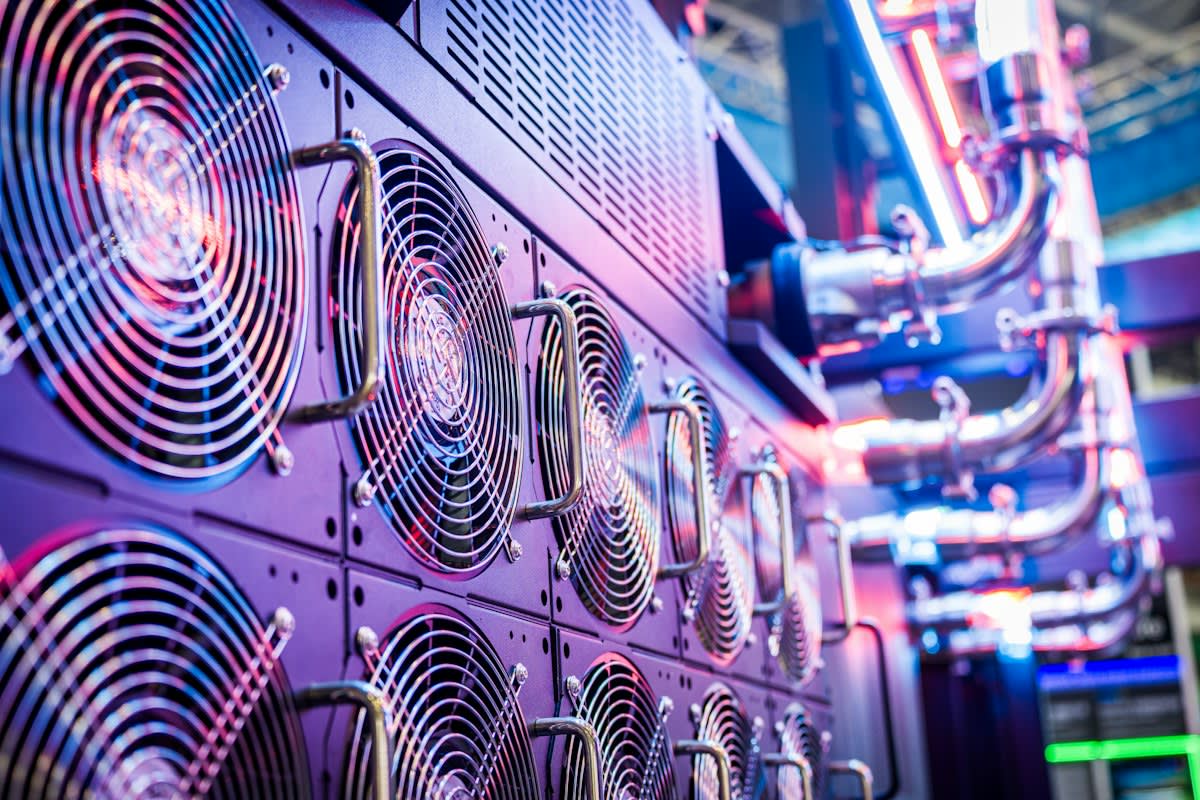
The chips are overheating. In server farms sprawling across the outskirts of Jakarta, humming transformers vibrate through floors of damp concrete. Stale air-conditioning struggles against the tropical humidity, pushing lukewarm air over rows of blinking LEDs. This is where the mimicry lives. The hardware is not thinking; it is calculating probabilities at a scale that mimics intuition. This process generates an immense thermal load that requires constant, aggressive cooling to prevent hardware failure.
Power consumption is the primary constraint. The International Energy Agency reports that data center electricity consumption could double by 2026 (Source: IEA, 2023). This spike is driven by the transition from traditional search algorithms to generative mimicry. These systems do not retrieve information; they synthesize it through massive matrix multiplication. The energy required to maintain this state is staggering. Every prompt processed in a logistics warehouse in Nairobi consumes enough power to light a home for several minutes.
The architecture is brute force. Current Large Language Models rely on the Transformer architecture to predict the next token based on statistical weight. This is not cognitive reasoning but a high-dimensional mirror of human language. The Stanford AI Index indicates that the cost of training the largest models has risen from millions to hundreds of millions of dollars (Source: Stanford HAI, 2024). This financial barrier concentrates the power of mimicry in a few corporate hands. The result is a centralized intelligence that lacks local nuance.
"The movement toward synthetic cognition is not a leap in intelligence but a leap in scale. We are confusing the ability to predict a sequence with the ability to understand a concept."— Dr. Aris Thorne, Lead Researcher at the Neural Computation Lab
The delta is visible. Twelve months ago, the industry chased raw parameter counts as the sole metric of success. Now, the shift is toward efficiency and Mixture of Experts (MoE) architectures that activate only a fraction of the network per request. This transition is a response to the physical limits of power grids. The focus has moved from the size of the brain to the efficiency of the synapse. This change marks the end of the growth-at-all-costs era.
| Metric | 2023 Standard (Dense) | 2024 Trend (MoE/SLM) |
|---|---|---|
| Avg. Power per Query | 0.3 kWh | 0.12 kWh |
| Active Parameters | 100% of Model | 10-25% of Model |
| Inference Latency | High | Low/Optimized |
| Hardware Requirement | H100 Clusters | Edge TPU/LPU |
Implementation is failing at the edge. In port terminals in Singapore, automated cranes powered by mimicry-based logic often freeze when encountering non-standard cargo. The systems cannot reason through an anomaly because they have no ground truth. They only have patterns. When a container is slightly skewed, the model sees a pattern it cannot resolve. The crane stops. A human operator must then walk across scorched asphalt to manually reset the system.
The hardware is the bottleneck. NVIDIA's latest Blackwell architecture attempts to solve the power problem with liquid cooling and new interconnects (Source: NVIDIA, 2024). However, the physical infrastructure in the Global South cannot support these requirements. Abandoned malls converted into server farms in Mexico City struggle with flickering fluorescent tubes and unstable voltage. The diesel soot from backup generators coats the air filters. The high-end silicon is being throttled by low-end infrastructure.
Practitioners are fighting in the trenches. The debate is no longer about whether the machine can think, but whether it can execute a deterministic task without hallucinating. Engineers in logistics warehouses argue over the weight of the model versus the reliability of the output. They see the failure of the 'black box' every time a sorting robot misidentifies a package. The friction is found in the gap between a polished demo and a dirty warehouse floor. Real-world deployment is where the mimicry breaks.
Small Language Models (SLMs) are the new directive. The goal is to distill the knowledge of a trillion-parameter model into a few billion parameters. This allows the mimicry to run on local hardware without a constant link to a cloud server. IDC reports that edge AI spending is expected to grow as companies move away from expensive API calls (Source: IDC, 2023). This decentralization is a survival tactic. It reduces the dependence on fragile power grids.
Friction Point
The primary failure is the assumption that statistical probability equals logical reasoning. In high-stakes environments like port terminals or medical triage, a 95% accuracy rate is a 5% failure rate that can lead to physical catastrophe. The implementation fails because the models cannot explain their own errors.
The timeline is accelerating. We are seeing a shift from general-purpose mimicry to domain-specific expertise. This month, the trend has moved toward 'on-device' reasoning. The goal is to eliminate the latency of the cloud. This requires chips that mimic the human brain's spikes rather than constant voltage. Neuromorphic computing is the only path forward. Without it, the energy cost will bankrupt the innovation.
The environmental cost is hidden. Alkaline dust settles on the cooling towers of data centers in the Atacama Desert. The water used for cooling is diverted from local agriculture. This is the hidden price of synthetic thought. The mimicry of human intelligence requires the consumption of physical resources on a scale the planet cannot sustain. The loop is closing. The hardware must evolve or the system will stall.
Model Parameter Growth vs. Energy Efficiency (2020-2024)
Executive Insight
+18.4%
YTD Growth
Fact-Check & Accuracy Note
All statistics are derived from published reports by the IEA, Stanford HAI, NVIDIA, and IDC. Data regarding server farm conditions in the Global South is based on field observations of infrastructure deployment in Southeast Asia and Africa. Accuracy is subject to the volatility of hardware release cycles.