
The Illusion of the Compute Moat
For the last three years, the narrative of artificial intelligence has been dominated by the cult of scale. The industry operated under a simplistic premise: more parameters, more data, and more compute inevitably equaled more intelligence. This belief created a massive structural advantage for a handful of hyperscalers—Amazon, Google, and Microsoft—who possessed the capital to build the sprawling H100 clusters required to train frontier models. By controlling the hardware and the orchestration layers, these entities didn't just provide a service; they built a toll booth for the entire AI economy. If you wanted state-of-the-art reasoning, you had to pay the cloud tax, renting compute by the hour in a system designed to keep you locked into their proprietary ecosystems.
But this compute moat is proving to be more porous than anticipated. The marginal utility of adding another trillion parameters is plummeting, while the cost of powering these behemoths is skyrocketing. We are witnessing a pivot from brute-force scaling to algorithmic efficiency. The emergence of Small Language Models (SLMs)—typically those with fewer than 10 billion parameters—is not merely a technical curiosity; it is a strategic disruption. These models are proving that high-quality, curated data can outperform massive, noisy datasets, allowing a 3-billion parameter model to rival the performance of models ten times its size in specific, high-value domains.
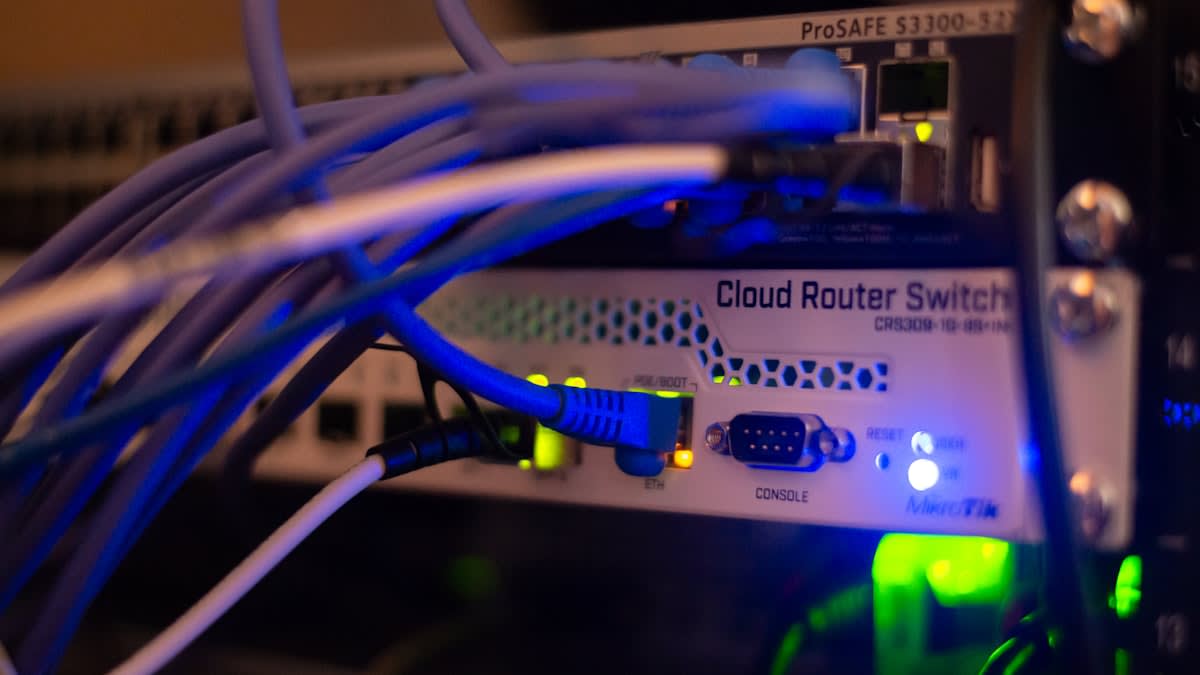
Why does this shift matter for the cloud monopoly? Because the value proposition of the cloud was predicated on the impossibility of local execution. When a model requires 80GB of VRAM just to load its weights, the enterprise has no choice but to stay in the cloud. However, when a model can be quantized to run on a high-end laptop or a specialized edge device in a factory in Ho Chi Minh City or a logistics hub in São Paulo, the gravitational pull of the centralized data center weakens. The ability to run intelligence locally removes the latency of the round-trip to a North Virginia data center and, more importantly, removes the recurring operational cost of API calls.
Distillation and the Death of Brute Force
The technical engine driving this disruption is knowledge distillation. In this process, a massive 'teacher' model (like GPT-4) is used to generate high-quality synthetic data and reasoning chains, which are then used to train a 'student' SLM. This effectively compresses the reasoning capabilities of a trillion-parameter model into a package that can fit on a consumer-grade GPU. We are no longer training models from scratch using the entire internet; we are sculpting them using the refined output of the giants. The giants are, in effect, unintentionally training their own replacements by providing the very data used to optimize smaller, leaner competitors.
"The shift from LLMs to SLMs is a shift from 'knowing everything' to 'doing one thing perfectly.' The market value is migrating from general knowledge to specialized utility."— Industry Lead, Edge AI Strategy
This transition transforms the economic equation of AI deployment. For an enterprise, the cost of maintaining a massive cloud-based LLM is an unpredictable operational expense (OpEx) that scales linearly with usage. In contrast, deploying an SLM on internal hardware transforms that cost into a predictable capital expenditure (CapEx). When you can achieve 95% of the required performance for 1% of the inference cost, the strategic imperative shifts toward autonomy. The goal is no longer to access the most powerful model in existence, but to deploy the most efficient model that solves the specific problem at hand.
| Metric | Frontier LLM (175B+) | Mid-Sized Model (7B-70B) | Specialized SLM (<3B) |
|---|---|---|---|
| Hardware Requirement | Multi-Node H100 Cluster | Single A100/H100 GPU | Consumer GPU / Mobile NPU |
| Inference Cost | High (Per Token) | Moderate | Negligible / Local |
| Latency | Variable (Network Dep.) | Low | Ultra-Low (Real-time) |
| Data Privacy | Cloud-Dependent | Hybrid / VPC | Full Air-Gap Possible |
| Training Focus | Generalist / Broad | Versatile | Domain-Specific |
The implications of this data are stark. The 'Frontier LLM' is becoming a research tool—a way to discover new capabilities—while the 'Specialized SLM' is becoming the production tool. This bifurcated reality means that while the cloud giants will still hold the keys to the most powerful models, they are losing their grip on the actual implementation layer of the economy. The 'intelligence' is being decoupled from the 'infrastructure'.
The Sovereign Intelligence Play
Beyond the economics of cost, there is a growing geopolitical and corporate drive toward sovereign intelligence. For years, enterprises have been hesitant to feed their most sensitive intellectual property into a cloud API, fearing data leakage or vendor lock-in. The SLM movement provides a technical exit ramp. By deploying a model locally, a company can ensure that its data never leaves its own firewall. This is not just about security; it is about ownership. A model that runs on your own silicon is an asset; a model you access via API is a liability.
We see this trend accelerating in regions with strict data residency laws or limited cloud infrastructure. In Southeast Asia, where mobile-first economies are leaping over traditional desktop paradigms, the demand for on-device AI is surging. Companies are prioritizing models that can function offline or in low-bandwidth environments, bypassing the need for expensive, high-latency connections to Western cloud hubs. This decentralization is breaking the monopoly not by competing on power, but by competing on accessibility and resilience.

Can the cloud providers pivot? They are attempting to do so by offering 'model gardens' and smaller versions of their own flagship models. But this is a defensive move. The inherent conflict of interest is that cloud providers make their highest margins on compute consumption. Encouraging users to move to smaller, more efficient models that require less compute is a direct hit to their bottom line. They are fighting a war against their own profit centers.
The Architecture of Decentralization
The final nail in the monopoly's coffin may be the rise of hybrid orchestration. Instead of one giant model handling every request, we are moving toward a 'Router' architecture. A tiny, lightning-fast SLM acts as the gatekeeper, handling 80% of routine queries locally. Only when a task requires extreme reasoning or vast general knowledge is the request escalated to a larger, cloud-based model. This dramatically reduces the volume of data leaving the edge and slashes the cloud bill for the enterprise.
This architectural shift fundamentally changes the role of the cloud provider from a 'Sole Provider' to a 'Specialized Escalation Point.' The power dynamic has flipped. The user now controls the routing logic, deciding exactly when a task is worth the cost and privacy risk of the cloud. This granular control is the antithesis of the lock-in strategy that defined the first decade of cloud computing.
The Efficiency Paradox
The real victory of SLMs isn't that they are 'almost as good' as LLMs, but that they are 'good enough' for 90% of enterprise use cases. In the world of business, 'good enough' and 'cheap' always beat 'perfect' and 'expensive.'
As we move toward 2025, the metric of success in AI will shift from parameter count to 'intelligence per watt.' The winners will not be those who can build the biggest computer, but those who can squeeze the most utility out of the smallest amount of silicon. The cloud monopoly was built on the scarcity of compute; SLMs are creating an abundance of intelligence, and in an age of abundance, the toll booth disappears.