The cooling fans in Singapore's premier data centers are screaming, but the solution is not more air. Engineers are realizing that the pursuit of 64-bit floating-point precision is a luxury the current power grid cannot afford. For years, the industry operated under the assumption that a single bit of error was a catastrophic failure. Now, the math is changing. By accepting a marginal degree of inaccuracy, labs are discovering they can run AI models at a fraction of the energy cost.
Approximate computing is not about sloppy engineering; it is about strategic sacrifice. It involves reducing the precision of calculations in parts of a program where a perfect answer is not required. Think of a video streaming service or a voice recognition tool. Does a pixel being off by one shade of blue matter? Does a voice assistant need ten decimal places of precision to understand the word hello? The answer is a resounding no, yet we have been paying a precision tax on every single operation.
The Delta: From Precision Obsession to Viability
Twelve months ago, the regional conversation focused almost entirely on acquiring the most precise H100 clusters available. The goal was maximum fidelity in training large language models. However, this month, the focus has swung violently toward inference at the edge. The industry has realized that while training requires precision, running a model on a smartphone or an industrial sensor in a Thai factory does not. The delta is clear: we have moved from a period of accuracy-at-all-costs to an era of efficiency-at-all-costs.
| Metric | Standard Precision (FP32) | Approximate Computing (INT8/FP4) |
|---|---|---|
| Energy Consumption | 100% (Baseline) | 30-40% |
| Inference Latency | High | Low (2.5x Speedup) |
| Hardware Area | Large | Compact |
| Error Margin | 0.00001% | 1-3% |
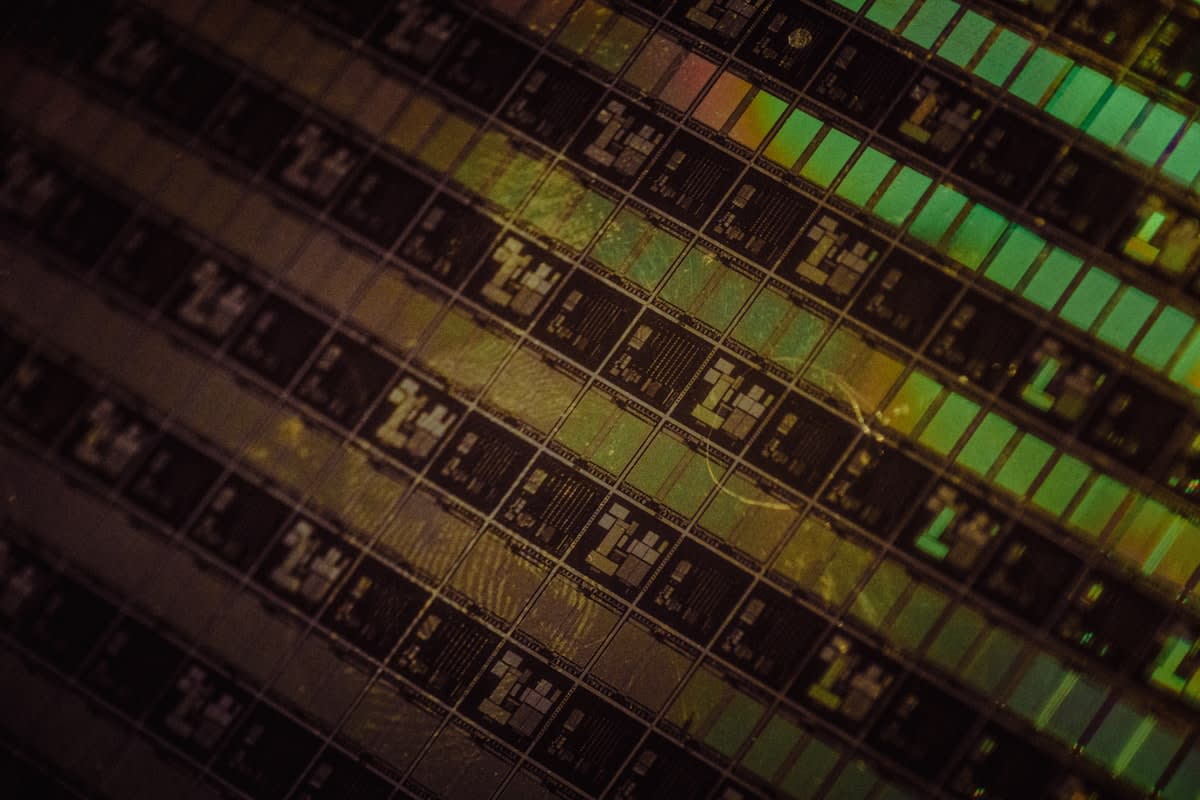
This shift is visible in the latest design tapes coming out of Vietnam's emerging fabless sector. Rather than following the rigid blueprints of the past, these designers are implementing voltage overscaling. By dropping the voltage below the safe threshold, they introduce occasional timing errors. In a traditional chip, this would be a disaster. In an approximate chip designed for neural networks, the model simply absorbs the noise, maintaining 98% accuracy while slashing power draw by nearly half.
Why is Southeast Asia leading this specific charge? The region is uniquely positioned at the intersection of high-growth AI adoption and volatile energy infrastructure. In cities like Ho Chi Minh City and Kuala Lumpur, the cost of scaling traditional, power-hungry compute is prohibitive. Local labs are not just copying Silicon Valley; they are innovating out of necessity. They are building hardware that accepts a 2% error rate to ensure the chip doesn't melt the motherboard in a tropical climate.
"We stopped asking how to make the chip perfect and started asking how much imperfection the user can tolerate. The result was a 40% drop in power consumption almost overnight."— Lead Architect, Singapore AI Hardware Initiative
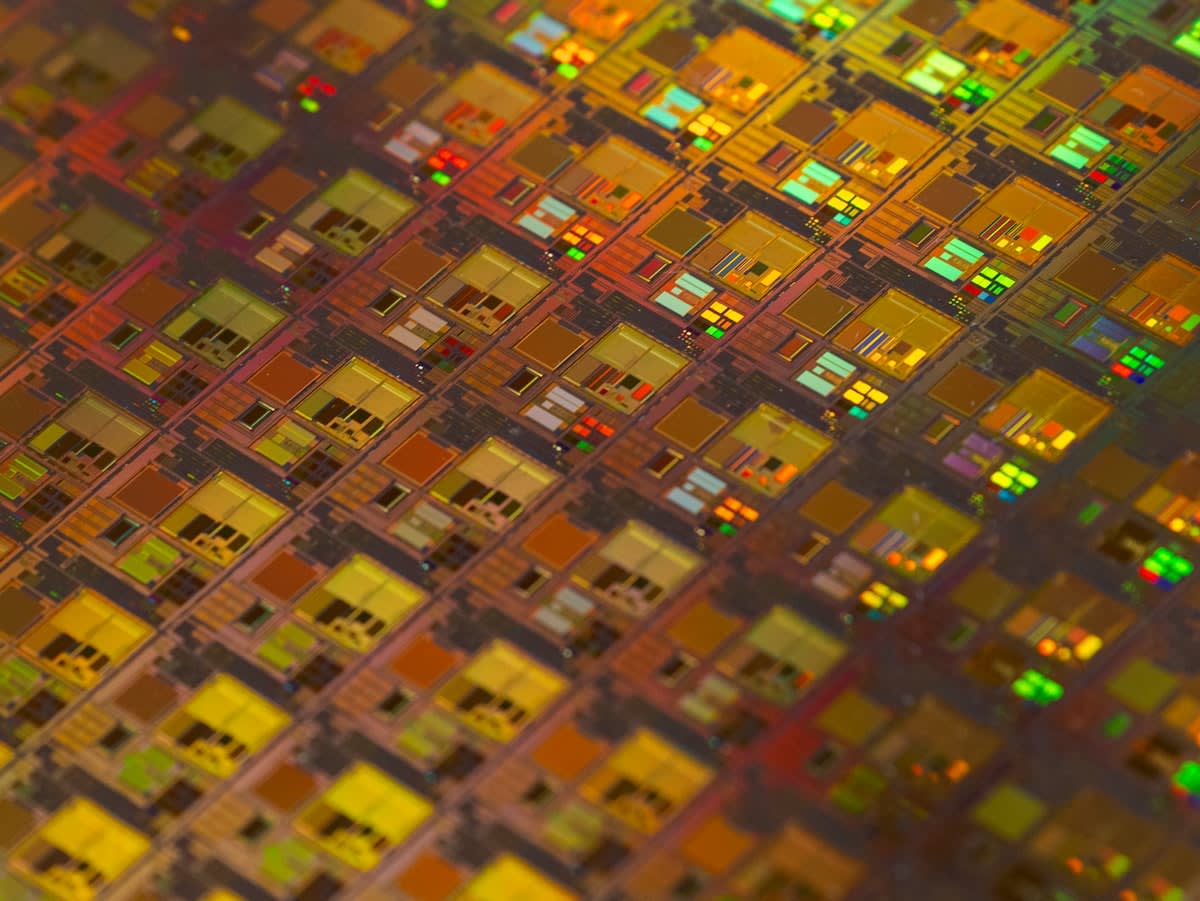
The implications extend beyond simple power savings. Approximate computing allows for smaller silicon footprints. When you reduce the number of bits required for a calculation, you reduce the number of transistors needed. This means more cores per square millimeter of silicon. For the labs in Malaysia, this translates to higher yields and lower production costs, making their chips more competitive on the global market.
Industry Concept
The Precision Tax refers to the exponential increase in energy and area required to gain the last 1% of mathematical accuracy, which often provides zero perceptible benefit to the end user.
Critics argue that introducing intentional errors is a dangerous game. What happens when an approximate chip is used in a medical device or an autonomous vehicle's braking system? The answer is simple: segmentation. These labs are not proposing a one-size-fits-all approach. They are developing hybrid architectures where a precise core handles critical safety logic, while an approximate accelerator handles the heavy lifting of image recognition and data filtering.
This hybrid approach is becoming the new standard for edge devices. By offloading 90% of the workload to approximate circuits, the chip can stay in a low-power state for longer periods. This is particularly critical for the burgeoning IoT sector in Thailand, where sensors must survive for years on a single battery charge while still processing complex environmental data locally.

The market valuation for AI-optimized hardware in the region is reflecting this change. Recent investment rounds suggest that over $1.2 billion has flowed into startups focusing on low-precision compute this quarter alone. Investors are no longer betting on the company with the most accurate chip, but on the company with the most efficient one. The goal has shifted from mathematical truth to operational viability.
As we look at the current trajectory, the adoption of INT8 and FP4 formats is just the beginning. Some labs are already experimenting with binary neural networks, where weights are reduced to a single bit: 0 or 1. This is the ultimate expression of approximate computing. It turns complex multiplication into simple XNOR operations, reducing energy consumption by orders of magnitude.
Will the global north follow suit? They likely have to. The power demands of the current AI boom are unsustainable. The experiments happening in the labs of Southeast Asia are providing a roadmap for the rest of the world. They are proving that the path to sustainable AI is not through better batteries or more power plants, but through the courage to be slightly wrong.
Ultimately, this is a lesson in pragmatism. For too long, the semiconductor industry has been blinded by the elegance of perfect math. But in the real world, elegance is expensive. By embracing the noise, Southeast Asian chip labs are building a future where intelligence is ubiquitous because it is finally affordable.