Dhar's Saraswati is Gayatri: Science ends 900-year mix-up
Source Entity
VINITA CHATURVEDI
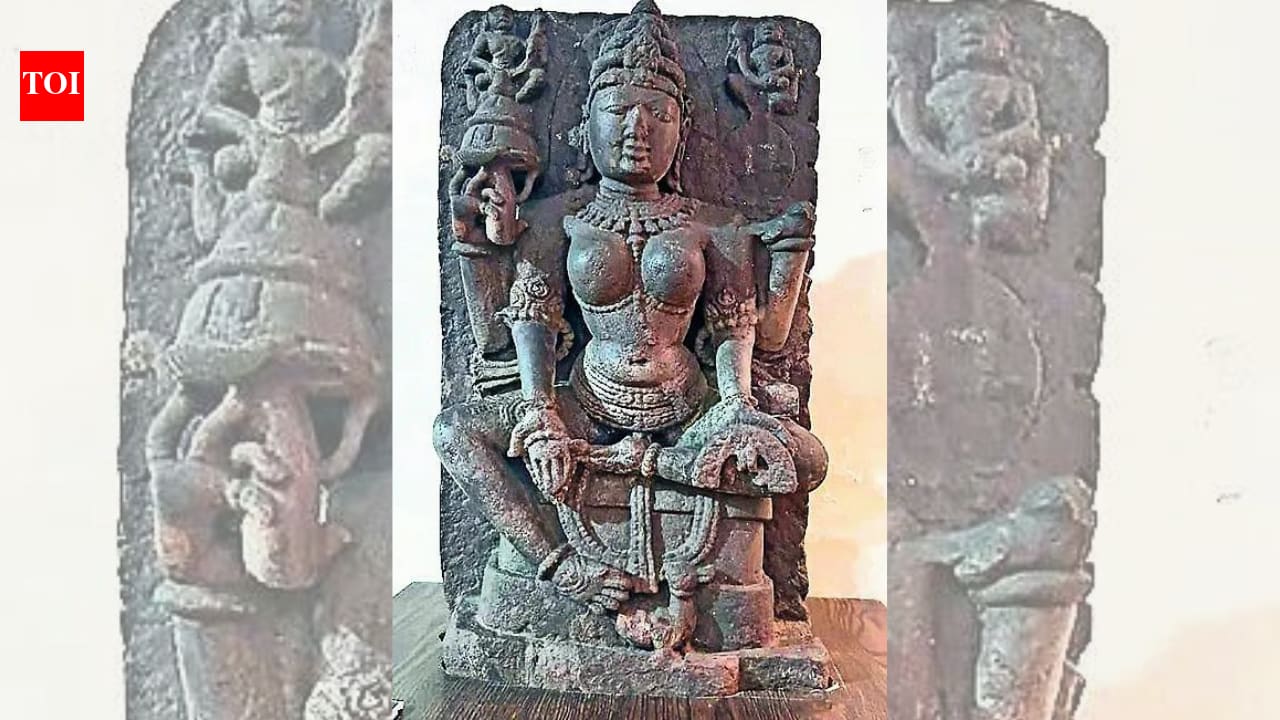
A 12th-century sculpture previously identified as Saraswati has been correctly identified as Gayatri. Digital documentation and 3D mapping revealed iconographic clues missed for centuries. The absence of a veena, a common Saraswati attribute, proved crucial in this re-identification. This rare image of Gayatri, embodying Vedic wisdom, was unearthed in Dhar. The rediscovered icon now represents Madhya Pradesh's digital heritage mission.
The Intersection of Faith and Technology: Correcting a 900-Year Misidentification
In a remarkable fusion of ancient artistry and modern science, a 12th-century sculpture in Dhar, Madhya Pradesh, has undergone a profound re-identification. For nearly nine centuries, the artifact was believed to represent Goddess Saraswati, the deity of knowledge, music, and art. However, recent efforts utilizing cutting-edge digital documentation and 3D mapping have revealed that the sculpture actually depicts Goddess Gayatri, the personification of the sacred Gayatri Mantra and the embodiment of Vedic wisdom. This correction not only restores the original intent of the ancient sculptor but also highlights the critical role of technology in preserving and understanding cultural heritage.
The Precision of Digital Archaeology
The re-identification was made possible through the application of high-resolution 3D mapping, a process that allows historians and archaeologists to examine sculptures with a level of detail impossible for the naked eye. By creating a precise digital twin of the icon, researchers were able to scrutinize the specific iconographic markers—or lakshanas—that define Hindu deities. The most telling clue was the definitive absence of the veena (a stringed instrument), which is the primary attribute of Goddess Saraswati. In traditional Indian iconography, the absence of a deity's signature attribute is often a stronger indicator of identity than the general appearance of the figure, leading experts to conclude that the sculpture represents Gayatri.
Iconographic Nuances: Saraswati vs. Gayatri
To understand the magnitude of this mix-up, one must consider the conceptual overlap between Saraswati and Gayatri. Both deities are associated with wisdom, speech, and spiritual enlightenment, which likely contributed to the centuries-long misidentification. While Saraswati is the patron of the arts and learning, Gayatri is viewed as the 'Mother of the Vedas,' representing the primordial sound and the light of consciousness. The distinction between the two is subtle but significant in Vedic theology. By correctly identifying the figure as Gayatri, the sculpture now provides a rare glimpse into the specific theological leanings and devotional practices of the 12th-century community in Dhar.
Historical Context of 12th-Century Dhar
Dhar has historically been a center of learning and power, particularly under the Paramara dynasty, which flourished in the region. The 12th century was a period of intense artistic and intellectual production, characterized by the construction of elaborate temples and the patronage of scholars. The presence of a rare Gayatri icon suggests that the region was a hub for Vedic studies and sophisticated spiritual practices. This discovery adds a new layer to the historical narrative of Madhya Pradesh, suggesting that the spiritual landscape of ancient Dhar was more diverse and complex than previously documented.
Implications for the Digital Heritage Mission
This event serves as a flagship success for Madhya Pradesh's digital heritage mission. By integrating 3D scanning and digital documentation into the cataloging of ancient sites, the state is moving toward a more scientific approach to art history. This methodology creates a scalable blueprint for auditing other sculptures across India, many of which may have been mislabeled during the colonial era or by early local historians who lacked the tools for precise iconographic analysis. The move toward 'digital heritage' ensures that these artifacts are not only preserved physically but are accurately understood intellectually.
Conclusion: A New Chapter for Ancient Art
The correction of this 900-year-old error is more than a mere academic exercise; it is a restoration of truth. By utilizing science to end a long-standing confusion, the discovery in Dhar demonstrates how technology can bridge the gap between the ancient world and the modern era. As more sculptures are subjected to 3D mapping, it is likely that further 'lost' identities will be recovered, allowing for a more accurate reconstruction of India's vast and intricate religious history.