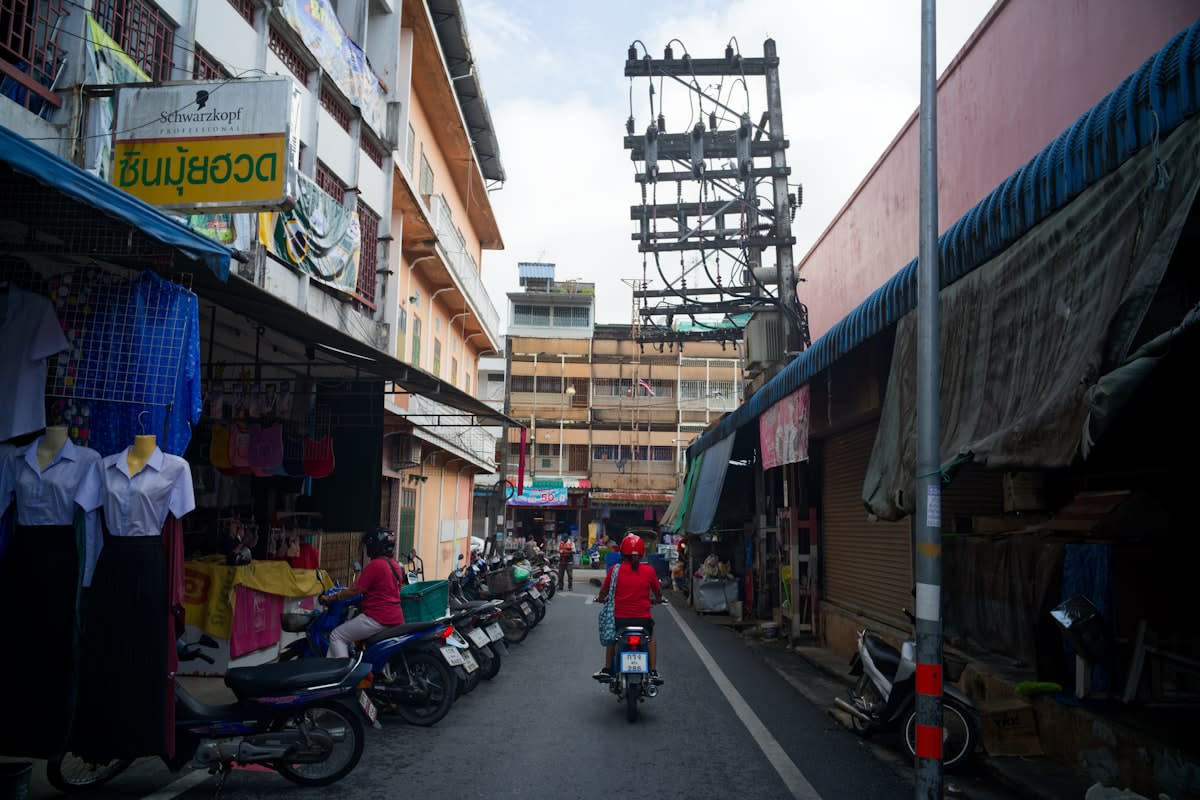
For decades, the global narrative regarding Southeast Asian industry has been one of assembly. The region was the world's workshop, a place where components designed in Silicon Valley or Tokyo were put together by an efficient, low-cost workforce. This perception is now a liability for those failing to see the actual movement on the ground. The region is no longer content with the end of the value chain. From the cleanrooms of Taiwan to the chemical loops of Malaysia, a fundamental reconfiguration is happening. The goal is no longer just to build the device, but to own the molecule.
This transition is most evident in the aggressive pursuit of GMP-compliant biomanufacturing. When Creative Life Science showcases its Zhubei facility at 2026 BIO Asia-Taiwan, it isn't just showing off a factory; it is signaling a claim over the upstream supply chain of regenerative medicine. By focusing on GMP-grade culture media and cell preservation solutions, the region is attacking the most fragile part of the biotech pipeline. Why rely on Western imports for the very materials that keep cells alive when you can manufacture them to international PIC/S standards locally? The strategy is clear: control the inputs, and you control the industry.
The Upstream Power Play
The move into regenerative medicine materials represents a sophisticated bet on the future of healthcare. Regenerative medicine is notoriously difficult to scale because it requires extreme precision in raw materials. Creative Life Science is leveraging its process-development capabilities to ensure that the media used in cell therapy is not just available, but standardized. This eliminates the volatility of cross-border logistics for temperature-sensitive biologicals. By building these capabilities in Zhubei, the region creates a gravity well for biotech startups that can no longer afford the overhead of importing critical reagents from the US or Europe.
"The focus has moved toward the build-out and service capacity of biomanufacturing facilities that can advance critical raw materials for regenerative medicine across Asian markets."— Industry Analysis, 2026 BIO Asia-Taiwan
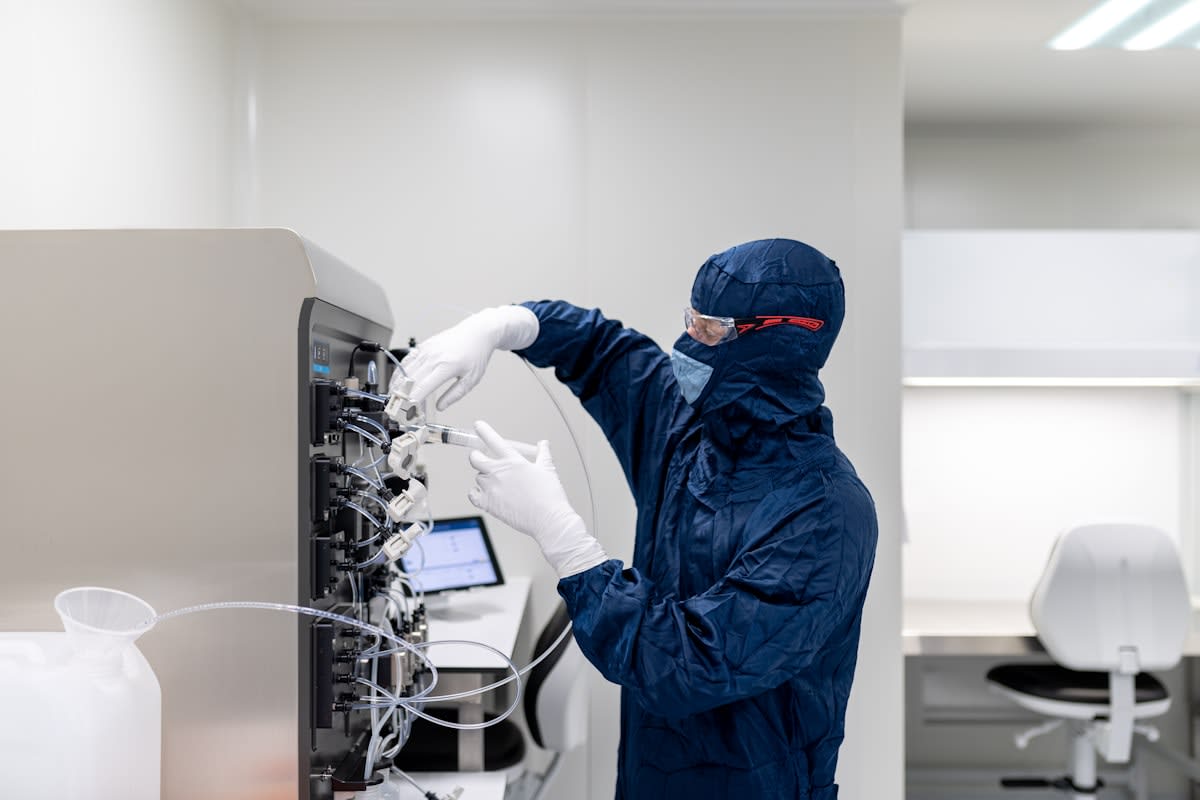
Does this represent a mere expansion of capacity, or something more predatory? In the world of biomanufacturing, capacity is a weapon. When a region can provide the culture media, the diagnostic reagents, and the quality-testing services in a single ecosystem, it reduces the cost of innovation for every player in that orbit. This isn't a slow growth curve; it is a deliberate attempt to make the region the indispensable node in the global bio-economy. The integration of quality systems directly into the manufacturing process means that the 'Made in Asia' label is transitioning from a sign of cost-savings to a mark of technical precision.
| Sector | Strategic Focus | Key Technical Driver | Regional Anchor |
|---|---|---|---|
| Regenerative Medicine | Upstream Raw Materials | PIC/S GMP Compliance | Taiwan (Zhubei) |
| Energy Storage | Chemical Supply Loops | Thermal Runaway Mitigation | Malaysia (Sepang) |
| Agri-Biotech | Methane Reduction | AWD/MRL Compliance | Vietnam/Indonesia |
| Financial Architecture | Equity Advisory | Regulatory Strategy | Singapore |
The logic of molecular ownership extends beyond the pharmacy and into the battery. The 4th ASEAN Battery Technology Conference, scheduled for August 19 to 21, 2026, in Sepang, Malaysia, highlights a critical realization. Policy frameworks are useless without engineering realities. The focus has shifted toward the actual physics of cell manufacturing and the chemistry of thermal runaway mitigation. This is where biomanufacturing principles intersect with energy: the management of complex chemical reactions at scale within a specific environmental context.
Thermal Management and Chemical Loops
Manufacturing batteries in the tropics is not the same as manufacturing them in a temperate climate. Atmospheric and thermal management are the primary technical hurdles for energy storage systems in Southeast Asia. By localizing the chemical supply loops, Malaysia and its neighbors are not just reducing shipping costs; they are optimizing the chemistry for the environment. This is a high-stakes game of chemical engineering where the winner is whoever can prevent thermal runaway in 35-degree Celsius humidity. It is a specialized form of industrialization that creates a moat against competitors who simply copy-paste Western factory designs.
The Engineering Moat
The industrial deficit in ASEAN is being addressed not through subsidies, but through the engineering of localized chemical supply loops and thermal management systems tailored for tropical climates.
This obsession with the 'loop'—whether it is a chemical loop for batteries or a supply loop for cell media—reveals a broader regional strategy. They are building closed-circuit ecosystems. When you control the raw material, the manufacturing process, and the quality testing, you eliminate the external dependencies that have historically left the region vulnerable to global shocks. It is a move toward total vertical integration at the molecular level.
But the most subversive application of this biological dominance is happening in the rice paddies of Vietnam and Indonesia. For too long, agricultural biotechnology was seen as the domain of a few Western conglomerates. Now, companies like Rize are treating the rice paddy as a biological system to be optimized. Since rice paddies represent 10-12% of global methane emissions, the ability to reduce this footprint while maintaining yield is a massive economic opportunity.
The Methane Equation
Rize is not just helping farmers; it is creating a new class of bio-commodity. By implementing Alternate Wetting and Drying (AWD) and MRL compliance, they are transforming the biological output of 50,000 hectares. The goal is not modesty; it is scale. Expanding to 150,000 farmers across 300,000 hectares by the end of the decade is an industrial-scale biological intervention. This allows the region to export 'low-emission rice' to high-premium markets in Europe, Canada, and Australia.
- Current reach: 17,000 smallholder farmers across 50,000 hectares in Vietnam and Indonesia.
- Target: 150,000 farmers across 300,000 hectares by 2030.
- Economic lever: Shipping low-emission rice to premium markets in Europe, Canada, and Australia.
- Environmental impact: Addressing the 10-12% of global methane emissions produced by conventional flooding.
This is biomanufacturing in its most raw form. It is the application of biological precision to an existing landscape to create a higher-value product. The farmer becomes a technician in a massive, decentralized bioreactor. This synergy between environmental necessity and market opportunity is exactly how Southeast Asia is quietly dominating the field. They are not building shiny new labs in a vacuum; they are integrating biotechnology into the existing economic fabric of the region.
None of this happens without the financial plumbing. Singapore continues to act as the strategic brain, providing the equity advisory and regulatory strategy needed to fund these capital-intensive shifts. The recent strengthening of FGS Global's Singapore business, with appointments focused on equity advisory and financial transactions, suggests that the capital markets are beginning to price in this bio-industrial shift. Singapore is the place where the technical capabilities of Taiwan and Malaysia are translated into investable assets.
The Strategic Architecture
When you step back, the pattern is unmistakable. The region is attacking three distinct but related fronts: the materials for the next generation of medicine, the chemistry for the next generation of energy, and the biological optimization of the next generation of food. Each of these requires the same core competency: the ability to manufacture complex, high-precision biological or chemical products at scale. This is no longer about cheap labor. It is about the mastery of the molecular supply chain.
The world may continue to focus on the geopolitical tension surrounding semiconductors, but the real quiet revolution is biological. By the time the West realizes that the upstream materials for cell therapies and the chemical loops for batteries are concentrated in ASEAN, the moat will already be too deep to cross. The region is not just participating in the bio-economy; it is designing the architecture that will sustain it.