
The Great Compute Migration
The geography of artificial intelligence in Southeast Asia is being rewritten in real-time. For years, Singapore acted as the undisputed gateway, the sole destination for any hyperscale investment entering the region. That monopoly is ending. This week, the announcement of a major upgrade to the Malaysia-Cambodia-Thailand (MCT) subsea cable network signals a definitive move. Symphony Communication and Nokia are not just increasing bandwidth; they are building the nervous system for an AI-driven economy that no longer needs to route everything through a single city-state. Why now? Because the physical requirements of generative AI have outpaced the available real estate and power of the old guard.
Twelve months ago, the conversation focused on cloud adoption and basic digitalization. Today, the dialogue has shifted to raw power and thermal management. We are seeing a transition where data center investment is no longer about hosting websites, but about sustaining massive GPU clusters. As AI-driven demand transforms the region into a global data center battleground, the balance of power is swinging toward Malaysia, Indonesia, Thailand, Vietnam, and the Philippines. These nations are no longer just 'emerging markets' for software; they are becoming the physical foundations for the world's most power-hungry technology.
The Industrialization of AI
The business of tech has stopped being about coding and started looking like oil refining. It is now a game of heavy industry, where success is measured in gigawatts and cooling capacity rather than lines of Python.
Cables as the New Borders
Connectivity is the primary constraint on inference speed. The partnership between Symphony Communication and Nokia to upgrade the MCT subsea cable is a strategic strike to eliminate latency. By boosting capacity and sustainability, this project reinforces Thailand's position as a hub for AI and cloud-driven services. When the cable capacity increases, the cost of moving massive datasets drops, making it viable to place inference hubs further south. This isn't just a technical upgrade; it is a land grab for digital sovereignty.
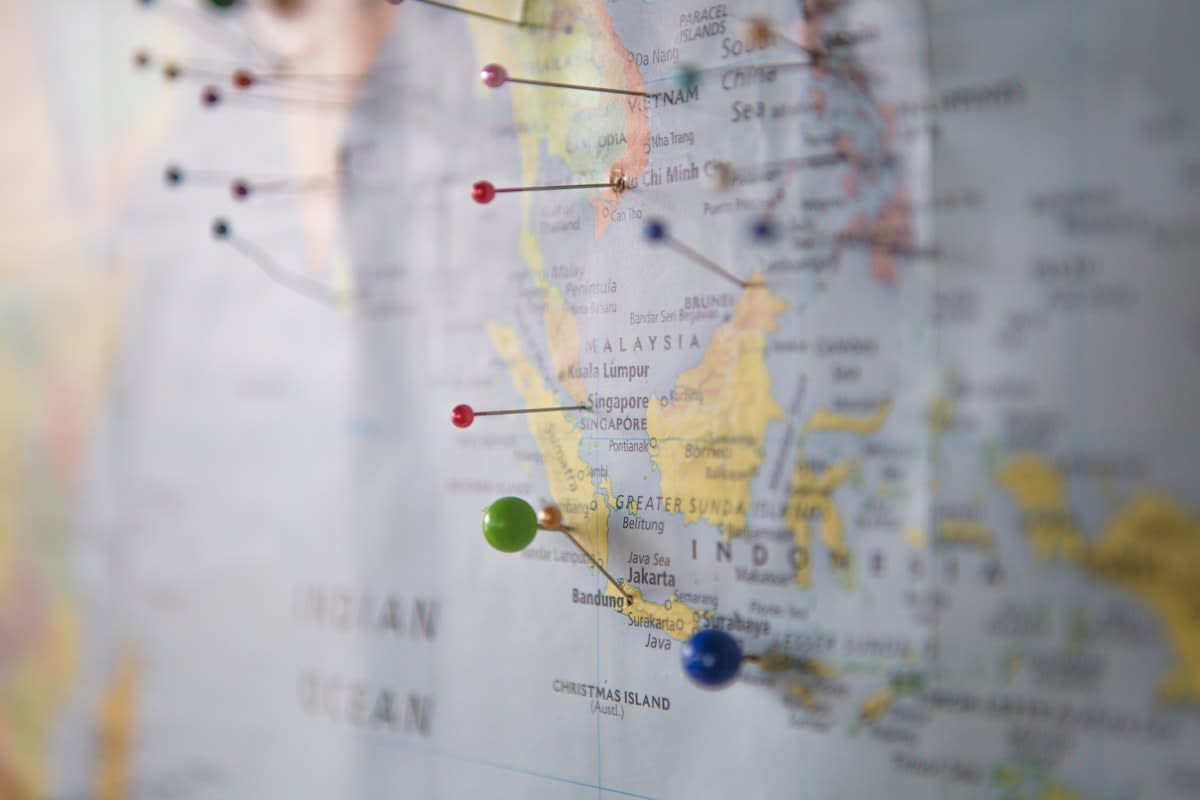
Who benefits from this? Hyperscale customers who require unmatched reliability and capacity. The MCT network allows these giants to distribute their workloads across multiple jurisdictions, reducing the risk of a single point of failure. It also allows them to take advantage of lower land and energy costs in Thailand and Malaysia while maintaining the connectivity speeds previously only available in Singapore. The map is being redrawn not by policy, but by the physical requirements of the H100 and its successors.
The Energy Hunger of the Hyperscalers
Consider the scale of the demand. Meta recently announced the expansion of its flagship AI data center, pushing its peak power needs to a staggering five gigawatts. To put that in perspective, that is the equivalent of several medium-sized cities. When a single company requires that much energy, the 'premium hub' model of Singapore collapses. You cannot fit five gigawatts of power into a land-constrained island without compromising the entire grid. This is why the 'battleground' has moved to Malaysia and Indonesia, where land is plentiful and energy grids can be expanded more aggressively.
| Hub Attribute | Legacy Hub (Singapore) | Emerging South Hubs (MY, TH, ID) |
|---|---|---|
| Power Availability | Highly Constrained | Expanding/High Potential |
| Land Cost | Premium/Prohibitive | Competitive |
| Connectivity | Global Primary | Rapidly Improving (e.g., MCT Cable) |
| AI Focus | Management/Financials | Inference/Heavy Compute |
This shift is happening while investors are beginning to question the pace of hyperscaler spending. The Philadelphia Semiconductor Index, which tracks the engines of this boom like Nvidia and TSMC, saw a near-18% drop from its June peak. Does this mean the build-out is slowing? Hardly. It means the market is correcting for efficiency. The move south is an efficiency play. By relocating the heavy lifting of AI inference to regions with cheaper power and land, companies like Amazon, Google, and Microsoft can sustain their spending without destroying their margins.
The $305 Billion Marketing Catalyst
The demand isn't just coming from the tech giants; it's coming from the enterprise level. Ken Research reports that the Asia-Pacific AI in marketing market is projected to reach USD 305.35 billion by 2030. This growth is fueled by a 28.3% CAGR on enterprise AI adoption. We are talking about a massive wave of predictive analytics, automated content generation, and AI-powered customer engagement. These applications require low-latency inference—the process of running a trained model to get a result—which is exactly why the infrastructure is moving closer to the end-users in Southeast Asia.

When thousands of enterprises in Indonesia and Vietnam start integrating large language models into their CRM and digital marketing platforms, the latency of routing that data to a distant hub becomes a business liability. The market is demanding local compute. This creates a virtuous cycle: higher enterprise demand drives more hyperscale investment, which leads to better infrastructure like the MCT cable, which in turn lowers the barrier for more enterprises to adopt AI.
The Security Debt of Speed
However, this rapid southward expansion is creating a dangerous gap. Lava Labs warns that AI data centers are being built faster than they can be secured. Traditional data center designs are fundamentally inadequate for the unique risks posed by AI infrastructure. The rush to claim territory in Malaysia and Thailand has led to a 'build first, secure later' mentality. The result is a new scale of risk where the physical and digital hardening of these sites—what Lava Labs calls 'Forge'—is lagging behind the deployment of the hardware.
"AI infrastructure introduces new security risks that traditional data center designs were never built to handle. The danger is that those building this new type of data center, at speed, do not readily understand the difference."— Lava Labs Report
Can the region afford this security debt? As these hubs become critical to national economies, they also become prime targets. The transition to 'heavy industry' tech means that a security breach is no longer just a data leak; it is a potential disruption of national compute capacity. The challenge for the emerging hubs in the south will be to implement the 'Forge' requirements—hardening the metal beneath the model—without slowing down the deployment that is currently driving their economic growth.
Ultimately, the movement of inference hubs is a reflection of the new laws of physics in the AI age. When compute requires gigawatts of power and massive cooling, the 'premium' of a financial center like Singapore is outweighed by the 'utility' of a resource-rich neighbor. The MCT cable is the first of many such arteries that will bleed the monopoly of the old hubs and distribute the power of AI across the southern latitudes of Southeast Asia.