I burned all my tokens researching how to save tokens
Source Entity
Hacker News
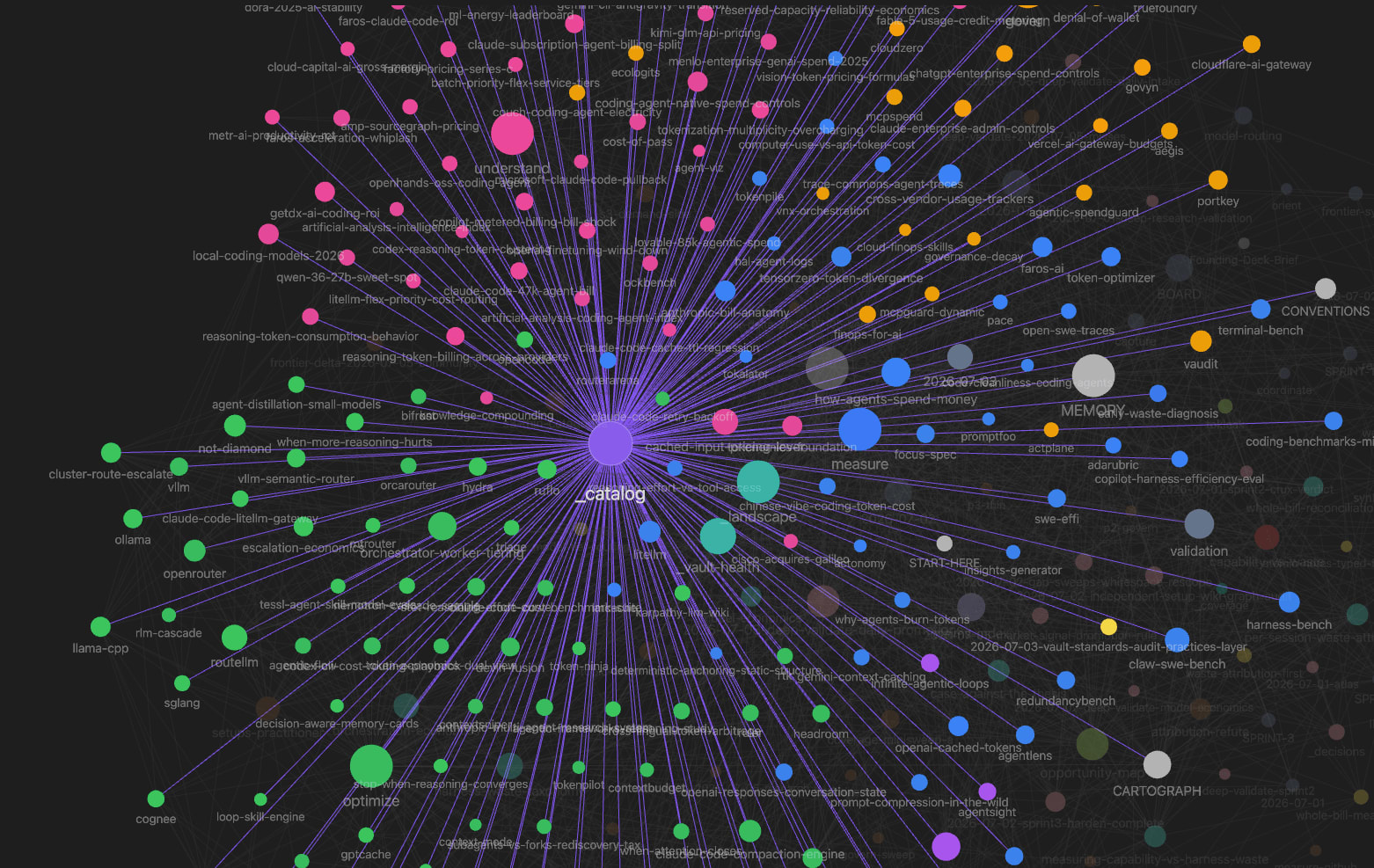
A researcher at Quesma details the financial risks of autonomous AI agents after a deep research pipeline exhausted a Claude Max 5x plan in 30 minutes. The study focuses on optimizing 'tokenomics' to balance high-trust knowledge bases with sustainable AI spend governance.
The Cost of Intelligence: Analyzing Agentic Tokenomics
In a revealing account from Quesma, a researcher highlights a critical friction point in the current AI landscape: the volatile economics of autonomous AI agents. The core of the issue is illustrated by a striking incident where a "deep research" agent pipeline—designed to build a trustworthy knowledge base—exhausted the entire limit of a Claude Max 5x subscription plan in a mere 30 minutes. This event underscores the inherent danger of "agentic coding," where autonomous loops can lead to exponential token consumption far beyond the expectations of a standard user.
Understanding the 'Tokenomics' Struggle
At the heart of this research is the concept of "tokenomics," or the economic study of how tokens (the basic units of text processed by LLMs) are consumed and billed. The author's objective was to map the entire ecosystem of token management, focusing specifically on how teams govern their AI spend and which monitoring systems are effective. This is a pivotal area of study because as AI moves from simple chat interfaces to autonomous agents that can search, reason, and iterate independently, the potential for "token burn" increases significantly. The gap between a theoretical optimization mentioned in a research paper and the real-world application of that optimization is often where the most significant financial losses occur.
The Paradox of Agentic Research Pipelines
Agentic pipelines differ from traditional LLM interactions because they operate in loops. To build a knowledge base that is actually "trustworthy," an agent must cross-reference sources, verify facts, and refine its output. However, this iterative process creates a feedback loop of token usage. In the case of the Quesma researcher, the initial setup lacked the necessary guardrails to prevent this run-away consumption. The transition from a state of "burning tokens" to achieving a sustainable setup suggests that the primary challenge in agentic AI is not just the intelligence of the model, but the orchestration and governance of the process.
Bridging the Gap Between Trust and Cost
One of the most significant takeaways from the narrative is the dual pursuit of "cost and trust." In the realm of AI agents, there is often a trade-off: higher trust (achieved through more rigorous verification and deeper research) typically requires more tokens, thereby increasing costs. The researcher's goal was to break this correlation by using existing subscriptions more efficiently. By focusing on optimization tools and governance practices, it is possible to maintain high-fidelity outputs without the financial volatility associated with unchecked agentic loops.
Broader Implications for AI Governance
This scenario reflects a broader industry trend where organizations are struggling to move AI from experimental prototypes to production-ready systems. The "deep research" failure serves as a cautionary tale for any organization deploying autonomous agents. Without robust monitoring systems and a clear understanding of spend governance, the cost of maintaining an AI-driven knowledge base can quickly become unsustainable. The shift toward finding practices that work in the "real world" indicates a maturing market where efficiency is becoming as important as capability.
Conclusion: Toward Sustainable Autonomy
Ultimately, the journey from depleting a high-tier subscription in 30 minutes to establishing a controlled, trust-based pipeline represents the current evolution of AI implementation. By analyzing the economics of AI agents and implementing strict governance, developers can leverage the power of agentic coding without risking financial exhaustion. The success of such a system depends on the ability to balance the depth of research with the reality of token limits, ensuring that AI remains a tool for productivity rather than a liability of cost.