Mitch McConnell's staff under fire over hospital photos: ‘Should put out video…’
Source Entity
Latest News: Today's Latest News Headlines from India & World | Hindustan Times | Hindustan Times
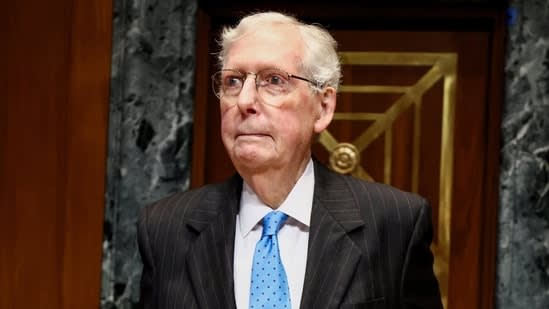
Senator Mitch McConnell's staff faced backlash after releasing hospital photos intended to prove his well-being during a prolonged absence. Critics, including activist Laura Loomer, alleged the images were AI-generated or staged, fueling online conspiracy theories.
Digital Skepticism and the 'Proof of Life' Controversy
In an era defined by the rapid proliferation of synthetic media, the efforts of Senator Mitch McConnell's staff to reassure the public of the 84-year-old Republican's health have instead ignited a firestorm of skepticism. Following a prolonged absence from Capitol Hill, which naturally sparked speculation regarding his condition, his team released two photographs from the hospital intended to serve as "proof of life." However, rather than calming the waters, these images became a lightning rod for accusations of manipulation, reflecting a growing trend where official communications are met with immediate suspicion.
The Anatomy of the Visual Evidence
The controversy centers on two specific images. The first depicts Senator McConnell in a hospital bed alongside his wife, Elaine Chao, while holding a current newspaper—a traditional method used to verify the date and authenticity of a photo. The second image shows the Senator standing up. While these photos were intended to provide a transparent update on his status, they were immediately scrutinized by digital sleuths and political opponents. The juxtaposition of these images led to a row over their authenticity, with critics questioning the timing and composition of the shots.
AI Allegations and the 'Liar's Dividend'
The backlash was intensified by far-right activist and Donald Trump loyalist Laura Loomer, who publicly decried the first photograph as being AI-generated. This accusation highlights a critical shift in the political landscape: the emergence of the "liar's dividend," where the mere existence of AI technology allows bad actors or skeptics to dismiss genuine evidence as fake. By labeling a real photograph as synthetic, critics can maintain a narrative of suspicion regardless of the evidence provided, making it increasingly difficult for public figures to manage their image during health crises.
Conspiracy Theories and Visual Inconsistencies
Beyond the AI claims, conspiracy theorists focused on the perceived continuity between the two photos. Specifically, observers pointed out that McConnell appeared to be wearing the same shirt in both the bed-ridden and standing photos. In the hyper-analytical environment of social media, such small details are often weaponized to suggest that the photos were staged or that the sequence of events was fabricated. This level of scrutiny demonstrates how modern political communication is no longer just about the message, but about surviving a forensic audit by an online audience.
The Intersection of Age and Political Transparency
This incident underscores the heightened sensitivity surrounding the health of elderly leaders in the U.S. government. At 84, Senator McConnell's health is a matter of significant political interest, given his influential role in the Republican party. The staff's decision to release photos rather than a live video or a detailed medical report created a vacuum of information that was quickly filled by speculation. This event reflects a broader tension between a leader's right to medical privacy and the public's demand for transparency regarding the fitness of high-ranking officials.
Conclusion: The Shift Toward Video Verification
The fallout from these photos suggests that static imagery is no longer sufficient for "proof of life" in the age of deepfakes. The call for the staff to "put out video" indicates a shift in public expectation; as AI becomes more adept at mimicking still photos, only raw, unedited video evidence is seen as credible. Moving forward, political entities will likely need to adopt more rigorous verification standards to combat misinformation and restore trust in official health updates.
Verification Required?