Can spirituality heal a divided world? An expert explains how ancient wisdom offers timeless lesson
Source Entity
Latest News: Today's Latest News Headlines from India & World | Hindustan Times | Hindustan Times
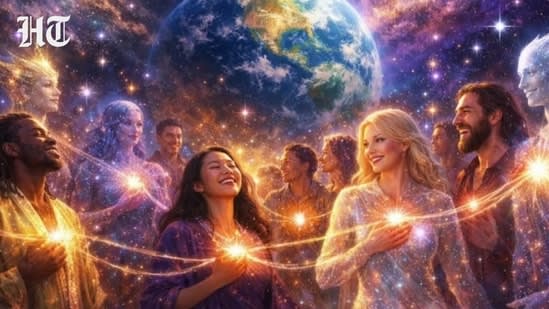
Ancient spiritual wisdom, specifically the principle of Vasudhaiva Kutumbakam, is being highlighted as a remedy for modern global division and loneliness. Experts suggest that cultivating internal peace and self-awareness is essential for navigating today's hyper-connected yet fragmented society.
The Crisis of Modern Connectivity and the Spiritual Pivot
In an era defined by unprecedented digital connectivity, paradoxically, humanity faces a deepening crisis of alienation. While global communication networks have shrunk physical distances, they have simultaneously fostered environments of heightened anxiety and social fragmentation. The assumption that technological advancement would inherently lead to a more harmonious global society has been challenged by the reality of digital echo chambers and the erosion of collective empathy. As experts point out, the solution to this contemporary malaise may not be found in the next iteration of software, but in a return to the foundational principles of self-awareness and introspection.
The Relevance of Vasudhaiva Kutumbakam
Central to this discourse is the ancient Sanskrit concept of Vasudhaiva Kutumbakam, which translates to "the world is one family." This philosophical framework serves as a profound antidote to the tribalism and isolationism prevalent in modern political and social spheres. By viewing the global population as a singular, interconnected unit, this wisdom challenges the zero-sum mentality that often drives international and interpersonal conflict. The application of this concept is not merely a nostalgic exercise; it is a pragmatic approach to fostering global citizenship and collective responsibility in a fractured age.
Internal Peace as a Foundation for Global Stability
Vivek Singhal, Founder of the Dominion Dharma & Destiny Institute, emphasizes that lasting peace is an internal endeavor rather than an external mandate. This perspective aligns with a wide array of historical wisdom traditions, including the Upanishads, the Bhagavad Gita, Stoicism, Buddhism, and Taoism. These disparate traditions converge on a singular truth: the external state of the world is a reflection of the collective internal state of its inhabitants. If the individual remains trapped in cycles of anxiety and ego-centric competition, the global stage will inevitably reflect that instability.
Bridging Ancient Wisdom with Modern Challenges
Integrating these ancient lessons into a secular, high-tech society requires a shift in how we define 'progress.' While modern society prioritizes efficiency and material output, spiritual traditions prioritize the cultivation of the human spirit. The challenge lies in translating these timeless lessons—such as mindfulness, detachment from transient outcomes, and the recognition of universal interconnectedness—into actionable practices for a digital generation. By developing greater self-awareness, individuals can move from reactive states of existence to proactive, empathetic participation in society.
Future Trends and the Need for Conscious Living
As we look toward the future, the trend toward 'conscious living' is likely to gain momentum as a response to the failures of hyper-materialism. The ongoing struggle for mental health and social cohesion suggests that technology alone cannot satisfy the fundamental human need for purpose and belonging. The intersection of spiritual wisdom and modern life will likely become a critical focal point for societal development, as individuals increasingly seek to balance technological utility with the ancient, essential need for inner stillness and human connection. Ultimately, healing a divided world requires a paradigm shift that recognizes the internal self as the primary site of global transformation.
Verification Required?