
The decision to pour $265 billion into the Arizona desert represents a calculated redistribution of technological risk. This is not a mere expansion of capacity or a quest for tax incentives. By committing an additional $100 billion to the United States, TSMC is executing a governance action that grants Washington a physical stake in sub-2nm production. Why does this matter? Because the world’s most advanced manufacturing is moving across jurisdictions, and the friction of that movement is not a rounding error. It is a cost that will eventually permeate every layer of the artificial intelligence stack, from the silicon wafer to the price of a single API call.
Financial performance currently masks the underlying tension of this geographic migration. In the second quarter of 2026, TSMC reported a staggering net income of NT$706.56 billion, roughly $22.36 billion, marking a 77.4% increase from the previous year. Revenue climbed 36% to NT$1.27 trillion. These numbers suggest a company at the zenith of its power, yet the margin dilution accompanying the US expansion is an inevitable tax on sovereignty. CEO C.C. Wei has been clear: the drive for 2nm mass production and advanced packaging fabs is a direct response to the insatiable demand from leading US customers who can no longer afford the fragility of a single-point-of-failure supply chain.
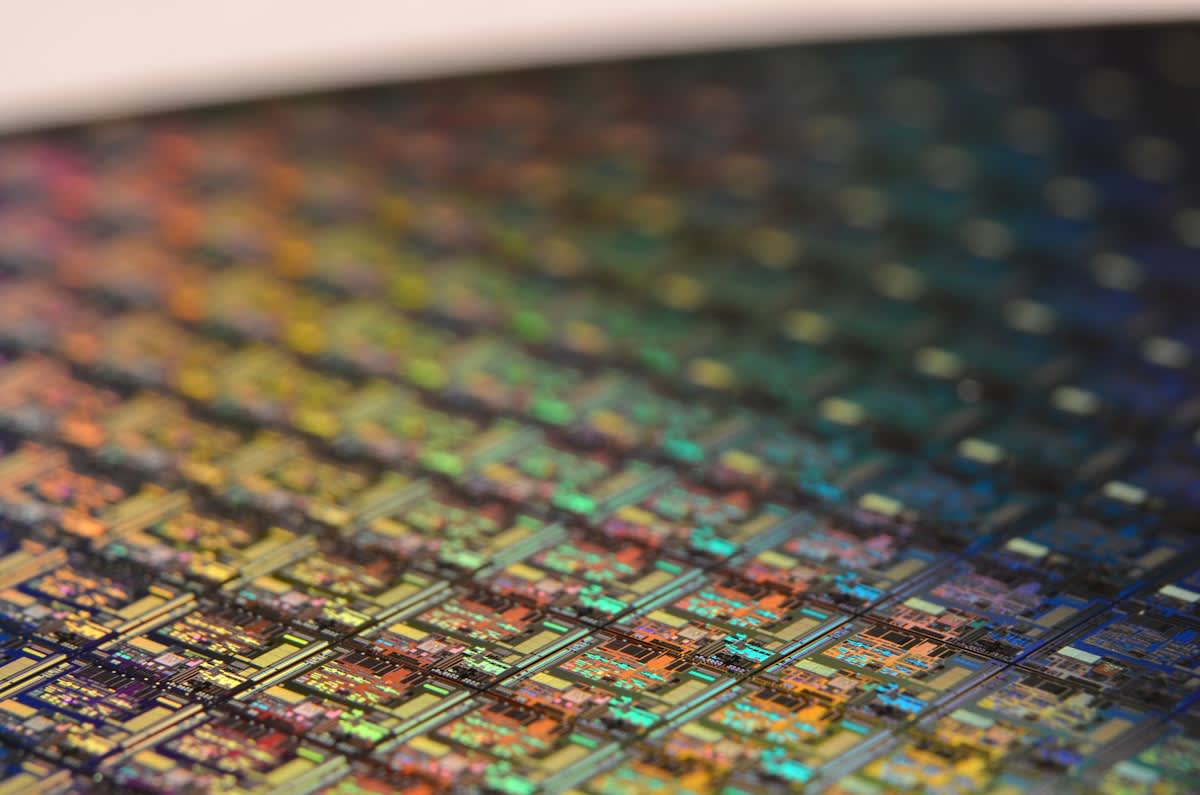
The 2nm Ramp and the Revenue Mix
To understand the stakes, one must look at the revenue distribution across process nodes. Currently, the 5-nanometer and 3-nanometer nodes are the workhorses, accounting for 33% and 30% of wafer revenue, respectively. Together with 7-nanometer technology, these finer nodes comprise 77% of TSMC's total revenue. However, the real story lies in the 3% of revenue currently attributed to the 2-nanometer node. This tiny percentage is the seed of the next decade's power structure. As the ramp-up for 2nm mass production begins, the ability to manufacture these chips on US soil changes the leverage dynamics between the foundry and the state.
| Process Node | Revenue Contribution (%) | Strategic Role |
|---|---|---|
| 2nm | 3% | Next-Gen Growth / Sovereignty Focus |
| 3nm | 30% | Current Leading Edge |
| 5nm | 33% | Primary AI Workhorse |
| 7nm | 11% | Established High-Performance |
| Other | 23% | Legacy / Specialized |
Does the market fully grasp the implications of this distribution? Most analysts focus on the 77% profit jump, but the strategic intelligence is in the 3%. The transition to 2nm is not just a shrink in size; it is an increase in complexity that requires advanced packaging technologies like CoWoS. By building these facilities in Arizona, TSMC is not just exporting hardware; it is exporting the entire ecosystem of high-end computation. This ensures that the most advanced AI chips remain tethered to US jurisdiction, effectively pricing the cost of security into the hardware itself.
The Sovereignty Tax
The Arizona commitment is a hedge against geopolitical volatility. By diversifying the location of 2nm production, TSMC reduces the risk of a total global AI blackout while simultaneously increasing the cost of production for its customers.
The financial cost of this diversification is already appearing in the guidance. While Q2 saw a gross margin of 67.7% and an operating margin of 60.3%, the third-quarter projections show a slight dip, with gross margins expected between 65% and 67%. This contraction is the tangible evidence of the 'sovereignty tax.' Building four new fabrication plants in North Phoenix is vastly more expensive than expanding existing sites in Taiwan. The margin dilution is a price the company is willing to pay to maintain its status as the indispensable partner to the US government and its tech giants.
"This is a game-changer that cements AZ as the global epicenter of semiconductor manufacturing & innovation."— Governor of Arizona
Such political rhetoric often obscures the clinical reality of the situation. Arizona is not becoming an innovation hub in the sense of original research; it is becoming a fortress of execution. The real innovation continues to happen in the labs, but the ability to scale that innovation into millions of 2nm wafers is where the actual power resides. When the governor speaks of a 'game-changer,' he is referring to the physical presence of the world's most critical technology within US borders, reducing the reliance on a fragile maritime supply chain in the Pacific.
This shift forces a reconfiguration of the entire American semiconductor supply chain. It is no longer enough to design the chips in California or Texas; the entire support structure—from ultra-pure chemicals to specialized gases—must now coalesce around the Phoenix hub. The $265 billion investment acts as a gravitational well, pulling in secondary and tertiary suppliers. This creates a localized cluster of extreme technical capability that is nearly impossible to replicate elsewhere, effectively creating a monopoly of geography.

Pricing the AI Token
We must ask: who ultimately pays for this security? The answer is the end-user. The cost of moving 2nm production to the US is astronomical, and TSMC will not absorb these costs indefinitely. As the company's capex guide rises to accommodate the Arizona plants, those expenses will be reflected in the pricing of the wafers sold to Nvidia and Apple. These costs then flow upward, increasing the capital expenditure required to build AI data centers, which eventually manifests as higher prices for AI tokens. Sovereignty, it turns out, has a per-token price.
The reliance on 2nm technology creates a precarious dependency. If the Arizona ramp-up faces delays, the global AI trajectory slows. If it succeeds, the US gains a strategic buffer. The current revenue of $40.2 billion in Q2 proves that the demand is durable, but the sustainability of this growth depends on the successful operationalization of these new sites. The market is watching whether TSMC will further increase capital spending, as this is the primary indicator of confidence in the long-term durability of AI demand.
The redistribution of manufacturing is not a sign of Taiwanese decline, but rather a sophisticated survival strategy. By embedding itself into the American industrial heartland, TSMC makes itself too vital to fail in both jurisdictions. It transforms from a foreign vendor into a domestic utility. This is the ultimate hedge: becoming a physical part of the state it serves. The 2nm node is the vehicle for this transformation, providing the technical edge that makes this geographic gamble a necessity rather than a choice.
- Total US investment reaches $265 billion, the largest foreign direct investment in US history.
- 2nm node currently accounts for 3% of wafer revenue but is the focus of future mass production.
- Q2 net income rose 77.4% to $22.36 billion, providing the capital buffer for US expansion.
- Gross margins are projected to dip slightly to 65-67% in Q3 due to the costs of diversification.
- Advanced packaging (CoWoS) is being integrated into the US strategy to support AI demand.
In the final analysis, the move to 2nm in Arizona is a signal that the era of globalized, cost-optimized supply chains has been replaced by a regime of security-optimized supply chains. The efficiency of the 'just-in-time' model is being traded for the resilience of the 'just-in-case' model. While this ensures that the AI revolution will not be halted by a single geopolitical event, it also ensures that the cost of intelligence will remain high. The ledger has been rewritten, and the price of admission is now measured in hundreds of billions of dollars.