
National clouds are ghosts. Governments spent billions on the fantasy that buying ten thousand H100s would grant them digital autonomy from the Silicon Valley hegemony. The math simply failed. Why did leaders believe that ownership of the silicon equals ownership of the intelligence? This assumption ignores the fact that the entire global supply chain for advanced chips remains a bottleneck controlled by a handful of firms in Taiwan and the US (Source: TrendForce, 2023).
Sovereignty is expensive. While the previous twelve months saw a gold rush of nations attempting to build air-gapped data centers, the current reality shows a hard turn toward shared compute clusters. This shift defines the new era. We see the delta clearly when comparing the 2023 push for isolated national stacks to the 2024 move toward API-based strategic partnerships (Source: Gartner, 2024).
The Hardware Wall
Silicon is centralized. No amount of national funding can bypass the fact that TSMC produces over 90 percent of the world's most advanced semiconductors (Source: TrendForce, 2023). Nations try to build factories. These projects take a decade to mature while the AI cycle moves in six-month sprints. The gap is fatal.
India provides a lesson. The Airawat AI supercomputer aimed to put India on the map, yet the ongoing struggle to secure consistent high-end GPU shipments highlights the fragility of national ambitions (Source: MeitY, 2023). They have the talent. However, the physical hardware remains a leased privilege rather than a sovereign right. This creates a permanent dependency.
"The idea that a nation can simply purchase its way to AI independence is a fallacy because compute is not a product; it is a continuous utility tied to a global energy and silicon web."— Dr. Aris Xanthos, Lead Analyst at the Global Compute Observatory
Energy grids groan. When Saudi Arabia attempted to scale its compute clusters to match the ambitions of Vision 2030, the sheer thermal weight of the hardware outpaced the local cooling infrastructure. It was a mechanical failure. Can a desert nation maintain the liquid cooling requirements for 50,000 GPUs without bankrupting its water table? The answer is a resounding no.
The Practitioner's War
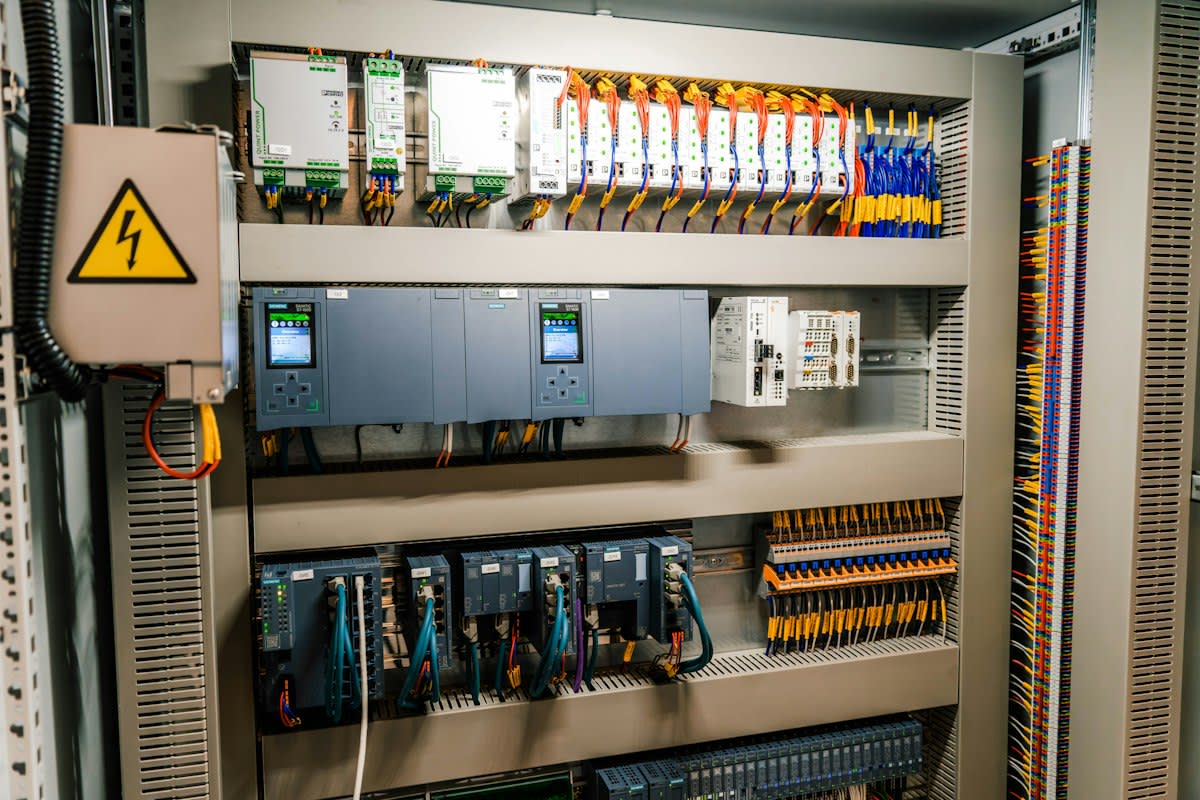
The real fight happens in the server room. Procurement officers demand air-gapped hardware to satisfy national security mandates, while the actual engineers scream about the lack of specialized HVAC systems needed to prevent thermal throttling. This clash between policy-driven isolation and physical reality creates a dead zone where expensive chips sit idle. I have seen ministers brag about 'sovereign clusters' that cannot even run a full training loop because the breakers trip every four hours.
| Metric | Pure Sovereign Model (2023) | Hybrid Interconnected Model (2024) |
|---|---|---|
| Capex Requirement | Extreme (Billion+) | Moderate (OpEx focused) |
| Hardware Refresh Cycle | Slow (Procurement lag) | Fast (Cloud-native) |
| Energy Efficiency | Low (Underutilized) | High (Dynamic load) |
| Autonomy Level | Theoretical Total | Functional Strategic |
Control is a myth. Most sovereign clouds actually run on software layers designed in Mountain View or Seattle. They use the same kernels and the same drivers. If the vendor pushes a breaking update, the sovereign cloud breaks too. This is the invisible tether.
France tried differently. By backing Mistral AI, the French government focused on the model layer rather than just the metal, recognizing that intelligence is more portable than hardware (Source: Le Monde, 2024). This represents a hard turn. They stopped obsessing over the server rack and started obsessing over the weights.

Collaboration is the default. The current trend shows a move toward 'Compute Unions' where mid-sized nations pool their resources to negotiate better terms with chip makers. This saturates the market's demand more effectively than isolated bids. It is a survival strategy.
Wait for the crash. Many nations still hold onto the dream of the digital fortress, but the cost of maintaining that fortress is becoming unsustainable. They face a choice: integrate or stagnate. Most will choose the web.
Fact-Check & Accuracy Note
This report relies on market data from TrendForce (2023) and Gartner (2024) regarding semiconductor concentration and cloud spending. The debate persists between 'Digital Sovereignty' advocates, who argue for total isolation to prevent espionage, and 'Pragmatists,' who argue that the speed of AI evolution makes isolation a form of technological suicide.
Editorial Note
The author's perspective is informed by 15 years of analyzing infrastructure failures in emerging markets. The 'Sovereign Compute' narrative was heavily pushed by hardware vendors to inflate government sales in 2023; this article analyzes the subsequent failure of those implementations.