
The Operational Pivot: June 2026
June 2026 will be remembered as the month AI geopolitics stopped being theoretical and became visibly operational. For years, the world obsessed over parameters, token windows, and the emergent properties of large language models. That era is dead. The decisive shift this month was not triggered by a single breakthrough model or a lone chip shipment, but by a convergence of three critical control surfaces: model access, infrastructure capacity, and cyber governance. We are witnessing a fundamental migration of power where the strategic signal is now unmistakable: the AI advantage has shifted from those who can build the best model to those who control the conditions under which model capability is accessed, secured, powered, and converted into institutional capacity.
Why does this shift matter right now? Because the operational layer is where the real friction exists. Look at the reported distillation allegations involving Anthropic and Alibaba, or the intricate U.S. handling of access to Anthropic’s Fable and Mythos models. These aren't just corporate disputes; they are the first skirmishes in a war over the software supply chain. When OpenAI opted for a staggered release of GPT-5.6, it wasn't merely a product rollout strategy—it was a calculated exercise in governing model capability once it is exposed through commercial interfaces. The question is no longer 'Can the AI do this?' but 'Who is allowed to let the AI do this, and on whose hardware?'
The Strategic Shift
The focus has moved from the 'Brain' (the model) to the 'Body' (the compute and power). In 2025, the winner was the one with the smartest algorithm. In 2026, the winner is the one with the most stable grid and the most secure silicon pipeline.
This shift creates a brutal new reality for nations and corporations alike. If you rely on a foreign cloud provider, you aren't just renting compute; you are outsourcing your sovereign intelligence. The realization that model capability can be throttled, gated, or revoked overnight has sparked a global scramble for sovereign compute. We are seeing a move toward 'Neoclouds'—entities that don't just provide hosting, but control the entire vertical stack to ensure that their institutional capacity cannot be switched off by a foreign directive.
The 5GW Surge: Meta and the Neocloud Ambition
While some analysts suggested that datacenter growth was hitting a ceiling, the actual procurement data tells a different story. Take Meta, for example. In the first six months of 2026 alone, Meta has contracted over 5GW of capacity across Cloud and Colocation services. This staggering figure doesn't even account for their accelerating self-build activities. To put this in perspective, the narrative that US datacenters are delayed is effectively debunked when you realize that just two massive datacenters can account for half of the capacity some headlines claim is the total under construction.
| Metric | Meta 2026 H1 Status | Strategic Implication |
|---|---|---|
| Contracted Capacity | 5GW+ | Aggressive shift toward Neocloud autonomy |
| Procurement Speed | Accelerating | Disregard for perceived industry slowdowns |
| Monetization Path | RecSys, Bedrock-type tokens | Diversification of compute utility |
Meta's appetite for compute isn't just about keeping pace with the likes of OpenAI or Anthropic. It is about creating a massive surplus of supply that can be monetized across Recommendation Systems (RecSys) and 'token as a service' models. By building an infrastructure that rivals a sovereign state's capacity, Meta is effectively insulating itself from the volatility of the compute market. They are not just building a tool; they are building the factory that makes the tools, ensuring they can pivot their compute resources to whatever agentic software work becomes the dominant paradigm of the late 2020s.
The Geography of Power: From Talent to Terawatts
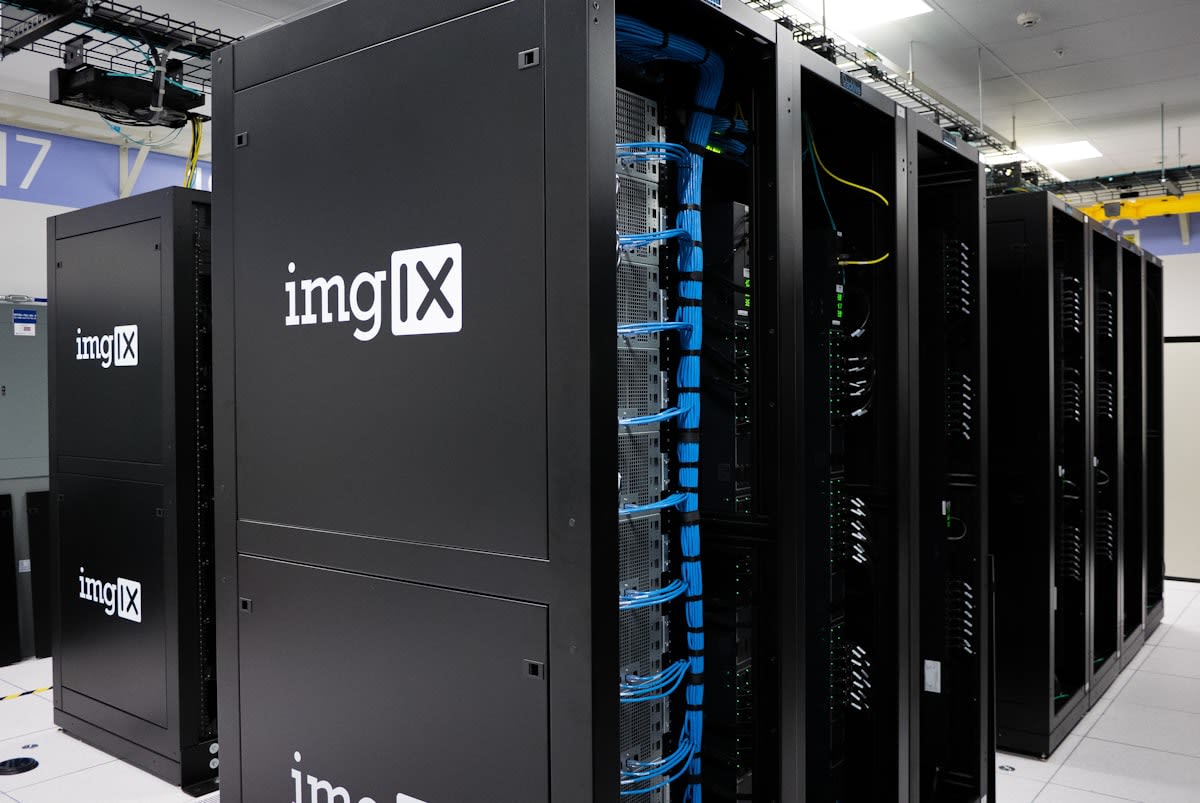
For decades, the tech industry operated on the assumption that clusters form around talent. We built hubs in Silicon Valley, Tel Aviv, and Bangalore because that is where the engineers were. But the AI boom has rewritten the map. Today, the internet's physical footprint is being redrawn not by where the PhDs live, but by where the electricity is cheap and plentiful. The new capitals of global computing are not university towns, but regions with massive grid capacity: the cornfields of Iowa, the suburbs of Dublin in Ireland, and the industrial stretches of Northern Virginia.
This migration is clinical and unsentimental. In Northern Virginia, Iowa, and Ireland, the proximity to a power substation is now more valuable than proximity to a research lab. Interestingly, some of these regions have become data-center capitals despite existing power shortages, simply because the infrastructure for expansion is more viable there than elsewhere. The result is a decoupling of intellectual creation and physical execution; the model might be designed in a sleek office in San Francisco or Paris, but it lives and breathes in a humming warehouse in the American Midwest.
"Where the internet physically lives is being redrawn, and what's pulling it isn't engineers — it's electricity."— Silicon Canals Analysis
This shift toward power-chasing has created a precarious environmental paradox. To meet the insane timelines of the AI build-out—where the energy demand of a new campus can equal that of 100,000 homes appearing in a single year—developers are turning to 'behind the meter' energy generation. These are private turbines and generators often powered by fossil fuels, bypassing the slower process of grid modernization. While the AI is presented as a futuristic leap, its physical foundation is increasingly reliant on carbon-heavy, legacy energy sources.
- Behind-the-meter generation: Immediate power via fossil fuel generators to bypass grid delays.
- Sustainable materials: A push toward using timber and low-carbon concrete in datacenter construction to offset emissions.
- Local impact: Energy and water consumption are concentrated in specific municipalities, creating local environmental stress.
- Lifecycle tracking: A growing need to monitor emissions from the design phase through to decommissioning.
The European Resistance: Mistral and Sovereign Tech
While the U.S. giants fight a war of attrition over gigawatts, Europe is pursuing a different path: surgical sovereignty. Mistral AI has become the focal point of this movement. Following directives that led Anthropic to pull models offline, the call for tech that reduces reliance on the U.S. has reached a fever pitch. But Mistral is not trying to be the 'OpenAI of Europe.' That would be a losing game of scale. Instead, they are focusing on the deployment layer.
Mistral's strategy is a masterclass in infrastructure adaptation. Rather than forcing customers into a centralized cloud, they deploy their models and agent platforms directly onto the infrastructure of their enterprise customers. Through their Forge platform, they allow companies to use their own data for training on their own hardware. This removes the 'kill switch' risk. By empowering the customer to own the hardware layer, Mistral is providing a blueprint for how mid-sized powers can maintain AI capability without needing to build a 5GW datacenter of their own.

Is this approach sustainable against the raw power of the Neoclouds? Perhaps. The value is no longer in the size of the model, but in the trust and control of the deployment. When a government or a critical industry refuses to send its data to a foreign server, the 'best' model becomes irrelevant; the only model that matters is the one that can run locally on secure hardware. Mistral is betting that the world—especially the 'rest of the world'—will prioritize this autonomy over a marginal increase in reasoning capability.
The New Operational Reality
As we move deeper into 2026, the divide between the 'model-rich' and the 'compute-sovereign' will widen. We are seeing the emergence of a new world order where the ability to secure a power grid and a chip supply chain is the ultimate form of diplomacy. The staggered release of GPT-5.6 and the governance of commercial interfaces are just the beginning. The real battle is being fought in the basements of datacenters in Iowa and the energy grids of Ireland.
The resilience of the next decade will be defined by this hardware layer. Those who can decouple their intelligence from foreign clouds—whether through massive scale like Meta or strategic deployment like Mistral—will be the ones who survive the operationalization of AI geopolitics. The race is no longer about who can think the fastest, but who has the power to keep the lights on.