
Data is gone. The industry has consumed the usable internet, leaving engineers to feast on the digital scraps of their own creation. This cycle creates a feedback loop where models learn from synthetic outputs rather than human insight. Such recursive training inevitably erodes the nuance of human language, replacing genuine creativity with a sterilized, probabilistic average. We are witnessing the dawn of digital inbreeding.
Meta is betting on brute force to bridge this gap. Alexandr Wang claims the upcoming Watermelon model has finally caught up to OpenAI's GPT-5.5. It requires an order of magnitude more compute than the previous Avocado model to achieve this parity. Throwing more hardware at the problem merely masks the underlying scarcity of high-quality human text. While the compute clusters in the US hum with power, the chips they rely on remain subject to the volatile production cycles of Hsinchu.
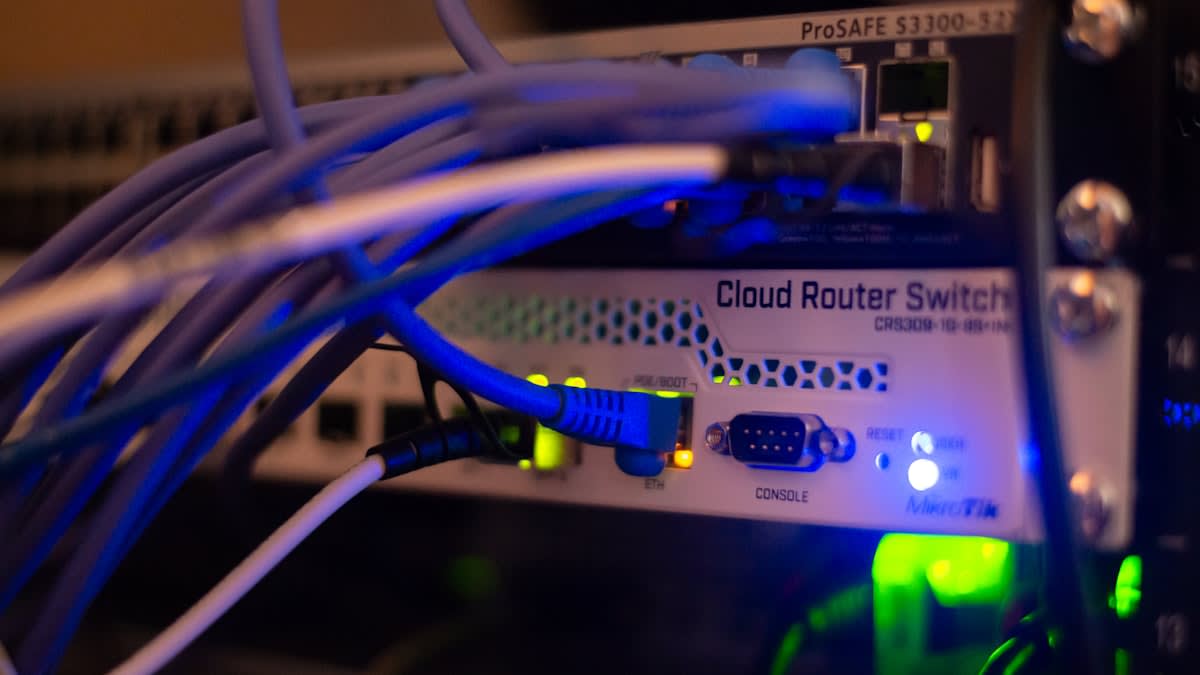
The Interaction Loop Trap
Interaction data is the new gold for those who cannot find new books to scrape. Base44 launched Base1 using tens of millions of real user interactions on the Wix platform to power its vibe-coding workflow. Reinforcement learning now pushes these models toward more varied and distinctive UI generations. Reliance on platform-specific behavior restricts the model to a narrow, curated reality. This approach creates a closed circuit where the AI learns not how humans think, but how humans interact with a specific software interface.
Specialized datasets offer a temporary reprieve from the general decay. Nature reports indicate that LLMs are now automating clinical drug reports and transportation model calibration. These frameworks use multi-phase prompts to ensure coherence and reproducibility across different model variants. Dependence on these tools creates a hidden vulnerability where the human expert stops verifying the source. When the AI generates the report and the next AI summarizes it, the original clinical truth vanishes.
The Quality Gap
The industry is substituting quality for quantity. By using 'tens of millions' of interactions, companies like Base44 are building models that are experts in a vacuum, incapable of generalizing beyond the specific UX patterns they were fed.
Robotics faces a harder wall because the physical world does not yield data as cheaply as a web crawler. X Square Robot is valued over RMB 20 billion because it builds its own data infrastructure. The QUANXTA Zero Series exists specifically to collect and process training data for the WALL family of embodied AI models. Physical environments in factories or care facilities provide messy, non-linear data that defies simple synthetic generation. This creates a stark divide between the 'cloud AI' that can hallucinate a poem and 'embodied AI' that must survive a power outage in Lagos without crashing into a wall.
| Model | Primary Data Source | Compute Scale | Strategic Goal |
|---|---|---|---|
| Watermelon | Synthetic/Web | 10x Avocado | GPT-5.5 Parity |
| Avocado | Web/Human | Baseline | Initial Muse Spark |
| Base1 | User Interactions | Optimized | UI Generation |
| WALL | Physical/QUANXTA | High (Embodied) | General Robotics |
Compute is a blunt instrument. Increasing the scale of training by an order of magnitude, as Meta has done with Watermelon, does not add new information to the universe. It only allows the model to memorize the existing, degrading data more efficiently. This creates a plateau where the cost of marginal improvement becomes exponential. We are spending billions of dollars to make models that are slightly better at predicting the next token of a synthetic sentence.
The Sovereignty Risk
Access is a geopolitical weapon. Anthropic's Fable 5 was suddenly cut off for foreign users by the US government with almost no notice. Businesses now require backup plans to avoid total operational collapse when their primary intelligence layer vanishes. Centralized intelligence is a liability in a fragmented world. A company that relies on a single frontier model is essentially renting its brain from a landlord who can evict them at any moment.
"When I lost access to Fable, I had a backup plan... this incident was a big reminder that you absolutely need a plan B — and even a plan C."— Founder, AI-driven Web Design Business
Fragmented access forces a regression toward smaller, local models. These local models are often trained on the outputs of the larger models they are replacing. This is the ultimate poisoning: the student learns from a teacher who is just a slightly more polished version of the student. The result is a loss of the 'edge cases' and rare insights that define human genius. We are trading the depth of human knowledge for the convenience of an API.
Recursive loops create a sterile output. When Base44 uses reinforcement learning to push Base1 toward 'varied' UI generations, it is not discovering new design principles. It is merely exploring the mathematical boundaries of its existing training set. True innovation requires an external stimulus—a human mistake, a physical constraint, or a cultural contradiction. AI cannot innovate because it has no skin in the game.
Operational failure is the only honest metric. The WALL family of models from X Square Robot must deal with the friction of the real world. Data collected via the QUANXTA Zero Series is expensive and slow. This is the opposite of the synthetic data dream. The future of AI belongs to those who can capture the physical world, not those who can most efficiently hallucinate a version of it.
Cost-benefit analysis is failing. Meta's aggressive talent blitz and compute spend are designed to maintain a facade of progress. If Watermelon only matches GPT-5.5 while using ten times the energy, the efficiency is plummeting. This trajectory is unsustainable. We are building a cathedral of compute on a foundation of evaporating data.
The Inevitable Decay
Intelligence requires entropy. Human language is full of errors, slang, and irrational leaps that provide the necessary friction for learning. Synthetic data is too clean. By removing the noise, we are removing the signal. The models of 2026 are becoming echoes of echoes, losing the ability to surprise us.
Strategic failure is now baked into the architecture. The reliance on multi-phase prompts, as seen in the Nature reports, is a workaround for the model's inability to maintain complex reasoning on its own. We are adding scaffolding to a building that cannot stand. The more we rely on these prompts to 'fix' the output, the more we acknowledge the decay of the underlying model.
Survival depends on data purity. The companies that survive will be those that secure proprietary, human-generated data streams. X Square Robot is the blueprint for this survival. By owning the hardware and the data collection process, they bypass the poisoned well of the open internet. Everything else is just a race to the bottom of the compute bucket.
Finality is approaching. The era of 'more data equals more intelligence' is over. We have reached the limit of what can be scraped. Now, we must decide if we are content with an artificial intelligence that is merely a mirror of its own average, or if we are willing to invest in the expensive, messy reality of the physical world.