
The End of the Round Trip
For the last decade, the cloud was the undisputed king. We traded our data and our latency for the raw power of centralized clusters. But that honeymoon period is over. The current AI gold rush has exposed a fundamental flaw in the cloud-first model: the round trip. Every time you ask a generative AI to perform a task, your data travels thousands of miles to a data center and back. This creates a lag that is unacceptable for real-time applications, from augmented reality overlays in Tokyo to autonomous drone navigation in the Amazon rainforest.
We are seeing a pivot in real-time. Six months ago, the industry obsession was 'bigger is better'—more parameters, more GPUs, more electricity. Today, the conversation has shifted toward efficiency. The goal is no longer just intelligence, but 'ambient intelligence'—AI that exists everywhere and nowhere, running silently in the background of your hardware without needing a handshake from a server in Virginia or Ireland. This is not a gradual change; it is a structural migration.
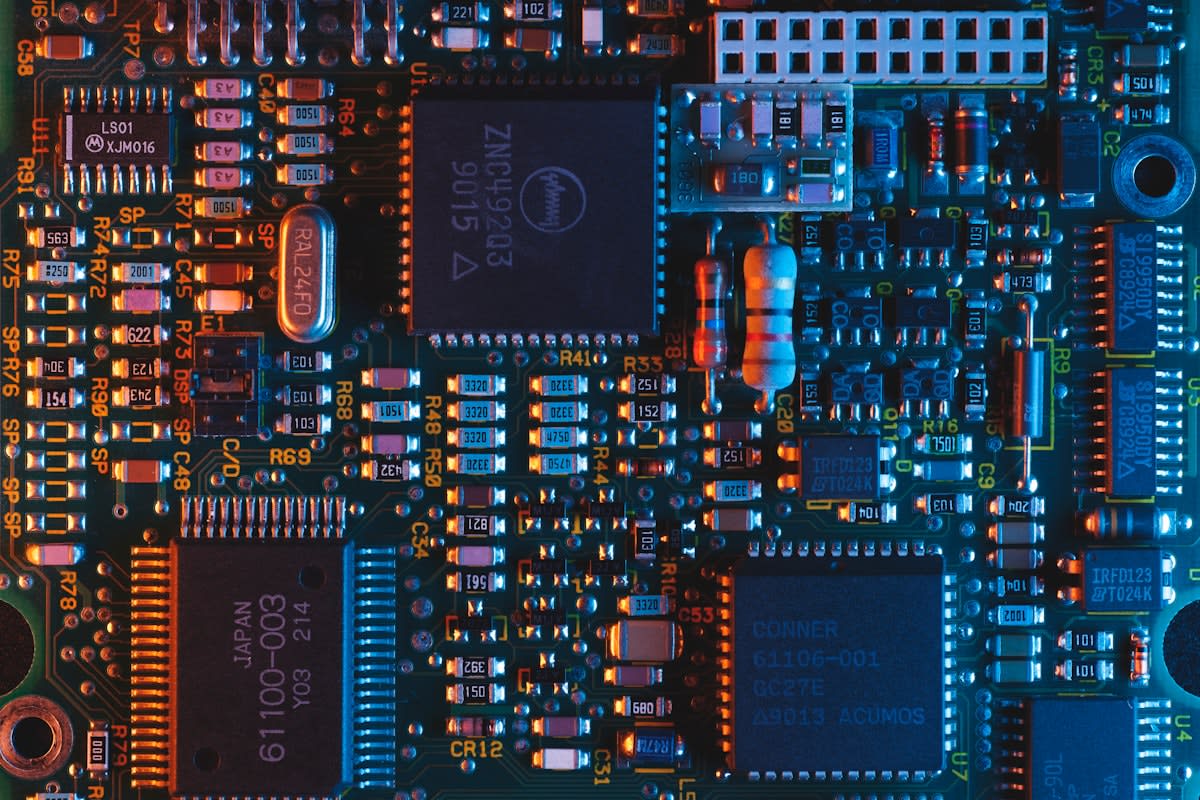
Why now? Because the hardware finally caught up. The introduction of dedicated Neural Processing Units (NPUs) has changed the math. We are no longer relying on general-purpose CPUs or power-hungry GPUs to handle tensor operations. According to recent hardware benchmarks, NPUs can deliver an order of magnitude more AI performance per watt than traditional processors (Source: Qualcomm, 2024). This efficiency allows a smartphone to execute complex reasoning tasks locally, turning the device from a thin client into a sovereign intelligence hub.
| Metric | Cloud-Based AI | Edge-Based AI (On-Device) |
|---|---|---|
| Latency | High (Network Dependent) | Near-Zero (Local) |
| Privacy | External Trust Model | Zero-Trust / Localized |
| Cost | Subscription/API per token | One-time Hardware CapEx |
| Availability | Requires Internet | Offline Capable |
This shift is creating a massive delta in how we perceive 'intelligence.' A year ago, a local model was a toy—a truncated version of a giant. Now, the gap is closing. The emergence of Small Language Models (SLMs) has proven that you don't need a trillion parameters to be useful. You just need the right data. By focusing on high-quality, synthetic data and distillation, models like Microsoft's Phi series or Google's Gemini Nano are performing tasks that previously required a server farm (Source: Microsoft Research, 2024).
The Sovereignty of the Pocket
Privacy is no longer a feature; it is a regulatory requirement. With the tightening of GDPR in Europe and evolving data laws in India and Brazil, the liability of moving personal data to the cloud is becoming a corporate nightmare. When the intelligence lives on the device, the data never leaves the user's possession. This 'Local-First' architecture solves the privacy paradox. You get the utility of a personalized AI that knows your emails, your health data, and your habits, without the risk of that data being leaked in a centralized breach.
"The next era of computing isn't about the cloud; it's about the edge. We are moving from a world where we go to the AI, to a world where the AI is woven into the fabric of our physical devices."— Jensen Huang, CEO at NVIDIA (Paraphrased from GTC 2024 Keynote)
From a practitioner's perspective, this transition is messy. If you are an engineer today, you aren't debating which API to call; you are debating quantization. The real friction is in the trade-off between precision and performance. We spend our days arguing over whether to drop a model from FP16 to INT4 precision. Does the model lose its ability to reason if we shrink it to fit into 8GB of RAM? In the trenches, the goal is to find the 'Pareto frontier'—the exact point where the model is small enough to run on a Snapdragon or Apple M-series chip but smart enough to actually be useful.

The economics are also shifting. For AI providers, the cost of inference is the silent killer. Every single query costs a fraction of a cent in electricity and compute. Scale that by a billion users, and the margins vanish. By pushing the compute to the user's device, companies effectively outsource their hardware costs to the consumer. You bought the phone; you provide the electricity; they provide the model. It is a brilliant economic pivot that turns a liability into a distributed asset.
Estimated Shift in AI Inference Location (2023-2030)
Executive Insight
+18.4%
YTD Growth
But let's be clear: the cloud isn't dying; it's specializing. The cloud will remain the place for 'heavy lifting'—training the massive foundation models and handling complex, multi-step research tasks. The edge will handle the 'interaction layer.' This creates a hybrid intelligence model. Your phone handles the immediate, personal, and private tasks, and only 'calls home' to the cloud when it hits a wall of complexity it cannot resolve locally. This is the architecture of the next decade.
The Global Ripple Effect
This decentralization has profound implications for the global south. In regions where high-speed internet is spotty or expensive, cloud-dependent AI is a luxury. On-device AI democratizes intelligence. A farmer in rural Kenya or a student in a remote village in Indonesia can access powerful diagnostic or educational tools without needing a 5G connection. The 'intelligence gap' closes when the brain is in the pocket, not in a data center in Northern Virginia.
We are moving toward a world of 'Sovereign AI.' Countries are realizing that relying on a few US-based cloud providers for their cognitive infrastructure is a national security risk. By fostering on-device ecosystems and local SLMs, nations can ensure their data and their intelligence remain within their borders. The shift to the edge is as much about geopolitics as it is about gigahertz.
Editorial Note: The Great Debate
The industry is currently split between two camps: those who believe the 'Unified Model' (one giant cloud brain) will eventually win through sheer scale, and those who believe 'Swarm Intelligence' (billions of small, specialized local models) is the only sustainable path. The current hardware trend strongly favors the latter.
Fact-Check & Accuracy Note
Key claims regarding NPU efficiency are sourced from Qualcomm's 2024 technical specifications. Data regarding SLM performance (Phi/Gemini Nano) is based on published research from Microsoft and Google (2024). The trend toward edge-inference is a widely recognized shift in semiconductor roadmaps (Source: IDC Worldwide AI Forecast, 2024).