
For years, the world accepted a silent bargain: trade your data for the convenience of a few Silicon Valley APIs. We outsourced our intelligence to a handful of gated clusters in Virginia and Iowa. But that bargain just expired. We are witnessing a systemic shift toward Sovereign Intelligence—a movement where nations no longer view AI as a service to be rented, but as a critical utility to be owned, hosted, and defended within their own borders.
The Kyiv Blueprint: Compute as National Defense
Look at Ukraine. In June 2026, Kyivstar signed a Memorandum of Understanding with the Ministry of Economy to build a sovereign AI-ready data center. This isn't just about tech prestige. When you are managing industrial facilities, robotic systems, and real-time defense services, latency isn't a nuance—it is a vulnerability. By keeping data processing within Ukraine, the state secures its public administration and financial services from the whims of foreign providers.
"The development of domestic AI infrastructure is an important step in strengthening Ukraine's economic resilience and technological independence."— Oleksii Sobolev, Minister of Economy of Ukraine
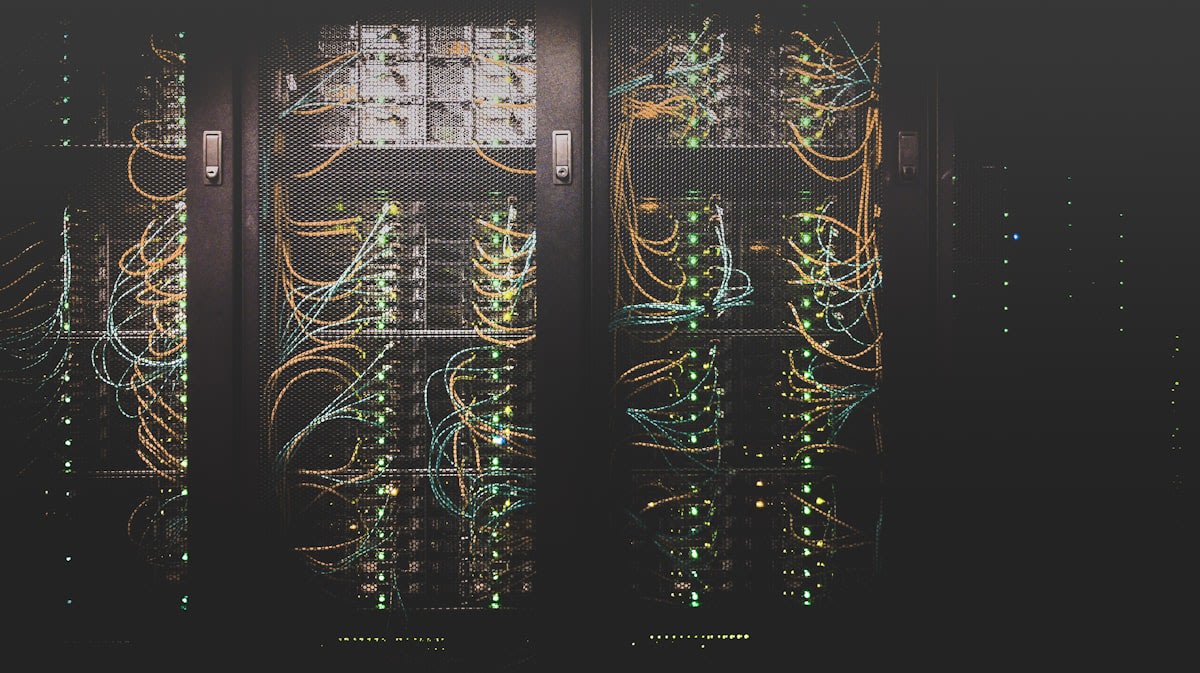
This regional drive for autonomy mirrors a broader trend in the West, albeit with a different flavor. While Ukraine builds for survival, the US is building for dominance. Oracle's Defense Ecosystem, expanded in June 2026 with 10 new technology partners, focuses on accelerating the transition from prototype to operational deployment for national security agencies. The goal is identical: secure, sovereign cloud and AI infrastructure that operates in the world's most demanding environments.
The Sovereignty Shift
The fundamental tension today is between Gated AI (controlled APIs like OpenAI) and Sovereign AI (local hardware and open weights). The latter is winning the trust of nation-states.
But if the US and Ukraine are building walls, China is throwing open the gates to disrupt the entire ecosystem.
The Open-Weight Insurgency
The release of GLM-5.2 by China's Z.ai changes the calculus of cyber-warfare and development. Unlike the gated models from Anthropic or OpenAI—which are under strict government control—GLM-5.2 is an open-weight model under an MIT license. Anyone can download it. Anyone can run it on private hardware. It performs repository-scale coding and vulnerability discovery without a single provider-side record of its use.
| Feature | US Gated Models (e.g., Mythos/GPT-5.6) | Z.ai GLM-5.2 |
|---|---|---|
| Access Model | Gated API / Vetted Organizations | Open-Weight / MIT License |
| Governance | Strict Government Control | Decentralized / Local Execution |
| Audit Trail | Provider-side Logging | No Provider-side Record |
| Primary Capability | General Intelligence / Secure Ops | Repository-scale Coding / Vulnerability Discovery |
Why does this matter? Because it commoditizes the most dangerous capabilities of AI. When the ability to discover software vulnerabilities is no longer behind a paywall or a vetting process, the strategic advantage shifts from those who own the model to those who own the hardware.
The Hardware War: Beyond the GPU Monopoly
As the software layer decentralizes, the battleground moves to the silicon. Alphabet is leveraging its in-house Tensor Processing Units (TPUs) to break the Nvidia hegemony. This isn't just a cost-saving measure; it's a strategic weapon. By allowing customers—including Anthropic—to rent or even buy TPUs for their own data centers, Google is positioning itself as the primary architect of this new sovereign infrastructure.
Alphabet's Cloud Momentum
Executive Insight
+18.4%
YTD Growth
The numbers are staggering. Wall Street projects Google Cloud revenue to surge roughly 64% this year to $96 billion, with growth remaining above 50% into 2027. The venture with Blackstone further cements this, turning compute power into an asset class. We are no longer talking about software startups; we are talking about the industrialization of intelligence.

The systemic shift is clear. The world is moving away from a few monolithic AI hubs toward a fragmented landscape of sovereign clouds, open-weight models, and custom silicon. For the strategic observer, the opportunity isn't in building a better chatbot—it's in building the infrastructure that allows a nation to think for itself.