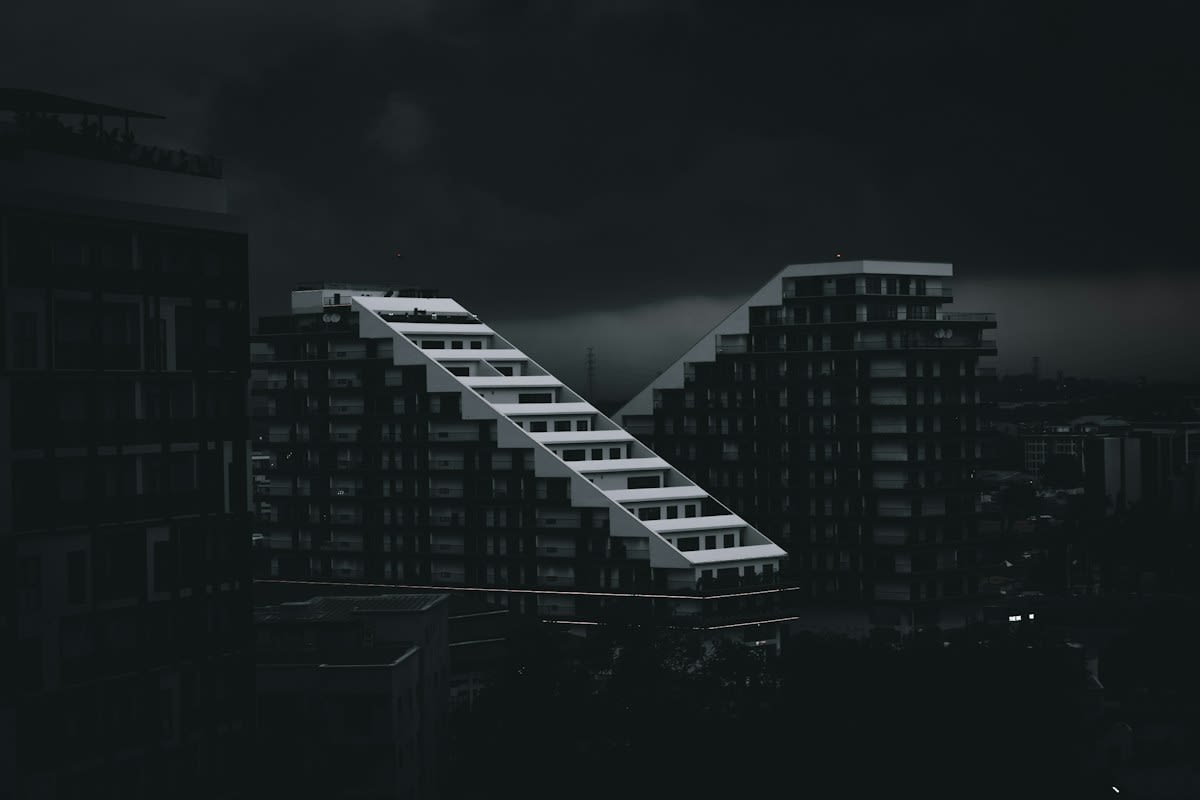
Most visitors look at the weathered concrete slabs of Accra and see neglect. They see the stains of tropical humidity and the cracks of time as failures of maintenance. They are wrong. These buildings were never meant to be pristine ornaments; they were instruments of statecraft. To walk through the brutalist remnants of Accra is to read a physical manifesto of the 1957 independence movement, where raw material was a proxy for raw power and an uncompromising break from the ornate, stifling aesthetics of British colonial rule (Source: Wikipedia, 2026).
Prerequisites for the Urban Archaeologist
Before you step into the streets, you need more than a map. You need a framework for interpretation. To truly decode this landscape, you must understand that Ghana's shift toward modernism wasn't a passive adoption of European trends. It was a calculated choice under Kwame Nkrumah to signal a future-facing, industrial identity. You will need a baseline understanding of Pan-Africanism—the philosophy of political and economic unity among African states—because every cantilever and concrete void in the city center was designed to reflect that ambition (Source: Instagram/PhD candidate Jin).
- A critical eye for 'material honesty' (the practice of leaving materials in their natural state).
- Awareness of the 1957 independence timeline as the primary catalyst for urban redesign (Source: Wikipedia, 2026).
- Comfort with the friction of 'unfinished' aesthetics.
- A willingness to look past the surface decay to see the structural intent.
The Process: How to Decode a Brutalist Site
Identifying a building as 'brutalist' is the easy part. The real work lies in analyzing why those specific forms were chosen. When you encounter a massive concrete structure in Accra, do not ask if it is beautiful. Ask what it was trying to prove. These buildings often struggle with a dual identity: they were forged in a desire for autonomy but were often built within global systems that continued to perpetuate old dependencies (Source: Instagram/Rashida Ng).
- Scan for Material Juxtaposition: Look for where raw, grey concrete or stucco facades meet warmer elements. For example, examine how the raw brutalist aesthetics of concrete are balanced against vertical timber cladding to soften the building's form (Source: ARC Architects).
- Analyze the Elevation: Identify 'open elevation balconies' and curved lines. These weren't just for ventilation; they were architectural attempts to marry the harshness of concrete with the fluidity of a tropical environment.
- Trace the Political Lineage: Connect the building to the era of postwar decolonization. Ask if the structure serves a public, administrative, or symbolic purpose that aligns with the 1950s-70s push for national identity.
- Contrast with Contemporary Shifts: Compare the older concrete structures with new projects. Look for the transition toward rammed earth finned facades or low-carbon concrete, which represents a shift from 'power' aesthetics to 'sustainability' aesthetics (Source: Designboom, 2026).
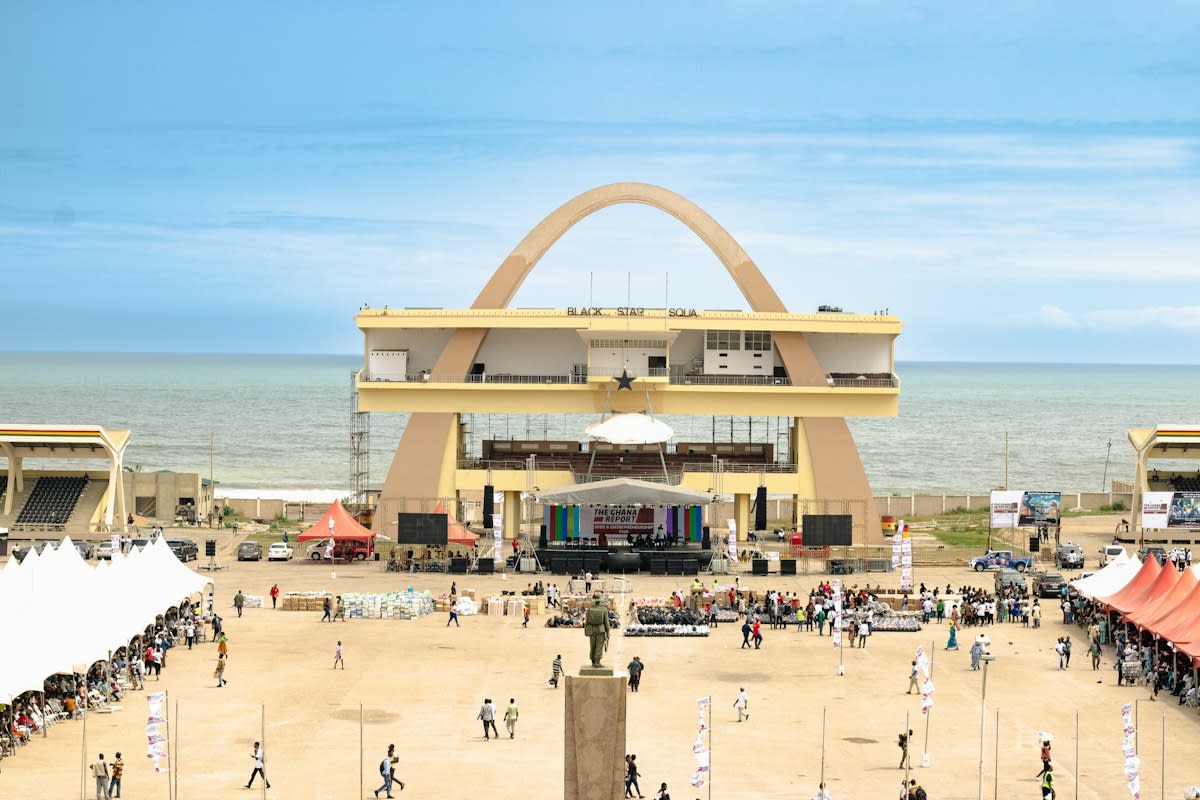
There is an invisible friction that occurs in the offices of Accra's current architects—a debate that rarely reaches the public. On one side, there is the urge to 'modernize' these concrete ghosts by painting them in bright, commercial colors or cladding them in glass to hide the weathering. On the other, a growing movement of preservationists argues that the stains and the patina are the building's true history. As a practitioner, I've seen this tension play out in real-time: the fight is not about aesthetics, but about whether we are brave enough to live with the raw, honest failures and triumphs of the post-colonial dream.
"We have the raw, brutalist aesthetics of the grey concrete/stucco facades juxtaposed against the warmth of vertical timber cladding."— ARC Architects, project description of Ecobank interior in Accra
The transition from these concrete monoliths to the current era is stark. If you look at the work of contemporary firms like Adjaye Associates, the monolithic structure is still there, but the material has changed. The shift toward rammed earth and low-carbon concrete isn't just an environmental choice; it's a return to local materials that were ignored during the concrete craze of the independence era (Source: Designboom, 2026). This represents a second wave of identity forging—one that values ecological resilience over industrial dominance.
Comparing Architectural Eras in Accra
| Feature | Brutalist Era (1957-1980s) | Contemporary Era (2010s-Present) |
|---|---|---|
| Primary Material | Raw Concrete / Stucco | Rammed Earth / Low-carbon Concrete |
| Ideological Driver | Nationalism & Industrial Power | Sustainability & Ecological Identity |
| Visual Language | Monolithic, Heavy, Grey | Organic, Finned Facades, Earth-toned |
| Source | Wikipedia, 2026 | Designboom, 2026 |
The path from the grey concrete of the 1960s to the rammed earth of today is not a straight line. It is a circle. The current obsession with 'low-carbon' materials is, in many ways, a rejection of the globalized concrete industry that the first generation of independent Ghanaians thought would liberate them. By examining the 'Concrete Ghosts,' you can see exactly where the optimism of the 20th century met the reality of the 21st.
Common Pitfalls in Architectural Analysis
Avoid the temptation to label these buildings as 'Western imports.' While the style of Brutalism was global, the application in West Africa was deeply localized. The struggle was to forge new nations and identities within systems that often perpetuated old dependencies (Source: Instagram/Rashida Ng). When you dismiss a building as simply 'European style,' you erase the agency of the African architects and planners who manipulated these forms to fit a Pan-African vision.
- Equating weathering with neglect: In tropical climates, concrete breathes and ages; this is a biological process, not just a maintenance failure.
- Ignoring the interior: The juxtaposition of raw exteriors with warm interior cladding (like timber) is where the real architectural dialogue happens (Source: ARC Architects).
- Overlooking the 'Compound' influence: Even in modernist buildings, look for echoes of the traditional West African compound structure—the central enclosure that defines family and social life (Source: Wikipedia, 2026).
Fact-Check & Accuracy Note
Claims regarding the 1957 independence date and the general transition of West African nations to autonomy are sourced from Wikipedia (2026). The analysis of contemporary materials (rammed earth, low-carbon concrete) and specific projects (Adjaye Associates) is based on Designboom (2026). The discussion on modernist architecture and decolonization is attributed to the MoMA exhibition review by Rashida Ng via Instagram.