
The Obsolescence of the Trophy Trip
The bucket list was once a social currency, a curated inventory of global landmarks that signaled a traveler's worldly sophistication. We treated geography like a checklist, ticking off the Eiffel Tower or the Great Wall as if they were badges of achievement. But this model of prestige-based travel is fracturing. The modern traveler no longer seeks the general prestige of a country; they seek the specific narrative of a scene. Why visit 'Italy' when you can visit the exact coastline of Taormina in Sicily, as seen in The White Lotus? The shift is subtle but systemic: we are moving from the era of the landmark to the era of the frame.
This transition is not merely a change in taste; it is a divergence in how demand is generated. In the past, tourism boards marketed the broad appeal of a region. Today, demand is fragmented and hyper-specific, driven by algorithmic recommendations and streaming media. This 'screen tourism' creates sudden, intense surges of interest in obscure locations that were never on any traditional bucket list. The village of Iseltwald in Switzerland, for instance, saw a massive influx of visitors not because of its alpine geography, but because of its presence in a specific television series. The destination is no longer the draw; the story is.
Does this mean the mega-event—the ultimate bucket list experience—is also failing? The data suggests a widening gap between hype and economic reality. Consider the 2026 Fifa Men's World Cup in Seattle. While the regional tourism board, Visit Seattle, initially projected a staggering $929 million in local economic activity, those numbers were later revised downward to $845.6 million. The failure wasn't just in the numbers, but in the local experience. Businesses near the stadium reported declining sales, proving that the mere presence of a 'must-see' global event does not guarantee a local boom. The crowd is there, but the spending is decoupled from the local ecosystem.

The Seattle case study reveals a critical flaw in the bucket list economy: the 'hyped' destination often creates a bubble that excludes the actual city. Bloomberg reported that Seattle may be the only US host city to see a year-over-year decline in flight bookings during the tournament. When travel is driven by a singular, hyped event, it becomes a transactional exercise. Visitors arrive for the match, stay in sanctioned zones, and leave, ignoring the surrounding business infrastructure. This is the death of the organic exploration that once defined the adventurous traveler.
While mega-events struggle to deliver on their promises, narrative-driven travel is accelerating. South Korea is poised for a major visitor boom in 2026, driven not by general curiosity, but by the continued dominance of Korean cinema and the anticipated release of the second season of All of Us Are Dead. This is precision tourism. Travelers are not flying to Seoul to 'see Korea'; they are flying to specific coordinates to inhabit a fictional world. This shift transforms the traveler from a tourist into a participant in a global cultural narrative.
"The focus has shifted from the destination as a place to the destination as a prop in a larger cultural story."— Strategic Analysis of Screen Tourism Trends
This phenomenon extends far beyond East Asia. Dubrovnik has seen a similar transformation, attracting fans of Crash Landing on You. The result is a geographical arbitrage where a small village or a specific street becomes more valuable than an entire city's historic center. When the 'frame' becomes the attraction, the traditional bucket list—which prioritizes the 'most famous' sites—becomes irrelevant. The new list is a dynamic, ever-changing feed of trending locations.
If we look at the broader movements of global travel intention for Summer 2026, we see a map being redrawn in real-time. East Asia and Southeast Asia remain the dominant forces, capturing over a quarter of worldwide travel intentions. However, the internal dynamics are shifting. While East Asia recorded a slight SSI decrease of 1.67 p.p., the region's overall grip on the market remains firm, suggesting a transition from 'growth' to 'saturation'.
| Region | 2026 Summer Intention (%) | SSI Change (p.p.) | Primary Market Driver |
|---|---|---|---|
| East/SE Asia | >25% | -1.67 (East Asia) | Cultural Dominance/Cinema |
| Southern Europe | 11.71% | +2.47 | Rising Regional Appeal |
| North America | 8.36% | +1.01 | Steady International Growth |
| West Asia | N/A | -2.69 | Geopolitical Instability |
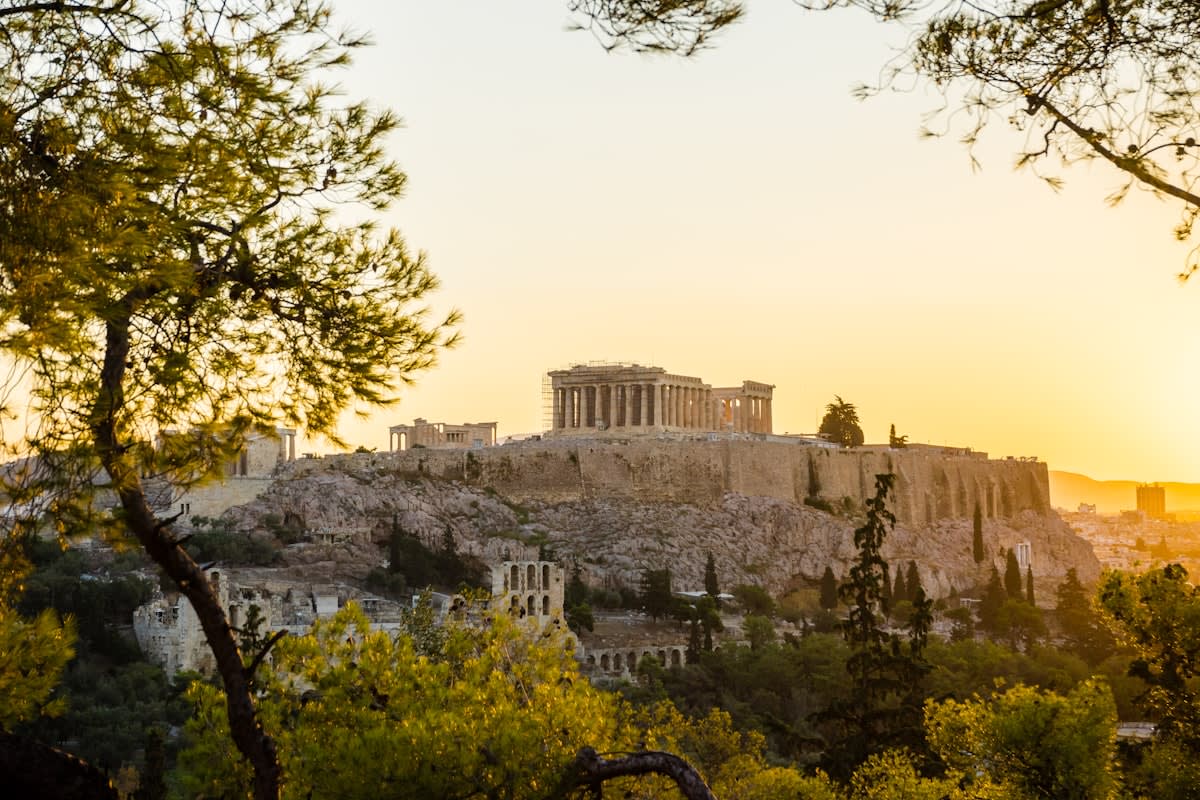
Southern Europe is emerging as the most significant rising force. With 11.71% of global travel intention and a substantial SSI surge of 2.47 p.p. compared to 2025, the region is capturing the imagination of the modern traveler. Athens, specifically, has become a focal point, representing 0.77% of global travel intention—an increase of 0.23 p.p. year-over-year. This isn't a random spike; it's a redirection of intent away from unstable regions and toward perceived stability and cultural density.
Conversely, the decline in West Asia serves as a stark reminder of how quickly a 'bucket list' destination can vanish from the global consciousness. The SSI in West Asia plummeted by 2.69 p.p., as persistent instability lowered the appeal of the region. In the old world of travel, a destination's fame might sustain it through a crisis. In the new world of real-time data and instant sentiment shifts, the decline is immediate and absolute.
North America also shows resilience, with 8.36% of global travel intention, up by 1.01 p.p. year-over-year. Yet, the internal friction seen in Seattle suggests that while the 'intention' to visit is high, the 'execution' of the tourism economy is lagging. The discrepancy between the 750,000 projected visitors and the actual economic benefit for local businesses highlights a systemic failure in how we plan for mass-market tourism.
What does this mean for the future of the industry? The 'bucket list' was a static document. The new travel paradigm is a fluid stream. We are seeing the rise of 'Intentionality over Prestige.' Travelers are no longer asking 'Where should I go to say I've been there?' but 'Where can I go to feel what I saw on screen?'
This shift creates a dangerous volatility for destinations. A location can go from a quiet village to a global hotspot overnight because of a Netflix series, only to be abandoned just as quickly when the next season premieres in a different country. The sustainability of this model is questionable. When a village like Iseltwald is suddenly flooded with visitors, the infrastructure is rarely prepared for the surge, leading to a degraded experience for the traveler and a disrupted life for the resident.
The Narrative Pivot
The transition from 'General Destination' to 'Specific Scene' is the most significant shift in travel psychology since the invention of the commercial flight.
Ultimately, the era of the bucket list is dead because the list itself has become too slow. In a world of real-time data and instant cultural contagion, the idea of a lifelong list of goals is an analog relic. We have replaced the list with the feed. We no longer seek to conquer the world; we seek to inhabit the moments that resonate with our digital identities.
The strategic implication for cities and countries is clear: stop marketing the 'landmark' and start courting the 'narrative.' The cities that thrive in 2026 and beyond will be those that can integrate themselves into the global cultural conversation, rather than those that simply rely on their historical prestige. The map is no longer a guide to places, but a map of stories.