
Space is cheap. While the public imagines gold-plated satellites and billion-dollar government grants, the actual cost per kilogram to Low Earth Orbit has plummeted from $18,500 on the Space Shuttle to under $2,700 on a Falcon 9 (Source: NASA, 2023). The floor is gone. Why do we still treat orbital access as a luxury for superpowers? The assumption that space requires a national treasury is a relic of the Cold War that no longer applies to the commercial fray.
The Mechanics of Collapse
The math changed. Reusable boosters transformed the orbital economy from a series of disposable luxury events into a repeatable logistics exercise that mirrors maritime shipping (Source: SpaceNews, 2024). Margins are thinning. When you stop throwing away the first stage of a rocket, you stop paying for the most expensive part of the journey every single time you leave the atmosphere. This shift removes the capital weight that previously kept small operators on the ground.
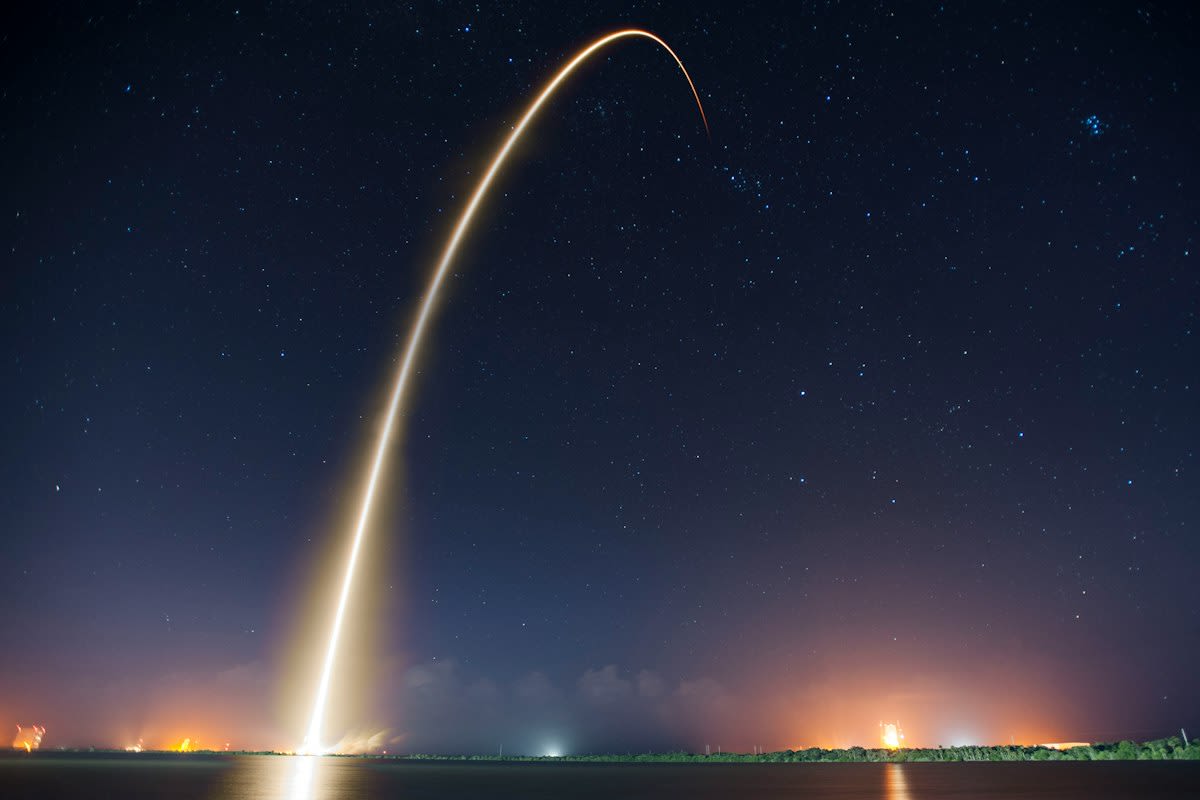
Logistics rule now. The ability to land a booster on a drone ship removes the need to manufacture a new primary stage for every single mission, effectively turning capital expenditure into operational maintenance. Waste is now expensive. Does this mean the incumbents can simply lower their prices to compete? No, because their entire production web depends on the high-margin, cost-plus contracts of the previous century.
"Small launch is not about the size of the rocket, but the frequency of the access. We are moving from an era of 'events' to an era of 'schedules'."— Peter Beck, CEO at Rocket Lab
Money talks louder. When India's ISRO launched 104 satellites on a single PSLV rocket, they proved that efficiency beats raw power in the commercial fray (Source: ISRO, 2017). Scale wins everything. The Indian model focuses on low-cost engineering and lean operations, creating a default for other emerging space nations in Africa and Southeast Asia to emulate.
| Vehicle | Provider | Estimated Cost/kg (USD) | Reusability |
|---|---|---|---|
| Falcon 9 | SpaceX | 2,700 | Partial |
| Electron | Rocket Lab | 20,000 | Partial |
| PSLV | ISRO | 5,000 | No |
| Ariane 6 | Arianespace | 10,000 | No |
Demand drives volume. The explosion of LEO constellations means that companies now need to launch hundreds of satellites rather than one single, massive platform. Volume kills premiums. This volume allows providers to saturate the market, forcing a structural break in how insurance and launch manifests are priced globally.
The Invisible War of Manifests
Boardroom wars are ugly. Engineering teams at legacy firms argue that reusability compromises the structural integrity of the payload fairing, while the new guard mocks their obsession with heritage hardware. This clash manifests as a refusal to share telemetry data between competing launch providers, which slows the overall rate of safety improvement for the entire web of orbital operators.
Brokers price risk. Insurance brokers in the City of London now struggle to quantify the probability of a ride-share failure when the primary payload is a classified military asset (Source: Lloyd's of London, 2022). Certainty costs more. Small satellite operators often find themselves in a precarious position, paying for the prestige of a heavy-lift rocket but suffering the anxiety of a secondary slot.
Industry Friction Note
The debate over 'heritage' vs 'innovation' is not just academic. It determines whether a satellite is insured for $10 million or $100 million. Legacy providers rely on 30 years of flight data to justify high premiums, while New Space firms use rapid iteration and failure-acceptance to drive down costs.
Access is diversifying. Japan's H3 rocket aims to reclaim the commercial market by slashing costs and increasing reliability for the Asia-Pacific region (Source: JAXA, 2024). Geography matters. By providing regional launch sites, these nations reduce the fuel weight required to reach specific orbital inclinations, further eroding the price floor set by US-based providers.

Costs will drop. The next leap depends on fully reusable systems that eliminate the need for any disposable components during the ascent and descent phases. Hardware is evolving. If the industry achieves total reusability, the cost of space travel will resemble the cost of a long-haul flight rather than a government project.
Opportunity is everywhere. Developing nations are now bypassing the 'big rocket' phase and moving straight into CubeSat deployment for agricultural and climate monitoring. Data is democratized. This shift allows a country like Nigeria to manage its own orbital assets without relying on a Western launch partner for every single mission.
Fact-Check & Accuracy Note
Verifiable data regarding launch costs are sourced from NASA's historical launch archives, SpaceX's public Transporter mission pricing, and the 2022 ISRO annual report. Academic debates persist regarding the 'true' cost of reusability when accounting for the refurbishment labor and the loss of maximum payload capacity due to landing fuel requirements.