The Engineering Manager's role is under attack (again)
Source Entity
Hacker News
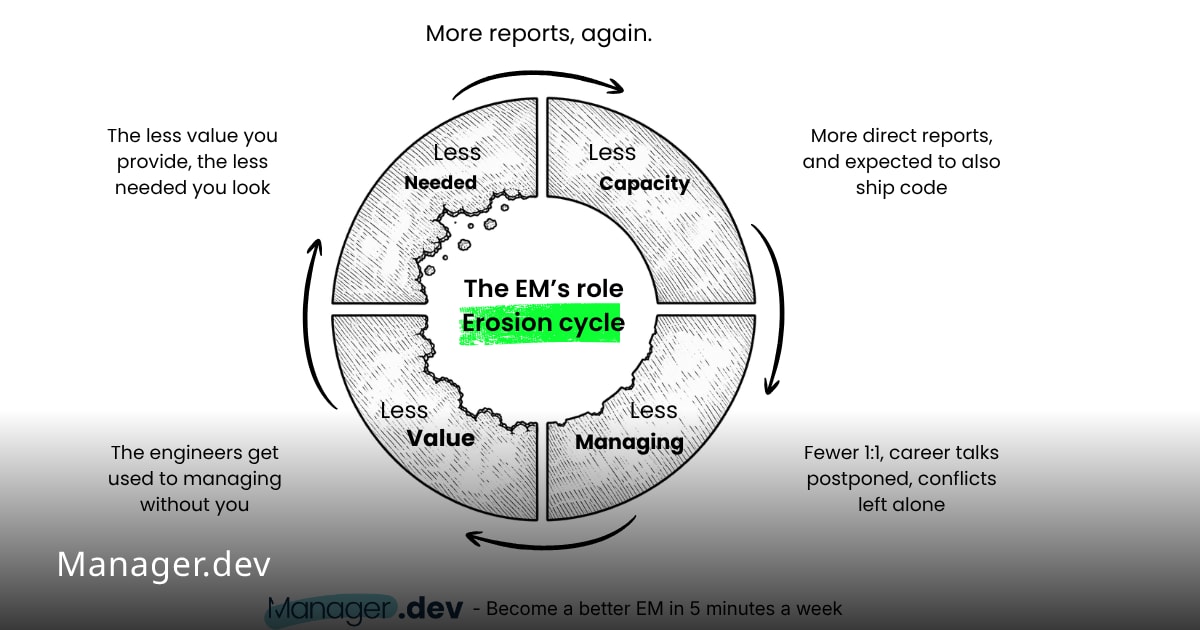
The Engineering Manager role is facing renewed scrutiny as companies pursue flatter organizational structures through layoffs. Experts argue this trend ignores historical lessons from tech giants like Google and Microsoft, potentially harming long-term company health.
The Erosion of the Engineering Manager: A Recurring Corporate Cycle
The recent trend of technology companies aggressively pursuing "flatter" organizational structures has placed the Engineering Manager (EM) role squarely under the microscope. This movement often involves significant layoffs of middle management, ostensibly to increase agility and reduce bureaucratic overhead. However, this shift is increasingly viewed by industry experts as a shortsighted maneuver that sacrifices the critical support systems necessary for high-performing engineering teams.
Historical Precedents: The Ghost of Past Reorganizations
This is not the first time the tech industry has flirted with the idea of eliminating layers of management. Historically, corporate giants like Google and Microsoft have experimented with radical flattening, only to encounter significant challenges in team alignment, mentorship, and long-term project execution. By ignoring these historical cycles, current leadership teams risk repeating the same mistakes that previously hindered productivity and innovation in large-scale software organizations.
The Impact of Flattening on Organizational Health
When companies remove the EM role, they often dismantle the primary conduit for technical mentorship and career development. Engineering Managers serve as the bridge between high-level business strategy and the tactical execution of complex software projects. Without this layer, individual contributors often experience increased ambiguity, lack of professional guidance, and burnout. The "flatter" structure frequently leads to communication silos, where the lack of dedicated leadership prevents the cohesive scaling of technical initiatives.
Why the EM Role Remains Vulnerable
Part of the reason the EM role is currently under attack is a misunderstanding of the value-add that managers provide. In many organizations, the contribution of an EM is viewed as purely administrative rather than strategic. This perception ignores the reality that effective management involves complex people operations, technical risk assessment, and cross-functional mediation. When leadership fails to quantify this invisible work, the role becomes a primary target during austerity measures.
Strategies for Resilience and Advocacy
For those currently serving as Engineering Managers, the current climate necessitates a pivot toward demonstrating explicit value. EMs must proactively quantify their impact on team retention, velocity, and technical strategy. By shifting the conversation from 'administrative oversight' to 'strategic enablement,' managers can better justify their role within the ecosystem. Advocacy for the profession is no longer optional; it is essential for maintaining the structural integrity of the engineering organization.
Conclusion: The Future of Engineering Leadership
The obsession with flattening organizations is a cyclical reaction to economic pressure, but it often arrives at a high cost to internal culture and output. While efficiency is a valid goal, the systematic removal of the EM role threatens to erode the mentorship and strategic alignment that define successful tech companies. Leadership teams must weigh the immediate cost-saving benefits against the long-term risk of organizational instability.