
The Death of the Budget-First Migration
For a decade, the geo-arbitrage playbook was simple: find a city where your currency has outsized purchasing power, rent a cheap apartment, and work from a cafe. This obsession with cost-of-living indices created a gold rush toward any destination that offered a low price point for housing and espresso. But the game has fundamentally changed. In late 2026, the most sophisticated remote professionals and enterprises are realizing that cheap rent is a vanity metric. The real currency is now infrastructure resilience. If the electricity flickers during a high-stakes trade or the local municipality cannot manage basic drainage, the low cost of living becomes a liability, not an asset.
We are seeing a decisive pivot in how the 'global citizen' evaluates a destination. The delta between 2025 and 2026 is stark. While last year's lists prioritized tax havens and budget destinations, today's priority is the 'functional stack'—a combination of high-speed connectivity, legal stability via digital nomad visas, and municipal reliability. The era of the accidental digital nomad is ending, replaced by an era of strategic infrastructure procurement. Why move to a city that costs nothing if the lack of basic services costs you your career?

The African Paradox: Speed vs. Stability
Nowhere is this tension more evident than in the current landscape of remote-work hubs in Africa. Consider the stark contrast between Egypt and Mauritius. On paper, Egypt is a geo-arbitrage dream. It boasts some of the fastest fixed-broadband in Africa, with a median download speed of 95.46 Mbps (Source: Ookla, 2026). Furthermore, Cairo remains one of the most affordable hubs, scoring a mere 23.2 on the Numbeo 2026 cost of living index (Source: African Exponent, 2026). But the 'cheap' narrative falls apart when you look at the structural friction: Egypt lacks a dedicated digital nomad visa and ranks 113th on the Global Peace Index (Source: IEP Global Peace Index, 2026).
Contrast this with Mauritius. It is not a budget destination by any stretch of the imagination, with monthly costs for a single person hovering around $964, including rent (Source: African Exponent, 2026). Yet, the infrastructure—both digital and legal—earns its premium. The shift we are seeing is a migration toward the 'Mauritius Model': paying more for the guarantee that the environment supports high-level productivity without the constant anxiety of legal ambiguity or social instability. The market is effectively pricing in 'peace of mind' as a core infrastructure component.
| Metric | Egypt (The Budget Play) | Mauritius (The Infra Play) |
|---|---|---|
| Fixed Broadband Speed | 95.46 Mbps | Top 5 in Africa |
| Cost of Living (Numbeo/Est) | 23.2 (Very Low) | ~$964/mo (Moderate) |
| Legal Framework | No Nomad Visa | Infrastructure-focused |
| Stability (GPI Rank) | 113th | High Stability |
This trade-off represents a maturing of the remote work economy. The initial thrill of living on $1,000 a month is being replaced by the necessity of operating in an environment that doesn't break. The 'race for infrastructure' is effectively a race for reliability.
The Urban Infrastructure Mirage
This isn't just a trend for high-earning expats; it is a survival mechanism for internal migrants. In Bangladesh, a critical study on climate migrants reveals a brutal irony: relocating from flood-prone rural areas to cities does not necessarily equate to safety. Migrants often trade one set of environmental dangers for another, encountering inadequate drainage, insecure housing, and insufficient municipal services in urban centers (Source: Mongabay, 2026). This is the dark side of geo-arbitrage—when the destination lacks the infrastructure to absorb the population, the move becomes a lateral shift in risk rather than an upgrade in quality of life.
"Families leave one set of dangers behind but may encounter another in cities: regular flooding due to inadequate drainage, insecure housing, insufficient municipal services and difficulties finding reliable work."— Smith, Doctoral Researcher at the University of East Anglia
This highlights a systemic failure in how we perceive urban migration. The assumption is that the city—by virtue of being a city—possesses a baseline of infrastructure. But as researchers point out, the lack of comprehensive mechanisms for tracking internal migration and the political interference in resource distribution often leave these migrants in a state of permanent precariousness (Source: Mongabay, 2026). It proves that the 'arbitrage' only works if the receiving infrastructure is scalable and equitable.
Fact-Check & Accuracy Note
The claims regarding broadband speeds in Egypt and cost-of-living indices are sourced from Ookla and Numbeo 2026 data via African Exponent. The findings on climate migration in Bangladesh are based on research from the University of East Anglia as reported by Mongabay. Ongoing debates continue regarding the efficacy of National Adaptation Plans in tracking internal migration patterns.
From a practitioner's perspective, this manifests as a constant, invisible friction in the 'digital nomad' community. In the closed forums where the real debates happen, the conversation has shifted from 'where is the cheapest beach?' to 'where is the most reliable Starlink coverage?' and 'which city has a grid that doesn't collapse during the rainy season?' There is a growing resentment toward the 'lifestyle' influencers who promote destinations based on aesthetics while ignoring the operational nightmare of failing power grids or corrupt local bureaucracies. The internal consensus is clear: uptime is more valuable than a low cost of living.
Macro-Infrastructure: The Enterprise Level
While individuals fight for stable Wi-Fi, global enterprises are fighting for the same stability on a macro scale. In London, the focus is shifting toward the modernization of multi-asset trading infrastructure to maintain consistent performance across divergent market environments (Source: Orbexy.com, 2026). This isn't about rent; it's about liquidity connectivity and order execution speed. When you are dealing with forex, precious metals, and digital assets, a millisecond of latency is a financial loss.
The pressure is mounting. Specialized AI infrastructure firms have recently suffered steep losses, casting a shadow over the supply chain (Source: TradingKey, 2026). At the same time, businesses are aggressively turning to cloud services—like those provided by Techanic Infotech and Computacenter in the UK—to modernize systems and improve reliability (Source: WhaTech, 2026). The logic is identical to the individual nomad: move your operations to where the infrastructure is most resilient, regardless of the initial cost of migration.
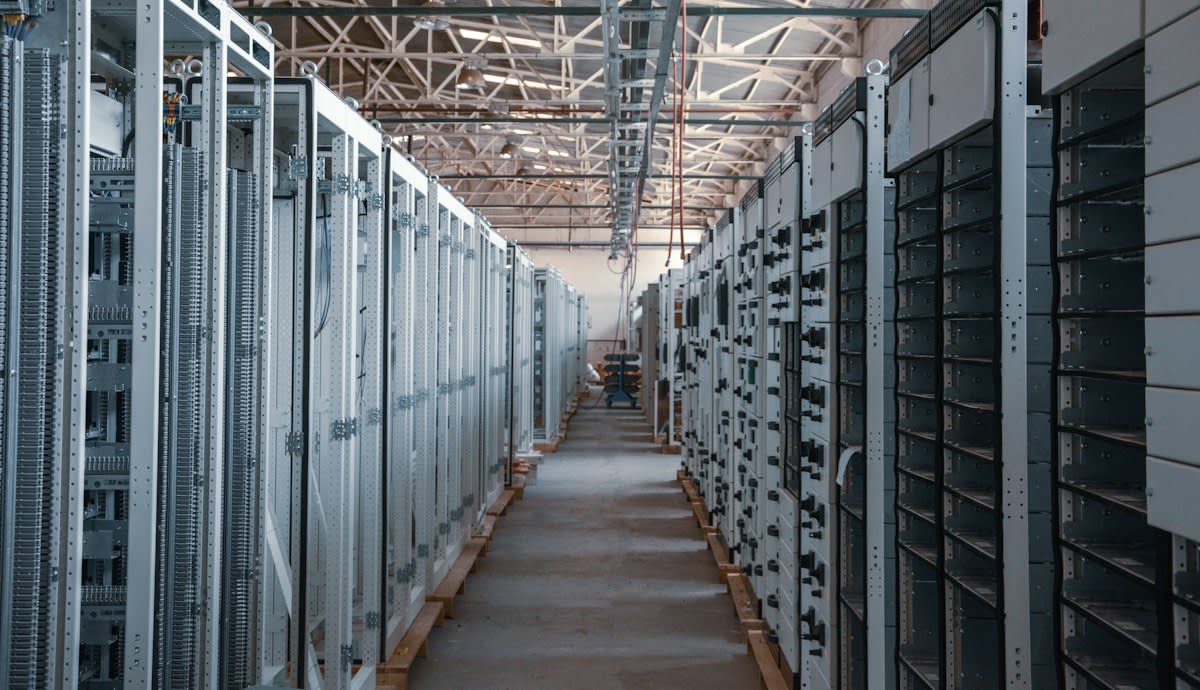
The overarching trend is clear: the world is decoupling 'low cost' from 'high value.' We are entering an era where the most valuable geography is not the one that is cheapest, but the one that is most functional. Whether you are a climate migrant in Bangladesh, a remote developer in Mauritius, or a trading firm in London, the race is now for infrastructure.
Editorial Note
Editorial Note: This report avoids the typical 'digital nomad' tropes of luxury and freedom. Instead, it analyzes migration as a strategic response to infrastructure availability. The data suggests a transition from 'hedonic' migration (pleasure-seeking) to 'functional' migration (stability-seeking).