
Sustainability is a maintenance strategy; regeneration is a growth strategy. For decades, the travel industry has obsessed over the 'footprint'—the effort to minimize negative impact, reduce plastic, or offset carbon. But reducing a negative to zero still leaves the destination exactly where it was. Regenerative travel asks a more aggressive question: How can the act of visiting a place actually improve its biological health and economic vitality? This requires a shift in perspective from the individual transaction to the systemic landscape.
To leave a destination better than you found it, you must stop thinking like a tourist and start thinking like an investor in local resilience. This means identifying the infrastructure that supports nature restoration and sustainable sourcing. Whether it is the shift toward landscape-level agricultural partnerships in Canada or the massive climate investment funds flowing into the Mekong region, the blueprint for regeneration is already being written by industry leaders. The traveler's role is to align their capital and presence with these high-impact systems.
Prerequisites for the Regenerative Traveler
The Verification Mindset
Before embarking on a regenerative journey, you need more than a passport. You need a framework for verification. Regeneration is often clouded by vague marketing; your primary tool is the ability to distinguish between 'protective' measures and 'restorative' outcomes.
- Digital Fluency: The ability to navigate intuitive, contactless booking systems and real-time sustainability data, as seen in the evolving European campsite market.
- Supply Chain Literacy: An understanding of how food and materials reach your hotel or rental, specifically looking for 'landscape-level' sourcing.
- Outcome-Based Inquiry: A commitment to asking providers for specific metrics—such as acreage restored or livelihoods improved—rather than accepting generic 'eco-friendly' labels.
- Economic Intentionality: A strategy for directing spending toward businesses backed by verified regeneration funds.
Why does this preparation matter? Because without a rigorous set of prerequisites, the traveler is susceptible to the fragmentation and loss of trust that currently plagues the regenerative movement. As noted by experts via Food Tank, the lack of clear alignment on what regenerative agriculture actually achieves risks creating a landscape of confusion. A master practitioner does not guess; they verify.
The Execution: Four Steps to Regenerative Integration
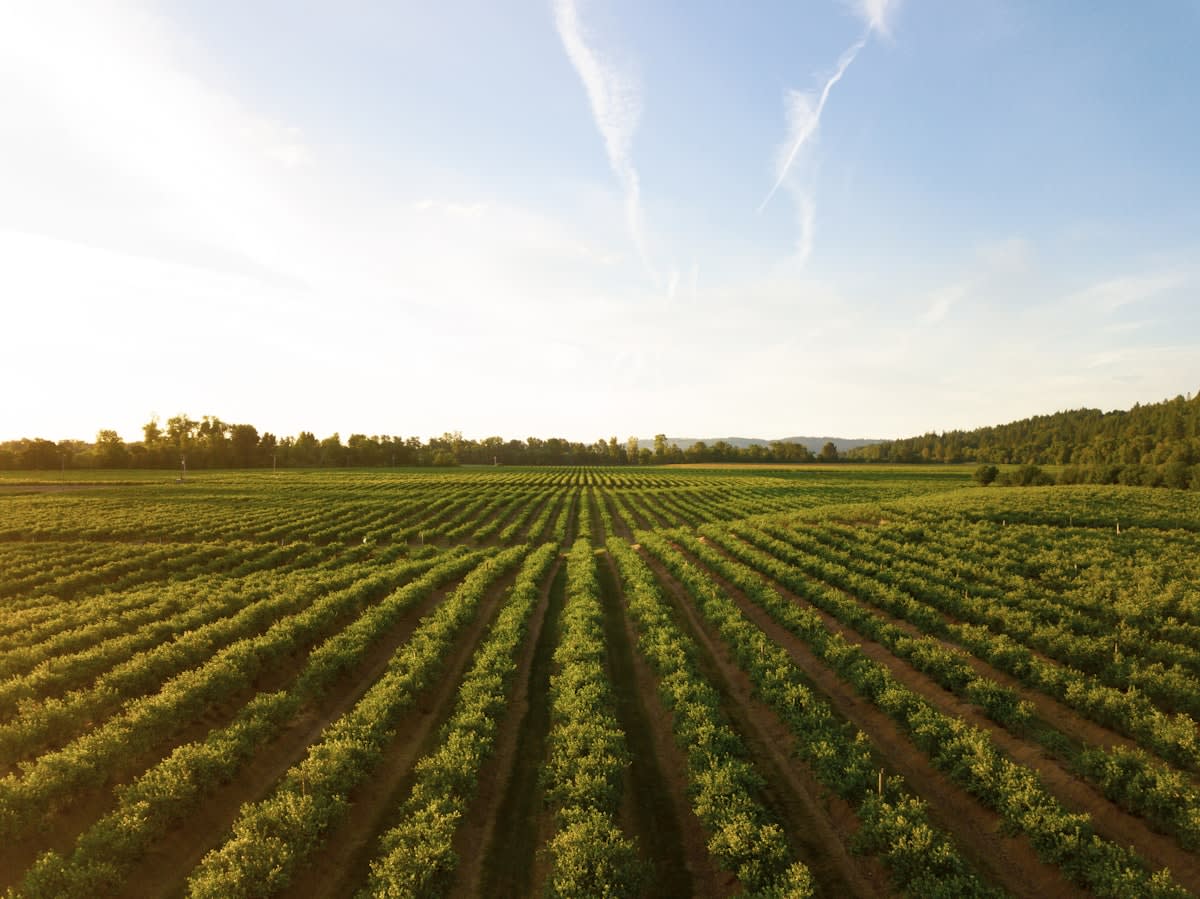
- Identify Landscape-Level Providers: Avoid operators who treat sustainability as a series of isolated 'green' projects. Instead, seek partners who employ a landscape-level model. For example, McCain Foods is transitioning 100% of its global potato acreage to regenerative practices by 2030, shifting from bilateral, farm-by-farm engagement to collective models where costs and benefits are shared across the value chain. When choosing a lodge or tour operator, ask if they collaborate with neighboring landowners to restore entire watersheds or forests rather than just their own backyard.
- Direct Capital Toward Restoration Funds: Align your travel destinations with regions receiving targeted regenerative investment. In the lower Mekong region, the Mekong Earth Regeneration Fund (MERF) is scaling up to USD 200 million to support sustainable agriculture, forestry, and low-emission aquaculture in Vietnam, Laos, and Cambodia. By visiting and supporting businesses that are part of such funds, you provide the consumer demand that justifies further private sector investment in regional resilience.
- Prioritize Next-Gen Sustainable Infrastructure: Support the evolution of the tourism market by choosing providers that blend digitalization with sustainability. In Europe, Generation Z and Alpha are reshaping campsite tourism, demanding a combination of intuitive digital access and a genuine option to disconnect and interact socially. These providers are often the first to implement the agile, tech-driven sustainability metrics required for true regeneration.
- Audit the Sourcing Depth: Look for providers who have scaled their restorative practices. PepsiCo, for instance, has expanded sustainable agriculture to 4.7 million acres worldwide and currently sources 70% of its key ingredients sustainably, with a target of 90% by 2030. If your destination's food supply chain mirrors this level of scale and ambition—supporting hundreds of thousands of people in their supply chains—you are contributing to a system that regenerates livelihoods and soil simultaneously.
The transition from a standard traveler to a regenerative one is essentially a transition from a consumer to a participant. When you prioritize a provider that uses a shared-benefit model, you are not just paying for a room; you are funding a shift in how land is managed. This is the difference between a hotel that uses LED bulbs and a resort that partners with 800 local growers to ensure the long-term resilience of the regional food supply.
But how do we quantify this shift? The numbers tell the story. We are seeing a movement from small-scale pilots to massive, systemic deployments. When a single entity can support 224,000 people across agricultural supply chains, as PepsiCo has done since 2021, the potential for travel to piggyback on these existing industrial shifts is enormous.
| Regenerative Metric | Industry Benchmark (Data-Backed) | Traveler's Application |
|---|---|---|
| Sourcing Scale | 4.7 million acres (PepsiCo) | Seek providers with regional, not just local, sourcing |
| Investment Volume | USD 200 Million (MERF) | Visit regions with active regeneration funds |
| Transition Target | 100% acreage by 2030 (McCain) | Prioritize operators with time-bound, absolute goals |
| Sourcing Percentage | 70% to 90% sustainable (PepsiCo) | Audit the percentage of 'regenerative' vs 'conventional' inputs |
Integration requires a willingness to challenge the status quo. Does the hotel know where its potatoes come from? Do they know if the farm is part of a landscape-level partnership or just a bilateral contract? These questions force providers to move toward the clinical precision required for actual restoration.

Common Pitfalls in the Regenerative Journey
The most dangerous pitfall is the 'Sustainability Trap.' This occurs when a traveler mistakes the absence of harm for the presence of healing. A hotel that is 'carbon neutral' is merely maintaining the status quo; it is not necessarily regenerating the soil or improving the livelihoods of the 224,000-person-scale communities that regenerative models aim to support.
Another significant risk is the 'Fragmentation Gap.' As highlighted by the discourse in Food Tank, the lack of alignment on what constitutes 'regenerative' can lead to a loss of trust. Travelers often fall for 'green-washed' terminology that lacks a data-backed framework. If a provider cannot point to a specific fund, a specific acreage target, or a landscape-level partnership, they are likely operating in the fragmentation gap.
Finally, there is the 'Digital Disconnect.' While Gen Z and Alpha are driving the demand for intuitive, contactless, and sustainable experiences in Europe, many regenerative efforts remain analog and invisible. The failure to bridge the gap between high-tech booking and high-impact restoration often leaves the most effective regenerative projects underfunded and under-visited.
"Without clearer alignment on what regenerative agriculture is trying to achieve, it risks fragmentation, confusion, and the loss of trust."— Farley, via Food Tank
To avoid these pitfalls, the regenerative traveler must remain an investigator. They must look for the intersection of corporate scale, climate investment, and digital transparency. When these three elements align, the result is a destination that is not just preserved, but actively healed.