The End of the Primate City Era
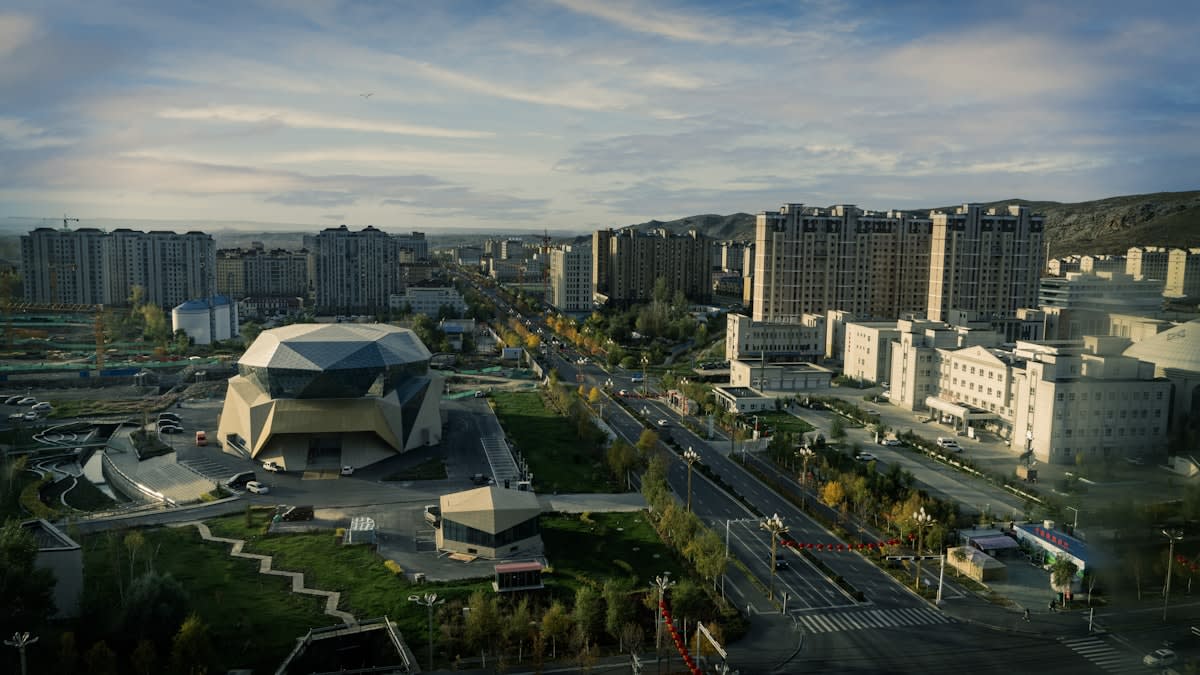
For decades, the global economic narrative was written by the primate city—the singular, oversized urban center that disproportionately dominates its country's political, economic, and cultural life. Whether it was London, Bangkok, or Mexico City, these mega-hubs acted as the sole gateways to global capital. But the monopoly is shattering. We are witnessing a systemic shift where secondary cities are no longer just satellites to the capital; they are becoming independent gravitational centers of innovation and residency. This is not a random migration but a calculated pivot toward polycentric urbanism.
The delta between 2019 and 2024 reveals a stark transition in how talent and capital move. While the pre-pandemic era focused on 'clustering'—the idea that you had to be in the room in Manhattan or Hong Kong to close a deal—the current trend emphasizes 'distributed excellence.' According to data from UN-Habitat (2023), there has been a measurable increase in the growth rates of mid-sized cities (populations between 500,000 and 2 million) compared to the stagnation of hyper-dense mega-cities in several emerging markets. The urgency is driven by a simple reality: the mega-city has become too expensive to function as a viable entry point for the next generation of entrepreneurs.
The Catalysts of Urban Redistribution
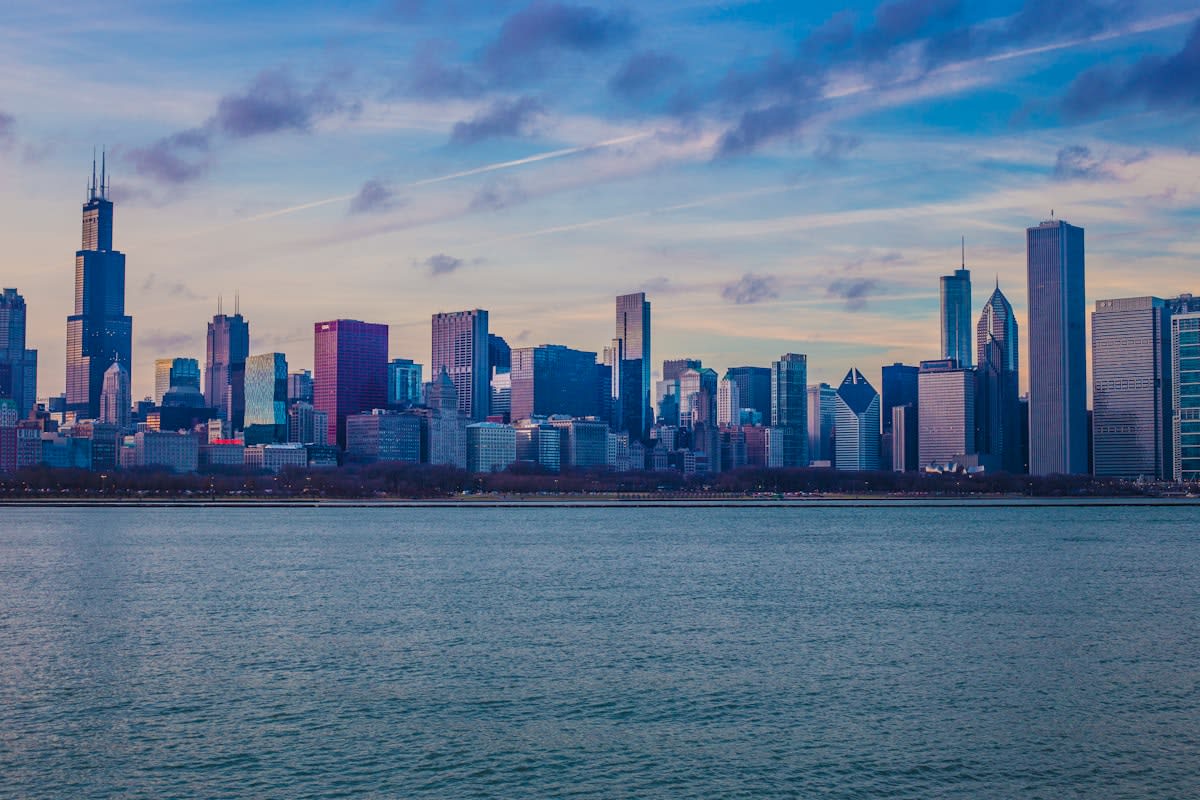
Why now? The trigger is a convergence of infrastructure saturation and a fundamental re-evaluation of the 'livability' metric. In cities like Seoul or New York, the friction of daily existence—commute times, astronomical rents, and decaying public utilities—has finally outweighed the prestige of the address. Secondary hubs offer a 'Goldilocks' environment: enough density to support a vibrant ecosystem, but enough space to allow for quality of life and scalable infrastructure. This shift is particularly aggressive in Southeast Asia and Eastern Europe, where regional cities are leveraging digital connectivity to bypass the traditional capital-city bottleneck.
- Digital Decoupling: The shift from physical presence to asynchronous collaboration allows firms to anchor in lower-cost hubs without losing global reach.
- Infrastructure Arbitrage: Secondary cities are building smart-city grids from scratch, avoiding the 'legacy debt' of 100-year-old sewage and transit systems found in capitals.
- Governmental Decentralization: Nations are increasingly offering tax incentives to move corporate headquarters out of the primate city to balance regional development.
- The Livability Pivot: A generational shift in preference toward environmental access and shorter commutes over corporate proximity.
Look at the trajectory of cities like Da Nang in Vietnam or Lyon in France. These are no longer just tourist stops or industrial backups. They are becoming specialized hubs. Da Nang has positioned itself as a tech-centric alternative to Ho Chi Minh City, while Lyon continues to carve out a niche in biotech and gastronomy that rivals Paris. The strategy is clear: don't compete with the mega-city on scale; compete on specialization and efficiency.
"The transition toward polycentric urban networks is not merely a trend in geography, but a necessary adaptation for economic resilience. When a single city holds all the keys, a localized crisis becomes a national catastrophe."— Strategic Urbanism Report, UN-Habitat (2023)
From a practitioner's perspective, this shift creates a fascinating tension in urban planning. On the ground, the debate has moved away from 'how do we expand the subway?' to 'how do we create 15-minute neighborhoods in a city that was designed for cars?' Planners in secondary hubs are currently fighting a war of zoning. They are trying to avoid the mistakes of the mega-cities—specifically the rigid separation of residential and commercial zones—by implementing mixed-use mandates. The real friction occurs when legacy landowners in these smaller cities realize their land is suddenly worth ten times more, leading to a localized version of the gentrification battles we saw in London and San Francisco a decade ago.
| Metric | Primate/Mega-City | Secondary Hub |
|---|---|---|
| Economic Driver | Global Finance/Politics | Specialized Industry/Tech |
| Cost of Entry | Prohibitive | Competitive |
| Infrastructure | Legacy/Overburdened | Modern/Scalable |
| Growth Pattern | Saturation-based | Expansion-based |
Economic Rebalancing and the New Capital Flow
The financial implications are profound. We are seeing a migration of Venture Capital (VC) and Private Equity (PE) toward these hubs. In the United States, the 'Sun Belt' migration saw billions in capital move from the Northeast corridor to cities like Austin and Nashville. This isn't just about cheaper office space; it's about access to a different kind of talent pool—people who are highly skilled but refuse to live in a concrete jungle. (Source: OECD Regional Outlook, 2023).
Relative Growth Rate: Secondary Hubs vs. Mega-Cities (2020-2024)
Executive Insight
+18.4%
YTD Growth
This capital flow is creating a feedback loop. As investment enters a secondary hub, the local amenity landscape improves. Better cafes, high-end gyms, and curated galleries follow the money, which in turn attracts more high-net-worth individuals. This 'amenity migration' transforms a functional city into a cultural destination. However, the risk is the creation of 'bubble hubs'—cities that grow too fast for their social fabric to keep up, leading to acute housing shortages.
The Future of the Urban Monopoly
Does this mean the mega-city is dead? Hardly. New York, Tokyo, and London will remain the ultimate nodes of global power. But their role is changing from 'the only place to be' to 'the place you visit to finalize the deal.' The urban monopoly has ended, replaced by a network of specialized nodes. The most successful nations in the next twenty years will be those that successfully transition from a hub-and-spoke model to a mesh network of cities.
The ultimate victory for the secondary hub is not in replacing the mega-city, but in offering a viable alternative. When a developer in Medellin or a coder in Krakow can access the same global markets as someone in San Francisco, the geography of opportunity is democratized. This redistribution of power reduces the systemic risk of urban collapse and fosters a more resilient global economy. The era of the urban monopoly is over; the era of the urban ecosystem has begun.
Editorial Note
This analysis focuses on the systemic shift in urban geography, prioritizing the move toward polycentricity over simple 'remote work' narratives. It examines the structural reasons why secondary cities are gaining ground, specifically infrastructure legacy and livability metrics.
Fact-Check & Accuracy Note
Key claims regarding the growth rates of mid-sized cities are sourced from UN-Habitat's 2023 reports on urban trends. Data regarding capital migration in the Sun Belt and regional outlooks are attributed to the OECD (2023). The 'Primate City' framework is based on established geographic theory (Mark Jefferson), applied to contemporary data.