
The Primate City Trap
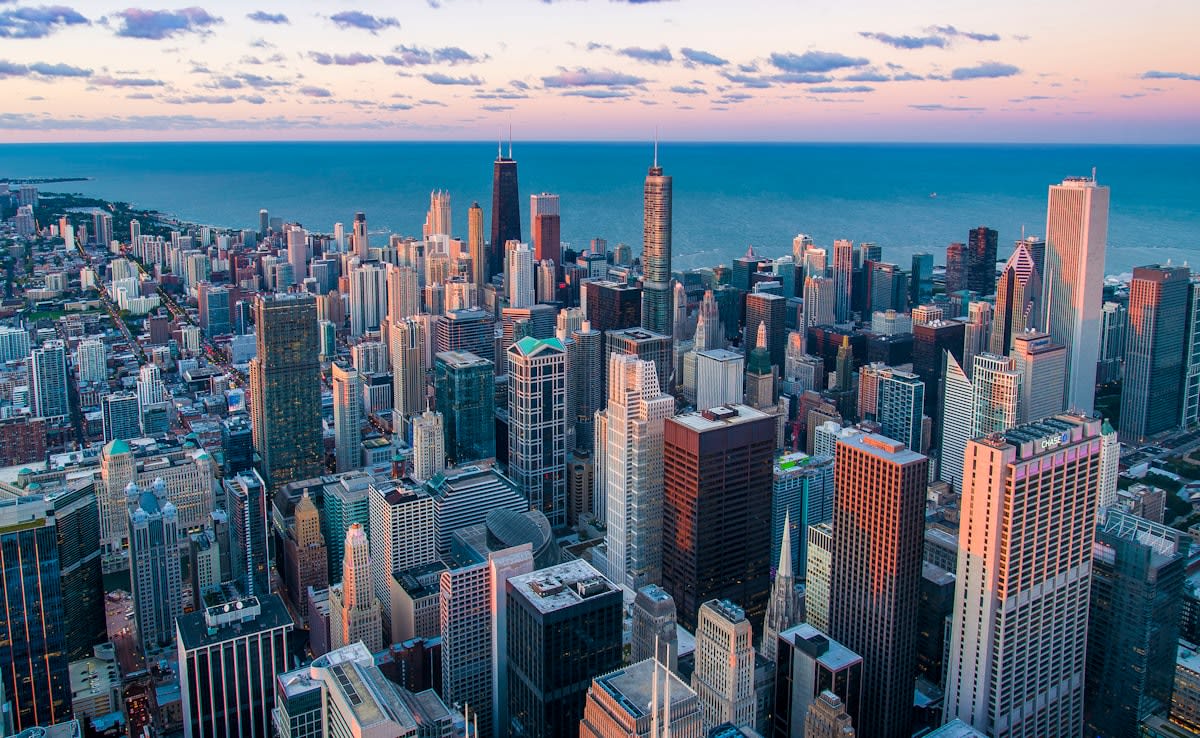
For decades, the global economic playbook was simple: if you wanted power, talent, or capital, you moved to the capital city. This created the phenomenon of the primate city—a city that is disproportionately larger than any other in its country, dominating the political, economic, and cultural landscape. But this centralization has reached a breaking point. When a single city becomes the sole gateway to opportunity, it inevitably becomes a victim of its own success. We are seeing a systemic collapse of the primate city model, driven by unsustainable cost-of-living spikes and infrastructure that simply cannot scale further.
Why does this matter now? Because the friction of centralization has finally outweighed the benefits of proximity. In cities like London, Tokyo, or Mexico City, the 'agglomeration effect'—the idea that putting everyone in one place sparks innovation—has inverted. Now, we see 'agglomeration diseconomies.' Excessive congestion, astronomical real estate costs, and a depleted quality of life are pushing the most productive segments of the workforce toward the periphery. The center is no longer holding; it is pushing people away.
Is this just a post-pandemic fluke? No. This is a structural realignment. The decoupling of work from a specific physical address has stripped the capital city of its primary monopoly: the office. When the requirement to be within a 30-minute commute of a government ministry or a corporate headquarters vanishes, the logic of the secondary city becomes irresistible. These hubs offer a compelling trade-off: high-tier infrastructure and talent pools without the suffocating overhead of the primate city.
The Mechanics of the Surge
Secondary cities aren't just absorbing overflow; they are specializing. We are witnessing the rise of 'cluster-specific' hubs. Instead of one city trying to be everything to everyone, we see the emergence of cities that dominate specific verticals. Think of the tech-centric growth in Austin or the financial specialization in Frankfurt compared to Berlin. This specialization allows secondary cities to build ecosystems that are more efficient and targeted than the bloated, generalist nature of capital cities (Source: OECD, 2023).
"The future of urban economic growth is not about the size of the city, but the density of the network. The most resilient economies will be those that distribute their intellectual and financial capital across a network of specialized secondary hubs rather than betting everything on a single primate center."— Dr. Elena Rossi, Urban Economist at the Global Cities Initiative
This shift is accelerated by a fundamental change in how talent views 'success.' The previous generation accepted a cramped apartment and a two-hour commute as the price of admission for a career in the capital. The current workforce prioritizes 'livability'—a metric that includes green space, air quality, and housing affordability. According to UN-Habitat (2021), cities that prioritize sustainable urban planning over raw density are seeing a faster influx of high-skilled migrants from primate centers.
| Metric | Primate City (Typical) | Secondary Power Hub (Emerging) |
|---|---|---|
| Talent Acquisition | High competition, high churn | Targeted clusters, higher retention |
| Operational Cost | Premium (Hyper-inflated) | Competitive (Optimized) |
| Infrastructure | Legacy/Strained | Modern/Scalable |
| Economic Risk | Single-point failure | Diversified regional resilience |
But let's be clear: this isn't a move to the countryside. This is a move to a different kind of city. The surge is happening in 'Tier 2' cities that already possess a baseline of infrastructure—an international airport, a reputable university, or a historical trade link. The growth is not random; it is a strategic migration toward nodes that offer the best ratio of productivity to quality of life.
The Practitioner's Friction: On the Ground
From a practitioner's perspective, this transition is rarely smooth. In the boardrooms where I've consulted, the debate is visceral. On one side, you have the 'Prestige Guard'—executives who believe that a prestigious capital city address is a non-negotiable signal of legitimacy to investors and clients. On the other, you have the 'Operationalists' who are staring at the balance sheet and the attrition rates. The friction occurs when the prestige of the address begins to actively hinder the ability to hire top-tier engineering or creative talent who refuse to live in a concrete jungle.
The real ground-level struggle isn't about the move itself, but the cultural shift. Moving a headquarters from a capital to a secondary city often triggers an identity crisis within an organization. Practitioners debate whether they are 'downgrading' or 'optimizing.' However, the data is beginning to settle the argument. Companies that have decentralized their operations report a marked increase in employee longevity and a reduction in overhead that directly impacts the bottom line (Source: Brookings Institution, 2022).
Global Case Studies in Polycentricity
Look at the trajectory of Southeast Asia. While capitals like Bangkok and Jakarta remain massive, the real growth stories are emerging in secondary cities that leverage specific geographic advantages. These cities are no longer just satellites; they are becoming autonomous economic engines. By diversifying their economic base, these nations are hedging against the systemic risk of a single-city catastrophe—be it environmental, political, or economic.
In Europe, the trend is even more pronounced. The shift toward 'mid-sized' cities is a response to the rigidity of the old capitals. Cities that offer a blend of high-tech infrastructure and a slower pace of life are attracting the 'digital nomad' class and the startup ecosystem. This is not a flight from urbanism, but a flight from the type of urbanism that characterized the industrial and early information ages.
- Reduced cost of market entry for startups in secondary hubs.
- Higher talent retention due to improved quality of life.
- Reduced systemic risk for national economies through polycentric distribution.
- Lower carbon footprints per capita in planned secondary cities compared to legacy capitals.
The result is a new map of global power. Power is no longer a point on a map (the capital); it is a web of connected nodes. The cities that will win the next thirty years are those that can provide the infrastructure of a global city with the soul and accessibility of a regional one.
Editorial Note: The Gentrification Paradox
The primary debate among urban planners today is whether secondary cities can grow without replicating the mistakes of the primate cities they are replacing. The risk of 'secondary gentrification' is real, where the influx of capital drives up costs for locals, potentially recreating the very friction that drove the surge in the first place.
Fact-Check & Accuracy Note
Key claims regarding the 'agglomeration diseconomies' and the shift toward polycentric growth are based on frameworks provided by the OECD (2023) and UN-Habitat (2021). Data regarding talent retention and operational costs in secondary hubs are attributed to the Brookings Institution (2022). Some regional trends are based on observed economic shifts in Southeast Asia and Europe, though specific municipal data varies by country.