
The End of the Monolithic Megacity
For decades, the global narrative focused on the center. We looked at the skyscrapers of the central business district as the sole markers of economic vitality. But look closer at the current shift. The real power is migrating toward the edges. We are seeing a strategic exodus from the saturated cores of megacities toward secondary hubs—peripheral areas that can actually support the heavy lifting of the 21st century: massive power grids, expansive land parcels, and high-capacity fiber networks.
Why is this happening now? The demands of the digital economy have simply outgrown the footprint of the traditional city center. You cannot fit a hyperscale data center in a historic downtown district. You cannot find the required wattage in a neighborhood designed for 19th-century residential blocks. The result is a rapid reconfiguration of urban geography where the 'periphery' is no longer a suburb, but a primary engine of growth.
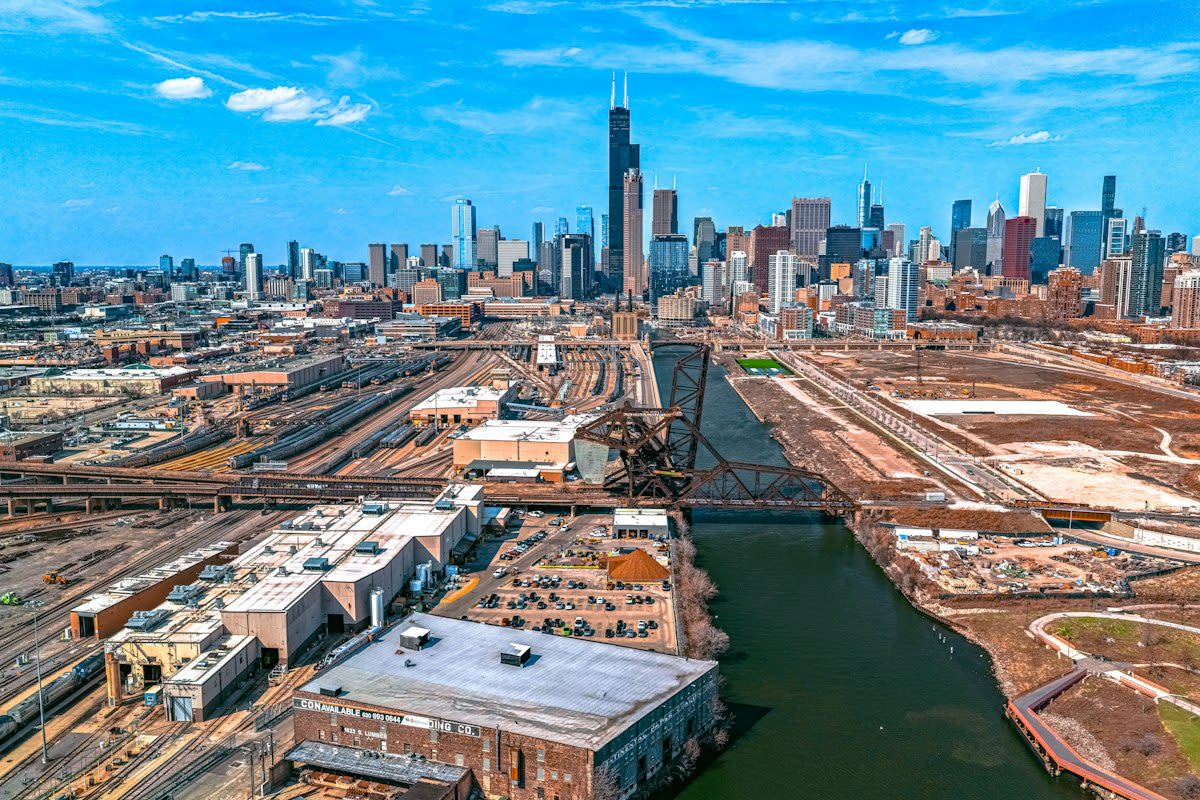
The Mumbai Blueprint: Infrastructure as Destiny
India provides the most aggressive example of this trend. Mumbai remains the dominant force, but the location of that dominance is shifting. According to data from CII-CBRE, Mumbai's share of installed data-center capacity across India's tier-I markets is projected to climb from 52% in the first half of 2026 to a staggering 68% by 2030 (Source: Economic Times, 2026). This isn't just a growth story; it is a spatial reorganization.
Where is this capacity actually landing? Not in the crowded streets of South Mumbai. Instead, the growth is concentrating in areas like Chandivali and Navi Mumbai, specifically along the Thane-Belapur corridor and around Panvel (Source: Economic Times, 2026). These locations offer the three things a modern hub needs: land, power, and policy incentives. This is where the real transformation is occurring, turning peripheral industrial zones into the nervous system of the national digital economy.
| Metric | 2026 Projection (H1) | 2030 Projection |
|---|---|---|
| Mumbai's Share of India's Tier-I Data Capacity | 52% | 68% |
| Primary Growth Corridors | Navi Mumbai / Chandivali | Thane-Belapur / Panvel |
This expansion creates a feedback loop. Once the data centers arrive, the fiber follows. Once the fiber is laid, other industrial developments gravitate toward the connectivity. We are witnessing the birth of a new kind of urbanism where the 'center' is defined by the proximity to a server farm rather than a stock exchange.
"Secondary hubs will still have a role. Developers are expected to extend into locations offering land, power and policy incentives. This diversification can reduce pressure on the most established markets and provide alternatives where land availability or local infrastructure limits expansion."— CII-CBRE Assessment, cited by Economic Times
But let's be honest about the friction. On the ground, this transition is messy. I've spoken with developers who describe the 'ugly' side of this expansion: the brutal slog of securing power allocations from aging grids and the legal nightmares of land acquisition in rapidly urbanizing zones. The debate in the boardroom isn't about whether to move to the periphery—it is about who can navigate the local bureaucracy fast enough to lock down the last remaining viable parcels of land.
Decentralization: From Physical Hubs to Digital Networks
The shift isn't just about where we build warehouses for servers; it is about how we organize intelligence and value. The physical decentralization seen in Mumbai is mirrored by a digital decentralization in the global financial and AI sectors. Look at the TRON network. It has emerged as a critical piece of global infrastructure, supporting more than $94 billion in circulating Tether (USDT) and processing approximately $5.6 trillion in USDT transfer volume year-to-date (Source: BeInCrypto, 2026).
When value moves through a decentralized autonomous organization (DAO) or a blockchain, the traditional 'financial capital' city loses its monopoly. The power no longer resides in a specific zip code in New York or London, but in the scalability and low transaction costs of the network itself. The infrastructure is the network, and the network is everywhere.

This trend extends to the intellectual layer as well. In September 2026, Montreal becomes the epicenter of decentralized AI as more than 100 independent teams gather for the Bittensor Commons Exploit Summit (Source: Bittensor Commons, 2026). Why Montreal? Because the new intellectual hubs are not always the traditional power centers; they are the places where specific ecosystems of talent and openness converge.
Is this the end of the megacity? No. But it is the end of the megacity as the sole arbiter of global influence. The new power structure is a hybrid: a dominant core supported by a constellation of high-performance secondary hubs. One provides the brand and the legacy; the others provide the actual capacity to function.
The delta between 2025 and 2026 is clear. We have moved from discussing 'remote work' to discussing 'remote infrastructure.' The focus has shifted from where people sit to where the data lives and how it moves. The winners of the next decade will be those who stop obsessing over the downtown core and start investing in the peripheral corridors.
Fact-Check & Accuracy Note
Key claims regarding Mumbai's data center capacity (52% to 68%) are sourced from CII-CBRE data via the Economic Times (2026). Figures regarding TRON's USDT volume ($5.6 trillion) and circulating supply ($94 billion) are sourced from BeInCrypto (2026). The Bittensor Commons event in Montreal is sourced from the official announcement (2026). The debate regarding land acquisition and power grid friction is based on industry practitioner perspectives within the urban infrastructure sector.