The Myth of the Landmark
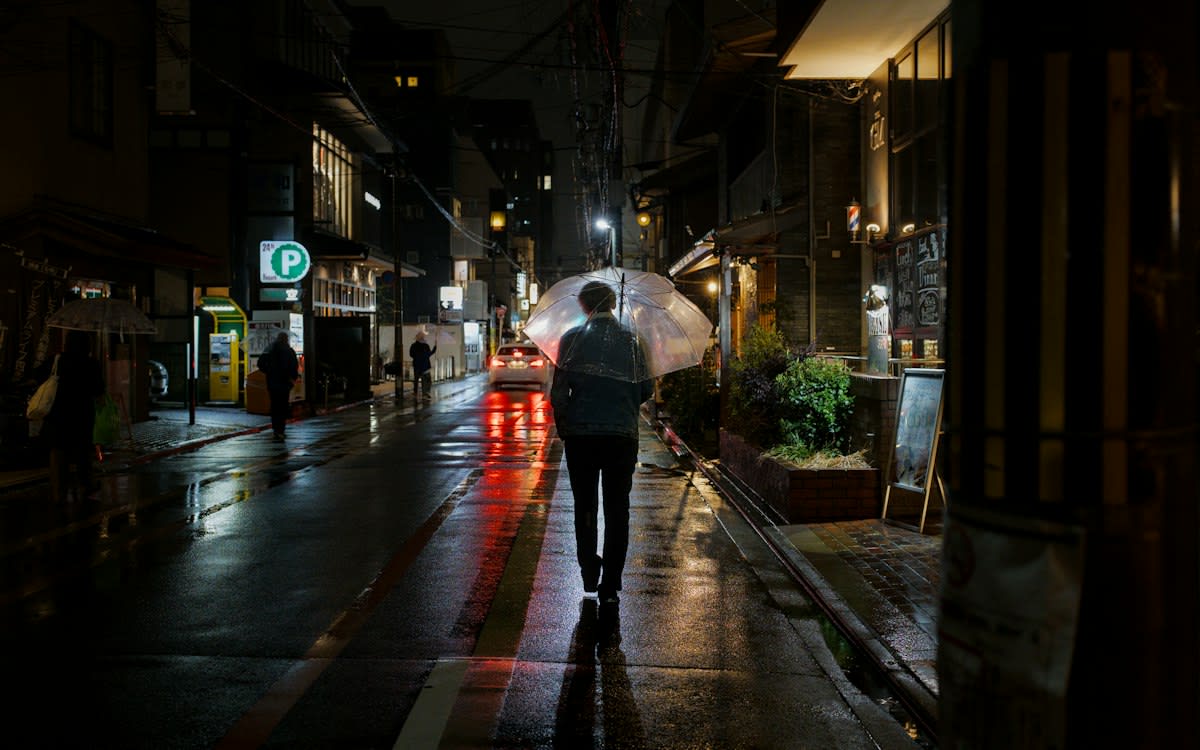
We have been lied to. For decades, the travel industry sold a dream of access, urging us to collect cities like stamps and conquer the most photographed corners of the earth. But the crowd is now a pollutant. When a destination becomes a global default, the experience becomes hollow. We are witnessing a hard turn toward the periphery, where the lack of a signal is the only signal that matters. Why do we still pretend that standing in a three-hour queue for a selfie is 'discovery'?
The weight of social obligation has finally crushed the traditional tourist hub. We see this in the data. High-traffic cities are no longer the magnets they once were. The saturate point has been reached. Travelers are not just avoiding crowds; they are actively seeking the void. This is not a temporary trend. It is a fundamental rejection of the 'bucket list' model that treats geography as a checklist rather than a terrain for reflection.
| Destination | Decrease in Visits (%) |
|---|---|
| Cardiff, United Kingdom | 63% |
| Nagoya, Japan | 50% |
| Florence, Italy | 25% |
| Nantes, France | 24% |
| Okinawa, Japan | 22% |
| Busan, South Korea | 20% |
The numbers tell a story of retreat. In Cardiff, we see a staggering 63% decrease in visits (Source: JimByersTravel, 2026). Nagoya follows with a 50% drop (Source: JimByersTravel, 2026). Even cultural bastions like Florence are seeing a 25% decline (Source: JimByersTravel, 2026). This is not a sign of travel's death. It is a sign of its migration. The traveler is moving away from the center, fleeing the brittle infrastructures of over-tourism in search of something that cannot be captured in a viral reel: silence.
The Digital Void and the False Control
The desire for solitude in travel is a reaction to the collision of convenience and loneliness in our daily lives. We have optimized the human experience into a series of one-tap transactions. We buy groceries, pay bills, and manage our social lives from a screen. This efficiency is a trap. It creates a web of hyper-connectivity that feels like intimacy but is actually a vacuum. When every interaction is mediated by an app, the real world begins to feel like an intrusion.
"It gives us this false sense of control and individuality if we’re just staying in our little box and having things come to us."— Dr. Gillian Sandstrom, Associate Professor of Psychology at the University of Sussex
This 'false sense of control' (Source: Time, 2026) is the engine driving the current demand for solitude. Travelers are realizing that the convenience of the modern world has stripped away the small, unplanned social interactions that make us human. By seeking out less-visited destinations, they are attempting to suture the fray of their own social existence. They aren't running away from people; they are running away from the algorithmic curation of people.
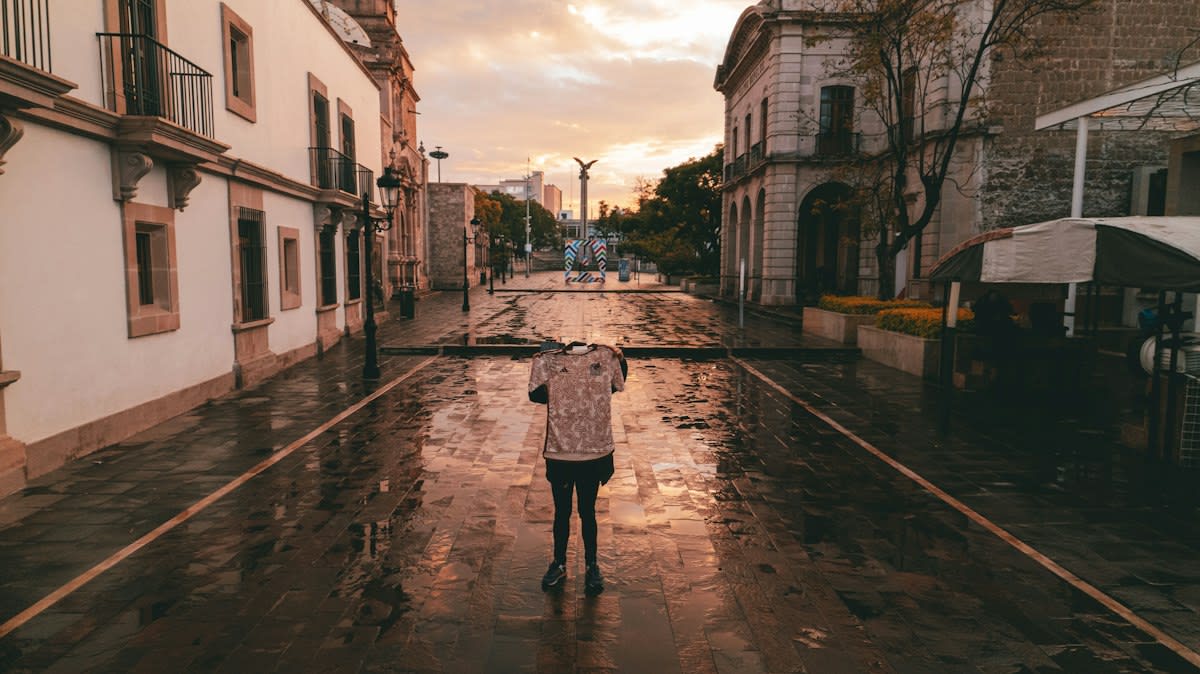
Consider the shift toward 'rain tourism.' While the masses flee the clouds, a growing segment of travelers is embracing the green season (Source: Explore Worldwide, 2026). Why? Because rain is the ultimate filter. It clears the streets. It empties the museums. It provides a natural barrier between the traveler and the tourist machine. In the rain, the terrain becomes honest again.
The Soloist's Ascent
Solo travel is no longer a compromise for the friendless. It is a strategic choice. Modern soloists are becoming more adventurous without sacrificing comfort (Source: Explore Worldwide, 2026). They are treating solitude as a tool for psychological recalibration. The goal is no longer to 'find oneself' in a generic sense, but to experience the world without the distorting lens of a companion's expectations. This is the grip of true autonomy.
From an industry perspective, this creates a profound internal clash. For decades, the revenue model of travel agencies and hotel chains relied on volume. The goal was to pack as many people as possible into a limited space. Now, the high-value client is paying for the opposite. There is a quiet war happening in boardrooms between the 'Volume Officers' and the 'Curators.' The volume officers want to optimize throughput; the curators realize that the only way to maintain luxury status is to limit it. The friction is palpable: how do you scale a product whose primary value is the absence of other customers?
Human Expertise vs. the Algorithm
AI is a mirror. It looks at what millions of people liked and gives you more of the same. If you ask an AI for a 'hidden gem,' it will give you the most popular version of a hidden gem. This is a mechanical failure of the algorithm. It cannot find true solitude because solitude, by definition, is not a data point. This is why travellers are returning to human expertise (Source: Explore Worldwide, 2026). They want the insider who knows the one road that isn't on Google Maps.
The trust in human expertise over AI (Source: Explore Worldwide, 2026) is a demand for authenticity. A human expert can understand the nuance of a traveler's emotional state; an AI only understands their search history. To find a place where you can truly be alone, you need someone who understands the value of the void, not someone who can optimize a route for efficiency.
Fact-Check & Accuracy Note
The data regarding city visit decreases is based on Skyscanner trends reported via JimByersTravel (2026). The shift toward rain tourism and solo adventurous travel is documented in the Explore Worldwide Travel Trends 2027 report. There is ongoing academic debate regarding whether 'solitude travel' is a genuine psychological shift or a luxury performance for a specific socio-economic class.
Ultimately, solitude has become the highest value travel asset because it is the only thing that cannot be synthesized. You can buy a five-star hotel in any city. You can fly first class to any continent. But you cannot buy a quiet moment in a saturated world. Those who can find, curate, and protect that silence are the new elite of the travel world. The void is no longer empty; it is the most expensive real estate on earth.