The Blueprint of Proximity
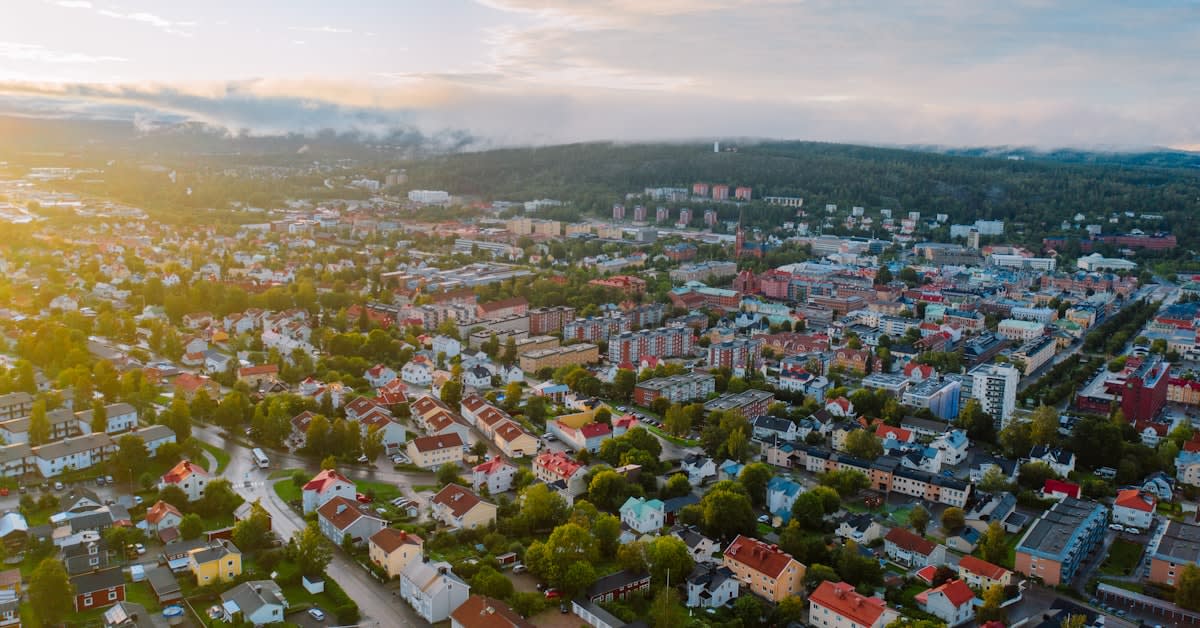
The premise is deceptively simple: everything a resident needs—work, groceries, healthcare, and education—should be accessible within a fifteen-minute walk or bike ride from their front door. It is a vision of urban choreography designed to kill the commute and revive the neighborhood. For decades, we built cities around the internal combustion engine, carving highways through living rooms and segregating residential zones from commercial hubs. Now, the pendulum is swinging back with violent force. But as cities attempt to undo a century of car-centric planning, they are discovering that rearranging a city's physical geography is the easy part; rearranging the psychological map of the citizen is where the real battle begins.
"The 15-minute city is not about restricting movement, but about providing the freedom to choose. It is the transition from a city of flows to a city of places."— Carlos Moreno, Professor at Panthéon-Sorbonne University and conceptual architect of the 15-Minute City
Is this truly a liberation from the commute, or a subtle redesign of social control? In theory, reducing the need for long-distance travel lowers carbon emissions and boosts local economies. In practice, the implementation has often felt like a top-down imposition. When the C40 Cities network began promoting this model globally, the goal was climate resilience and public health (Source: C40 Cities, 2021). However, the narrative shifted. In the public imagination, the '15-minute' boundary stopped being a convenience and started looking like a perimeter.
The Friction Point: When Convenience Feels Like Confinement
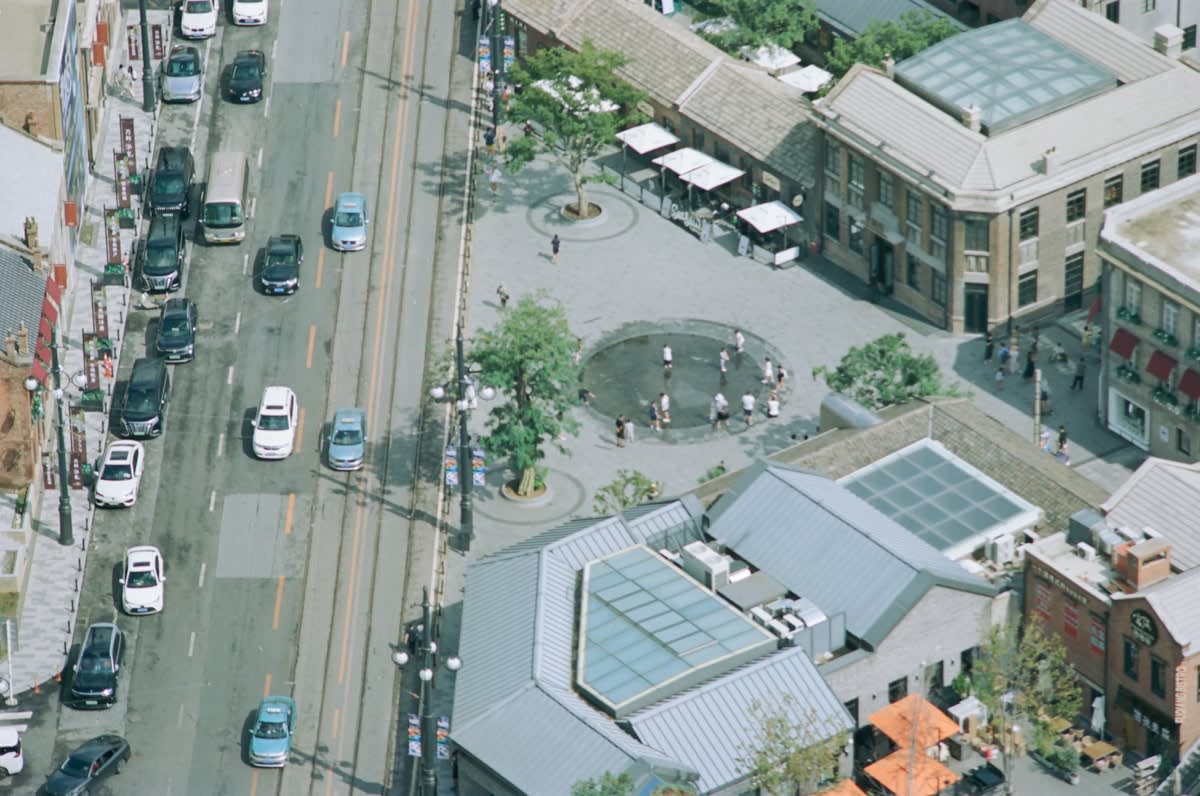
The most visceral reactions have not occurred in the theoretical journals of architects, but in the streets of mid-sized cities. Take Oxford, England. The introduction of traffic filters—designed to reduce congestion and improve air quality—became a lightning rod for global conspiracy theories. Critics didn't see a cleaner city; they saw 'climate lockdowns' and the precursor to a digital fence (Source: BBC News, 2023). Why did a simple traffic management scheme trigger a political revolt? Because it touched the third rail of modern urban life: the perceived right to unrestricted movement.
This isn't just about cars. It's about the systemic shift in how we perceive ownership of the street. For the modern driver, the road is a utility, a frictionless pipe connecting point A to point B. When planners introduce 'filters' or 'low-traffic neighborhoods' (LTNs), they are effectively reclaiming that pipe for the community. This creates an immediate conflict between the individual's desire for speed and the collective's desire for safety. The result is a political paradox: the more efficient the design becomes for the pedestrian, the more restrictive it feels to the driver.
We see this tension playing out in a variety of global contexts. In Paris, Mayor Anne Hidalgo's aggressive push to remove parking spaces and expand bike lanes has been met with both adoration and fury (Source: Mairie de Paris, 2020). In Bogotá, the 'Barrios Vitales' initiative seeks to reclaim streets for people, yet it faces pushback from local merchants who fear that removing car access will kill their business (Source: C40 Cities, 2022). The common thread is a fundamental distrust of the 'expert' who decides where the boundaries of a neighborhood should lie.
From my years in the field, I've seen this friction firsthand in the war rooms of city planning. The internal debate isn't usually about whether 15-minute cities are 'good'—practitioners almost universally agree they are. The real fight is over 'social mixing.' Planners argue over whether these zones will actually foster diversity or simply create 'gilded ghettos' where the wealthy enjoy walkable luxury while the working class is pushed further to the periphery, forced into longer commutes to serve the very neighborhoods they can no longer afford to live in. This is the hidden tension: the risk of hyper-localization becoming a tool for gentrification.
| Implementation Model | Primary Driver | Core Friction Point | Example City |
|---|---|---|---|
| Top-Down Mandate | Climate Targets | Perceived loss of autonomy | Paris |
| Tactical Urbanism | Public Health | Local business disruption | Bogotá |
| Infrastructure Filtering | Traffic Reduction | Surveillance/Lockdown fears | Oxford |
| Polycentric Growth | Economic Decentralization | Zoning law rigidity | Melbourne |
But is the backlash a sign of failure, or a necessary part of the adaptation process? The volatility we are seeing suggests that the 15-minute city model has been marketed as a product rather than a process. When it is presented as a finished blueprint, it feels like an imposition. When it is treated as a series of iterative experiments—what we call 'tactical urbanism'—the community is more likely to buy in. The shift we need is from 'designing for' the people to 'designing with' them.
Beyond the Noise: The Systemic Opportunity
If we strip away the political noise and the conspiracy theories, the 15-minute city represents a profound opportunity for urban resilience. We are moving toward a 'polycentric' city model. Instead of one massive central business district (CBD) that everyone must migrate toward every morning, we are seeing the emergence of multiple hubs. This decentralization is not just about convenience; it is a hedge against systemic shocks. Whether it's a pandemic, a fuel crisis, or a climate disaster, a city that can function in autonomous, self-sufficient cells is far more resilient than one dependent on a single, fragile artery of transport.
The real challenge now is the legal architecture. Most of our cities are governed by zoning laws written in the 1950s that explicitly forbid mixing residential and commercial uses. To make the 15-minute city a reality, we don't just need more bike lanes; we need a total overhaul of land-use legislation. This is where the real political battle will be won or lost—not in the shouting matches over traffic filters, but in the boring, technical revisions of municipal code.
Ultimately, the 15-minute city paradox is a mirror reflecting our current societal anxieties. We crave the convenience of the local, but we fear the loss of the global. We want the quiet streets of a village, but the economic opportunities of a metropolis. The cities that succeed will be those that stop selling the 15-minute city as a utopia and start treating it as a negotiation. The goal isn't to trap people in a circle; it's to make the circle so vibrant that they choose to stay.
Fact-Check & Accuracy Note
Key claims regarding the 15-minute city framework are sourced from the C40 Cities network (2021, 2022) and the official communications of the Mairie de Paris (2020). The political reactions in Oxford are documented via BBC News (2023). Note that the 'climate lockdown' narratives are widely categorized as misinformation by urban planning institutions, yet they remain a significant sociological factor in the implementation of these designs.
Editorial Perspective
Editorial Note: This analysis adopts a strategic, contrarian lens. While the 15-minute city is presented as a positive environmental goal, this piece highlights the systemic friction and sociological risks—such as gentrification and perceived loss of autonomy—that are often omitted from official planning brochures.