
Why is a building worth half a billion dollars if no one is inside it? This is the central paradox of the modern metropolis. We are witnessing the rise of the Ghost District—stretches of prime urban real estate that remain nominally 'prime' on a balance sheet but have become functionally unusable for the people they were meant to serve. For decades, the Central Business District (CBD) was the undisputed heart of economic power. Today, it is increasingly a museum of 20th-century corporate ambition, held in place by financial instruments rather than human activity.
The common narrative blames the pandemic and the shift to remote work. That is a superficial reading. The reality is a systemic decoupling of real estate value from real estate utility. In cities from London to Hong Kong, we see a phenomenon where owners refuse to lower rents or repurpose spaces because doing so would force a write-down of the asset's valuation. This creates a stalemate: the space is too expensive for new, innovative tenants to enter, but too empty to sustain the surrounding ecosystem of cafes, dry cleaners, and transit hubs.
The Assetization of Urban Space
We have stopped building cities and started building portfolios. When a skyscraper is treated primarily as a financial instrument—a vehicle for capital preservation or a hedge against inflation—its function as a place of work becomes secondary. This is 'Financialized Urbanism.' In this model, a vacant floor is not a failure of demand; it is a strategic hold. According to the Urban Land Institute's 2023 analysis on office trends, the gap between 'asking rents' and 'effective rents' has widened significantly in global hubs, masking the true extent of the vacancy (Source: Urban Land Institute, 2023).
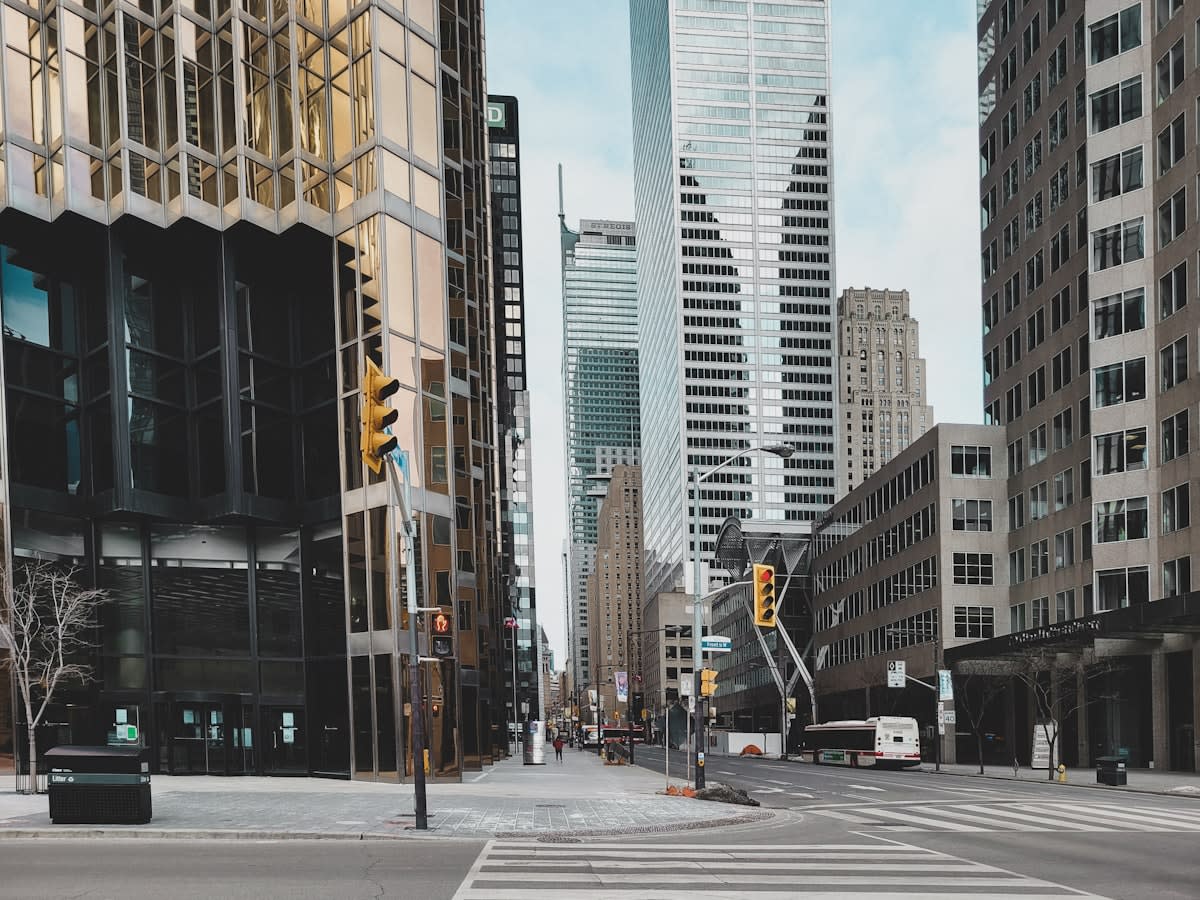
This decoupling creates a lethal feedback loop. As the 'anchor' corporate tenants shrink their footprints, the secondary economy of the district collapses. The sandwich shop closes. The gym goes bankrupt. The street level becomes a void. Once the vibrancy vanishes, the district loses its primary draw: the 'agglomeration effect.' Why move your headquarters to a district where your employees have no reason to leave the building? The result is a sterile environment that repels the very talent the corporations are desperate to attract.
"The danger is not that the office is dead, but that the CBD as a mono-culture is obsolete. We are seeing a transition from the 'hub-and-spoke' model to a polycentric urban fabric where value is distributed, not concentrated."— Dr. Elena Rossi, Senior Urban Strategist at the Global Cities Initiative
This shift is not limited to any one region. In Singapore, the push toward 'decentralized business hubs' is a conscious effort to avoid the Ghost District trap. In New York, the struggle to convert aging Class B office space into residential units is hampered by outdated zoning laws and the sheer cost of plumbing retrofits. The friction is not just economic; it is structural. We are trying to fit a 21st-century lifestyle into a 1950s blueprint.
What does this look like from the inside? If you spend time in the boardrooms of Real Estate Investment Trusts (REITs), the debate isn't about how to bring people back. It's about 'valuation protection.' There is a fierce internal conflict between the asset managers, who see the writing on the wall, and the shareholders, who demand the maintenance of the Net Asset Value (NAV). On the ground, this manifests as 'ghost leases'—agreements where tenants are paid to stay in spaces they no longer use, just to keep the occupancy rate looking healthy for the next round of financing.
The Structural Divergence: Legacy vs. Adaptive Districts
To understand why some areas survive while others become ghosts, we must look at the divergence in urban design. The Legacy CBD was built for the 9-to-5 commute. It is a machine for productivity, optimized for a single use. The Adaptive District, however, embraces the '15-minute city' concept, where living, working, and leisure coexist. The data suggests a clear migration of value toward these mixed-use environments.
| Metric | Legacy CBD (Ghost Risk) | Adaptive District (Resilient) |
|---|---|---|
| Primary Use Case | Single-use Corporate Office | Mixed-use (Residential/Retail/Work) |
| Footfall Pattern | Bimodal (Peaks at 9am/5pm) | Consistent 24/7 Activity |
| Value Driver | Proximity to Power/Prestige | Quality of Life/Accessibility |
| Tenant Profile | Large Institutional Firms | SMEs, Freelancers, Residents |
| Adaptability | Low (Rigid Floorplates) | High (Modular/Flexible Zoning) |
The risk for the Legacy CBD is that it becomes a 'stranded asset.' A stranded asset is something that suffers from unanticipated or premature write-downs. According to a 2024 report by the OECD on Urban Resilience, the lack of flexibility in prime commercial zoning is the single greatest contributor to urban stagnation in developed economies (Source: OECD, 2024). When a building cannot be easily converted from an office to a loft or a laboratory, its value is tied entirely to a demand curve that is permanently sloping downward.
Is this a catastrophe? Not necessarily. It is a correction. The 'Ghost District' is a symptom of an over-leveraged belief in the permanence of the corporate headquarters. The opportunity now lies in the 'Great Repurposing.' Cities that can break the deadlock of valuation protection and incentivize the conversion of these spaces will lead the next era of urban growth.

The transition requires a fundamental shift in how we measure urban success. We can no longer rely on 'Price per Square Foot' as the primary KPI. Instead, we need to track 'Activity Density'—the number of unique human interactions per hour in a given space. When we prioritize activity over equity, the Ghost Districts begin to breathe again. We see this in the revitalization of old industrial zones in Berlin and Tokyo, where the absence of 'prime' corporate expectations allowed for a more organic, resilient growth.
The path forward involves three critical levers: aggressive zoning deregulation, the introduction of 'vacancy taxes' to penalize the holding of empty assets for speculation, and a shift toward public-private partnerships that prioritize social utility over immediate ROI. The goal is not to save the office building, but to save the city. The buildings are just shells; the city is the people.
Fact-Check & Accuracy Note
The claims regarding the gap between asking and effective rents are sourced from the Urban Land Institute (2023). The analysis of zoning as a contributor to urban stagnation is based on the OECD's 2024 report on Urban Resilience. There remains an ongoing debate among economists regarding whether 'ghost leases' are a widespread industry practice or isolated incidents in specific markets like New York and London.
Editorial Perspective
Editorial Note: This analysis takes a contrarian view of the 'Remote Work' narrative, arguing that the Ghost District phenomenon is a result of financialization rather than just a change in work habits.