
The Myth of the Central Hub
For decades, the professional playbook was simple: move to the capital. Whether it was London, New York, or Tokyo, the logic dictated that proximity to power equaled proximity to opportunity. We viewed these cities as the only viable engines of scalability. But that logic is rotting. The gravitational pull of the primary hub is weakening, not because the capitals are dying, but because the definition of a hub has fundamentally changed. We are witnessing a systemic migration where ambition is decoupling from geography.
Consider the historical precedent of the Second City. Chicago spent the better part of the 20th century acting as the great switching yard of modernity. It was the collision point for railroads, industry, and Black music, turning localized movements into scalable national culture. As Bijan C. Bayne notes, Chicago was the origin for everything from the first U.S. releases of the Beatles via Vee-Jay Records to the evolution of modern film criticism. This proves a critical point: the most influential shifts often happen just outside the primary seat of power, in the spaces where industry and innovation actually collide.
Yet, the modern iteration of this shift is more aggressive. Recent demographic data from Illinois reveals a telling trend: while the total population has stabilized since bottoming out in 2022, the state is losing its youth. The under-20 population in Illinois dropped by nearly 7%, a rate three times faster than the rest of the United States. Why are the children leaving? They aren't just fleeing a city; they are searching for a different kind of leverage. They are realizing that the cost of entry in a global capital often outweighs the marginal benefit of being there.
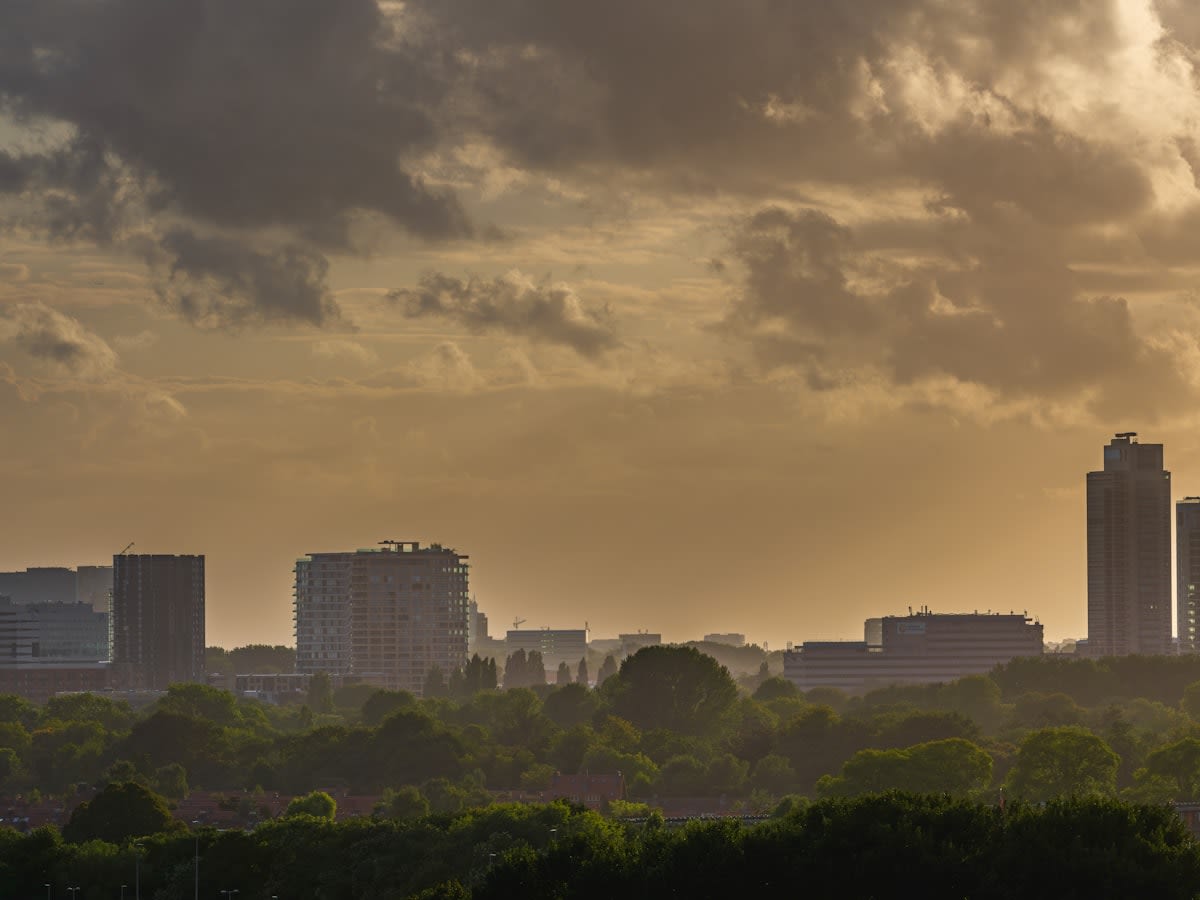
This is not a crisis of decline, but a redistribution of talent. When the next generation exits a legacy hub, they don't vanish; they relocate to environments where they can exert more influence over their surroundings. They are moving toward the secondary hub—cities that offer the infrastructure of a metropolis without the suffocating inertia of a global capital.
The New Architecture of Opportunity
If the primary hub is about maintenance, the secondary hub is about construction. Look at Sacramento. While many view it merely as a political center, it has emerged as a bright spot in California's hospitality and development market. The Sacramento Railyards project represents one of the largest urban infill developments in the country, signaling a move toward dense, integrated urban cores that don't rely on the traditional capital model. The planned opening of the Kaiser Railyards Medical Center in 2029 and the development of a new soccer stadium for Sacramento Republic FC are not just local wins; they are anchors of a new economic ecosystem.
Strategic Insight
The 'Second City' advantage is the ability to innovate without the crushing overhead of a global primary hub, allowing for faster iteration and higher ownership of the local landscape.
This trend is global. Sydney provides a masterclass in the economic potency of the secondary node. The impact of UFC 325 is a perfect proxy for this shift. The event generated AUD $65.7 million in economic impact for the Sydney metro area, with a gate revenue of AUD $14.4 million—the highest-grossing event at any indoor arena in Australian history. This demonstrates that global audiences and massive capital flows no longer require a traditional 'capital city' setting to achieve record-breaking results. The demand for high-tier experiences is now distributed.
| Metric | Global Capital Hub | Secondary Strategic Hub |
|---|---|---|
| Growth Driver | Legacy Power / Rent-Seeking | Infrastructure / Urban Infill |
| Barrier to Entry | Extreme (Hyper-inflationary) | Moderate (Scalable) |
| Talent Flow | Concentrated / Competitive | Migratory / Entrepreneurial |
| Economic Model | Centralized Services | Distributed Nodes of Excellence |
Does this mean the global capitals are becoming irrelevant? Hardly. Instead, they are evolving into something else: asset vaults. In New York City, the luxury housing market is booming despite aggressive attempts to curb it. Mayor Zohran Mamdani's pied-uà-terre tax on non-primary residences valued over $5 million was intended to improve affordability. Instead, the market responded with defiance. Signings for homes priced above $20 million rose 25 percent year-over-year, while the $10 million to $20 million segment climbed 38.6 percent.
The data suggests a fascinating pivot. Buyers are not leaving the city; they are simply changing the legal status of their holdings. By opting to purchase primary residences instead of second homes, the ultra-wealthy are maintaining their foothold in the capital while potentially spending more of their actual time and operational energy in secondary hubs. The capital has become a place to store wealth, while the secondary hub has become the place to deploy it.

The Digital Scaffold: Removing the Physical Tax
The catalyst for this entire migration is the collapse of the physical requirement. For a century, you had to be in the room where it happened. Now, the room is virtual. The migration of core IT systems to the cloud is the invisible engine driving this decentralization. Take Intesa Sanpaolo, Italy's largest bank. By migrating over 800 applications to Google Cloud, the institution created an infrastructure that is faster, more secure, and AI-ready. When a bank with €1.4 trillion in customer assets can optimize its entire operation via a cloud-native platform, the need for centralized physical hubs evaporates.
"By partnering with Google Cloud and TIM, we changed technology, reduced costs and, at the same time, laid the foundations for building Isytech, the cloud-native digital technology platform serving customers and colleagues across our Group."— Massimo Proverbio, Chief Data, AI and Technology Officer, Intesa Sanpaolo
This digital shift allows the most ambitious people to build world-class organizations from anywhere. They can leverage the luxury assets of New York, the cultural legacy of Chicago, and the operational efficiency of cloud-native systems, all while living in a secondary hub like Sacramento or Sydney. The 'tax' of the global capital—the traffic, the cost of living, the social rigidity—is no longer a necessary price for success.
We are moving toward a world of distributed excellence. The ambition that once flowed in one direction—toward the center—is now flowing outward. The secondary hub is not a consolation prize; it is a strategic choice. It is the choice to be a big fish in a growing pond rather than a small fish in a stagnant ocean.
The systemic shift is clear: the world is no longer a hub-and-spoke model. It is a network. Those who realize this first will stop fighting for a seat at the table in the capital and start building their own tables in the cities of the future.