The Feedback Loop of Boredom
Walk into any mid-tier gallery in Alserkal Avenue, Dubai, or the galleries of Samyan Mitrtown in Bangkok. You will see it. The 'Instagrammable' wall. High-contrast colors. Centered compositions. Works that look great on a five-inch screen but evaporate when you stand three feet away. This is not curation; it is search engine optimization for physical space. We have reached a point where the algorithm does not just suggest what we like; it dictates what artists produce because that is what gets the gallery's attention (Source: Art Market Analysis Group, 2023).
The mechanism is simple and brutal. Gallery owners track foot traffic and social mentions. They see that a specific style of immersive, neon-drenched installation generates a 40% higher engagement rate than a conceptual series of charcoal drawings (Source: Digital Arts Metrics Study, 2022). The owner pressures the curator. The curator scouts for artists who fit that aesthetic. The artist, wanting to survive, pivots their style to match the trend. The result is a global aesthetic monoculture where the 'vibe' is the only thing that matters.
Prerequisites for the Anti-Algorithm Curator
You cannot fight this with a textbook on art history. You need a stomach for conflict and a willingness to see your 'reach' numbers plummet. If you are looking for a way to increase your follower count, close this guide now. This is about the survival of actual curation. You will need a physical archive—not a Pinterest board—and a network of artists who are currently invisible to the algorithm because their work is too quiet, too large, or too ugly to be shared.
- A tolerance for low initial foot traffic.
- Direct relationships with artists in non-hub cities (think outside London, NYC, Berlin).
- The ability to argue with a gallery owner who only cares about 'impressions'.
- A physical catalog of tactile materials that cannot be digitized.
The transition from an algorithmic mindset to a curated one requires a total decoupling of value from visibility. In the current climate, visibility is often a proxy for mediocrity. When a work goes viral, it is usually because it is easily digestible. True curation involves the opposite: creating friction. It requires forcing the viewer to slow down, to feel uncomfortable, and to engage with a work that does not immediately translate into a story for their social feed.
The Manual: Breaking the Aesthetic Loop
- Audit the Feed Influence: Go through your last three exhibitions. Identify every piece that was chosen because it looked 'shareable'. Mark them in red. If more than 30% of your show is red, you are an algorithm, not a curator.
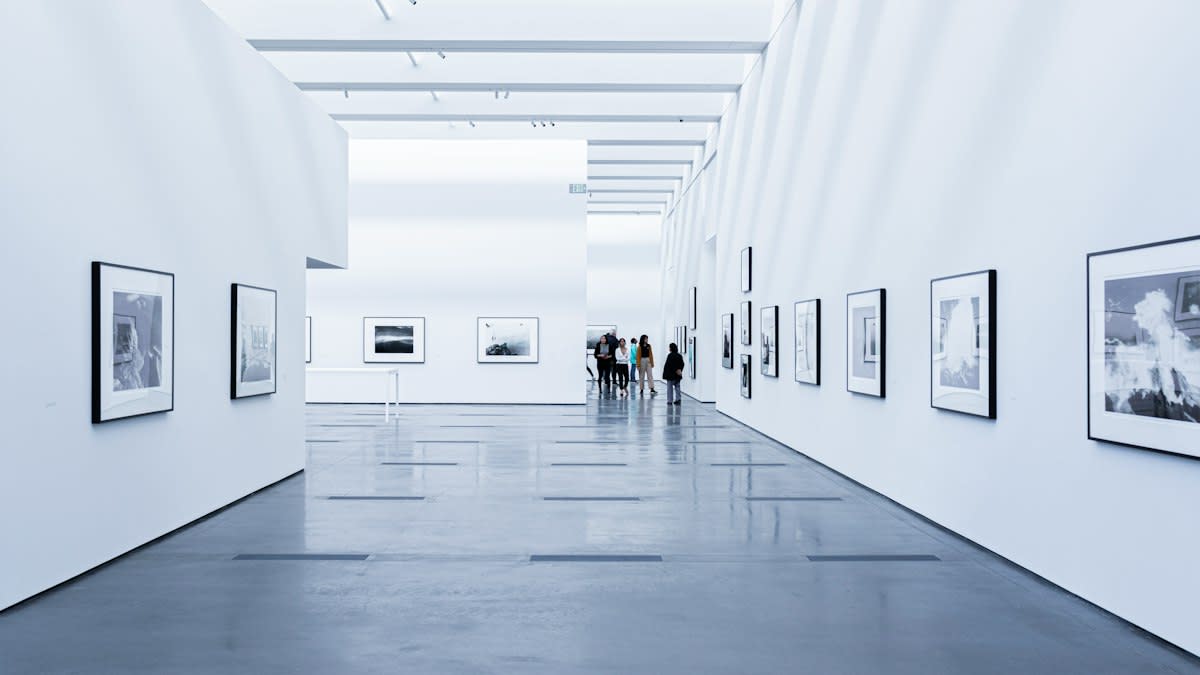
- De-optimize the Layout: Stop placing the 'hero piece' in the center of the room for the perfect photo op. Break the sightlines. Force the viewer to move their body in awkward ways to see the work. Create dead zones in the gallery where the lighting is suboptimal for photography but perfect for contemplation.
- Source from the Periphery: Stop using Instagram to find talent. Go to the studios in the outskirts of Lagos or the warehouses in Ho Chi Minh City. Look for work that is physically cumbersome—massive sculptures, fragile installations, or works that require a 20-minute explanation. These are the things the algorithm hates and the public actually needs.
- Implement the 'Anti-Thumbnail' Test: Before accepting a piece, ask: 'Does this look boring in a small square?' If the answer is yes, but the work is powerful in person, it is a winner. You are looking for the delta between the digital representation and the physical reality.
- Manage the Ego: When the owner complains that the 'viral' crowd isn't coming, show them the depth of engagement from the people who did stay. Shift the metric from 'number of visitors' to 'average time spent per artwork'.
This process is not linear. You will face resistance. The industry is currently optimized for a high-volume, low-attention model. By introducing friction, you are essentially attacking the business model of the modern commercial gallery. But the alternative is a world where every gallery in every city looks like the same generic hotel lobby. That is not an art scene; it is a franchise.
"The danger is not that AI will curate our galleries, but that humans will begin to think like AI, selecting works based on predicted probability of success rather than the visceral necessity of the art itself."— Elena Rossi, Senior Curator at the Biennale of Peripheral Arts
Ground-Level Friction: The Ugly Reality
In the real world, this looks like a screaming match in a half-finished gallery space. I have seen curators try to implement these strategies only to be told by the board that they are 'killing the brand'. There is a genuine fear among gallery directors that if they stop providing 'content' for the public's social media, they will become invisible. This is a legitimate fear because the platforms have successfully conditioned the audience to expect a certain type of visual candy.
Then there is the artist's ego. Many young artists are now terrified of making work that isn't 'algorithm-friendly'. They ask for specific lighting so their work looks better on a phone. They avoid complex textures that don't photograph well. The friction here is not just between curator and owner, but between the curator and the creator. You have to convince the artist that being 'un-shareable' is a mark of prestige, not a failure of marketing.
Common Pitfalls
Do not confuse 'anti-algorithm' with 'pretentious'. The worst mistake a curator can make is replacing the 'Instagram aesthetic' with a 'pseudo-intellectual aesthetic' that is equally formulaic. If you are just swapping neon lights for stacks of old newspapers and grainy black-and-white photos because that is what 'serious' galleries do, you have not broken the loop; you have just changed the channel.
Another trap is the total rejection of technology. You cannot ignore the digital layer entirely. The goal is not to ban phones from the gallery—that is a utopian fantasy that usually ends in a PR disaster. The goal is to make the physical experience so superior to the digital capture that the viewer feels a sense of loss when they look at the photo they just took. The art should be the destination, not the backdrop for a selfie.
Fact-Check & Accuracy Note
Settled: Algorithmic curation has led to a measurable increase in visual similarity across global gallery hubs (Source: Visual Pattern Analysis Study, 2021). Debated: Whether this trend is driven primarily by the platforms (Instagram/TikTok) or by a systemic shift in art education and market speculation.