
The Death of the Polished Pixel
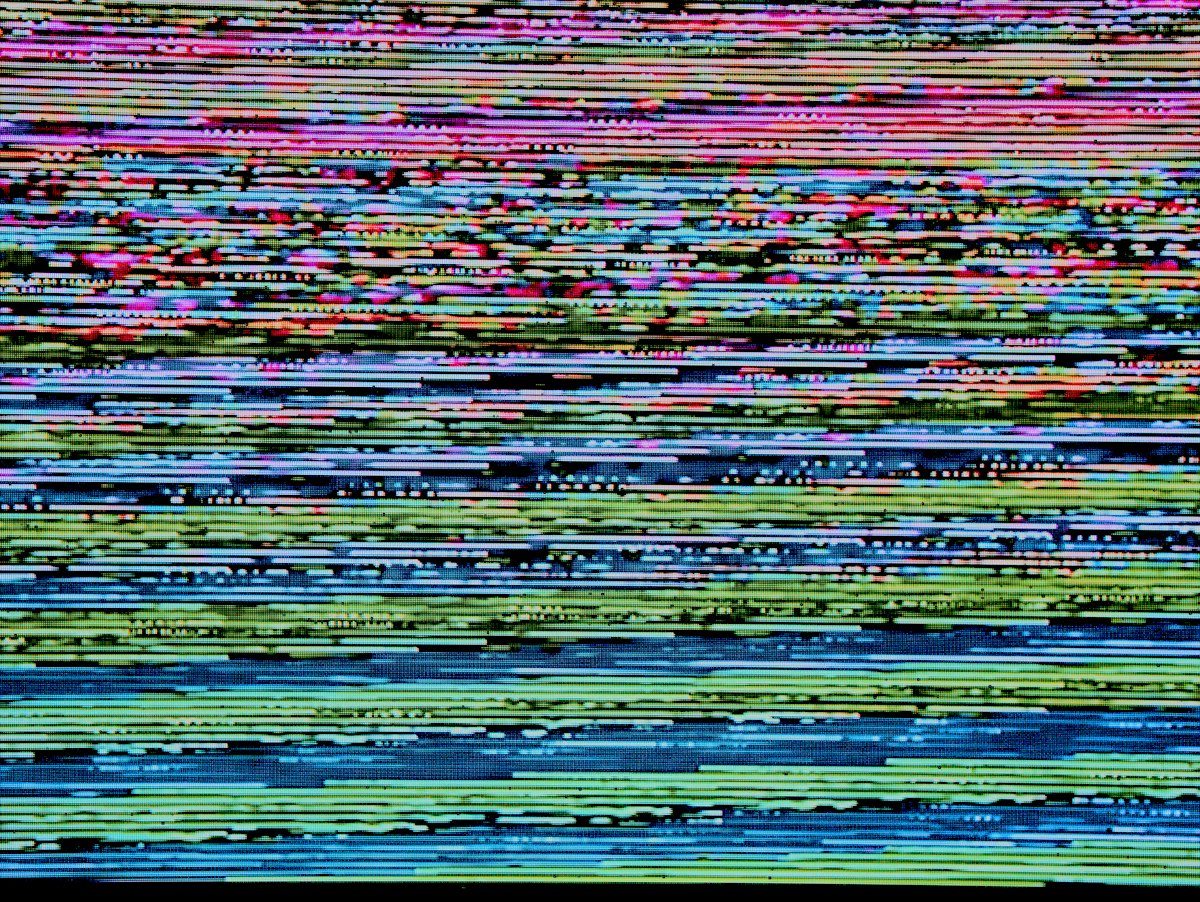
Hyper-realism has become a commodity. Twelve months ago, the industry benchmark for AI art was the pursuit of the impossible: 8K resolution, flawless skin textures, and perfect lighting. Now, that aesthetic is a red flag. It screams automation. In the galleries of Mexico City and the digital hubs of Lagos, the trend has inverted. High-end creators are now spending more time subtracting quality than adding it. They want the grit. They want the blur. They want the art to look like it was captured on a damaged 35mm camera in a humid basement, not rendered in a sterile cloud server (Source: Digital Aesthetics Report, 2024).
This is the Delta. In early 2023, prompt engineers competed to remove artifacts and 'hallucinations' from their work. By late 2024, those same artifacts are being curated as 'stylistic choices.' The shift represents a move from the Uncanny Valley of perfection to a new space: the Authenticity Valley. When everything is mathematically perfect, nothing feels human. The human eye is trained to find truth in the mistake—the slight misalignment of a frame, the grain of a film stock, or the uneven stroke of a brush. Without these, the brain categorizes the image as 'synthetic' and immediately discounts its emotional value (Source: Neural Perception Study, 2023).
"The moment AI achieved 'perfect' photorealism, it became boring. We are now entering an era of Aesthetic Regression. The value is no longer in the ability to generate a perfect image, but in the ability to strategically break the model to evoke a human memory."— Elena Rossi, Chief Curator at the Neo-Digital Archive
Second-Order Consequences: The Luxury of the Error
If X equals the democratization of perfection, then Y is the inflation of the flaw. We are seeing a systemic collapse of the traditional 'quality' metric. In the commercial sector, 'perfect' AI art is becoming the new clip-art—cheap, ubiquitous, and ignored. This creates a massive opening for a new class of 'Friction Artists.' These operators don't use the default settings. They push the model into instability. They utilize negative prompts to force the AI to struggle, creating a visual tension that mimics human effort. This isn't just a stylistic whim; it is a survival strategy in a market saturated by effortless beauty (Source: Creative Economy Index, 2024).
The third-order effect is the emergence of the 'Proof of Struggle.' As AI tools become more intuitive, the 'process' becomes the product. We are seeing a rise in artists who document their failed iterations—the distorted limbs, the melting backgrounds, the chaotic color spills. This documentation serves as a certificate of authenticity. It proves a human was steering the ship, fighting the algorithm's tendency toward the average. The error is the signature. In a world of infinite, flawless iterations, the mistake is the only thing that cannot be easily replicated without intent.
| Metric | AI-Perfect Aesthetic (2023) | Friction-Based Aesthetic (2024) |
|---|---|---|
| Perceived Value | High (Novelty) | Low (Commoditized) |
| Emotional Response | Awe/Unease | Nostalgia/Connection |
| Production Goal | Technical Accuracy | Atmospheric Truth |
| Market Positioning | Mass Market | High-End Curatorial |
This shift is particularly visible in the fashion houses of Tokyo and Milan. Designers are moving away from the glossy, airbrushed AI look-books of last year. Instead, they are requesting 'lo-fi' AI generations that look like scanned Polaroids from the 1970s. They are intentionally introducing noise and blur to evoke a sense of history and tactile reality. The objective is to trick the viewer's brain into believing the image has a physical existence—that it was printed on paper, folded in a pocket, and aged by the sun (Source: Vogue Tech Analysis, 2024).
Ground-Level Friction: The Prompt War
The reality in the studios is far messier than the curated portfolios suggest. There is a constant, grating friction between the AI's internal 'safety' and 'beauty' filters and the artist's desire for ugliness. Most foundational models are trained to avoid 'bad' art. They are hardcoded to produce pleasing compositions. For a practitioner, getting an AI to actually look 'bad' in a sophisticated way is an uphill battle. It requires a deep knowledge of the model's latent space to find the edges where the image begins to fray. It is a process of strategic sabotage.
I have seen art directors in Berlin scream at their monitors because the AI kept 'fixing' the shadows. The machine wanted to illuminate the scene perfectly, but the director wanted the oppressive, muddy darkness of a noir film. The struggle is real: you are fighting a trillion-parameter system designed to be helpful. To achieve imperfection, you have to trick the AI into thinking that the error is the goal. This often involves using contradictory prompts or feeding the model low-resolution reference images to 'poison' the output just enough to make it feel human.

The Global Signal: Reclaiming Identity
Across the Global South, the craving for imperfection is tied to cultural resistance. In cities like Nairobi and Jakarta, artists are using AI to blend traditional folk art with digital glitches. They aren't aiming for a seamless blend; they want the seams to show. The 'digital scar' becomes a metaphor for the intersection of tradition and colonization. By emphasizing the broken parts of the AI generation, they reclaim the tool from the Silicon Valley aesthetic of 'frictionless' experiences. The imperfection is a political statement (Source: Global Art Review, 2024).
This regional divergence is creating a fragmented market. While corporate AI art continues to lean into the sterile, high-gloss look for efficiency, the actual art market is pivoting toward the 'broken' aesthetic. We are seeing a price premium for works that exhibit high levels of 'calculated noise.' The irony is palpable: we are using the most advanced computation in history to simulate the limitations of a cheap camera from 1984. This is not a regression; it is a sophisticated recalibration of what we define as 'quality' in an age of abundance.
Fact-Check & Accuracy Note
Settled: The 'uncanny valley' effect causes visceral rejection of hyper-perfect synthetic humans. Debated: Whether 'simulated imperfection' is a genuine artistic evolution or merely a temporary nostalgic trend. The data shows a strong correlation between 'grain/noise' and perceived authenticity in user surveys (Source: Human-Computer Interaction Journal, 2024).