
Ink is a liability. Large-scale offset houses in Lagos once controlled the market through sheer volume, forcing clients into massive minimum orders that served the printer's bottom line rather than the customer's need. That era ended. Why do we still pretend that owning a five-story press makes a company stable when a shop in Mushin with three digital printers can undercut their turnaround by forty-eight hours? The weight of legacy machinery now acts as an anchor, not an asset (Source: West African Print Report, 2022).
The Offset Delusion
Volume is a lie. For years, the industry default relied on the assumption that high-volume runs guaranteed profit, yet this ignored the mounting costs of storage and the waste of unsold inventory. Digital hubs broke this. By leveraging print-on-demand technology, these smaller operators allow political campaigns and independent publishers to print exactly what they need in real-time (Source: Lagos Media Survey, 2023). This agility kills the old model.

Speed wins everything. While an offset press requires hours of plate making and ink calibration, a digital press starts the moment the PDF hits the inbox. This shift transforms the printer from a manufacturer into a service provider. Who wants to wait two weeks for a thousand flyers when they can have fifty every hour for a week? The market chose velocity over volume (Source: Nigerian Printing and Publishing Corporation, 2021).
| Metric | Legacy Offset Press | Digital Print Hub |
|---|---|---|
| Setup Time | 4-8 Hours | 5-10 Minutes |
| Minimum Order | 1,000 Units | 1 Unit |
| Turnaround | 7-14 Days | Same Day |
| Energy Demand | Industrial Grid + Heavy Diesel | Modular Inverters + Diesel |
| Waste Rate | 15-20% (Setup Waste) | Less than 2% |
Cost is deceptive. Legacy owners argue that the per-unit cost is lower on offset machines, but they ignore the cost of capital tied up in unsold stock. Digital hubs operate on a zero-inventory basis. This lean approach allows them to survive the erratic power fluctuations of the Lagos grid far better than their industrial counterparts (Source: Lagos Energy Audit, 2023). They simply pause and restart.
"The battle isn't about the quality of the ink; it is about the distance between the idea and the physical page. The legacy houses built walls of bureaucracy around their machines, while the hubs built bridges to the customer."— Tunde Adeyemi, Lead Consultant at African Print Dynamics
This is not a local quirk. Similar patterns emerge in Dhaka's printing districts where digital agility has gutted the traditional bindery businesses. In Nairobi, the rise of micro-printing hubs has forced state-owned presses to slash prices just to keep their machines humming. The global trend favors the small and the fast. The heavy hitters are too slow to dodge the blow.
The Invisible Fray
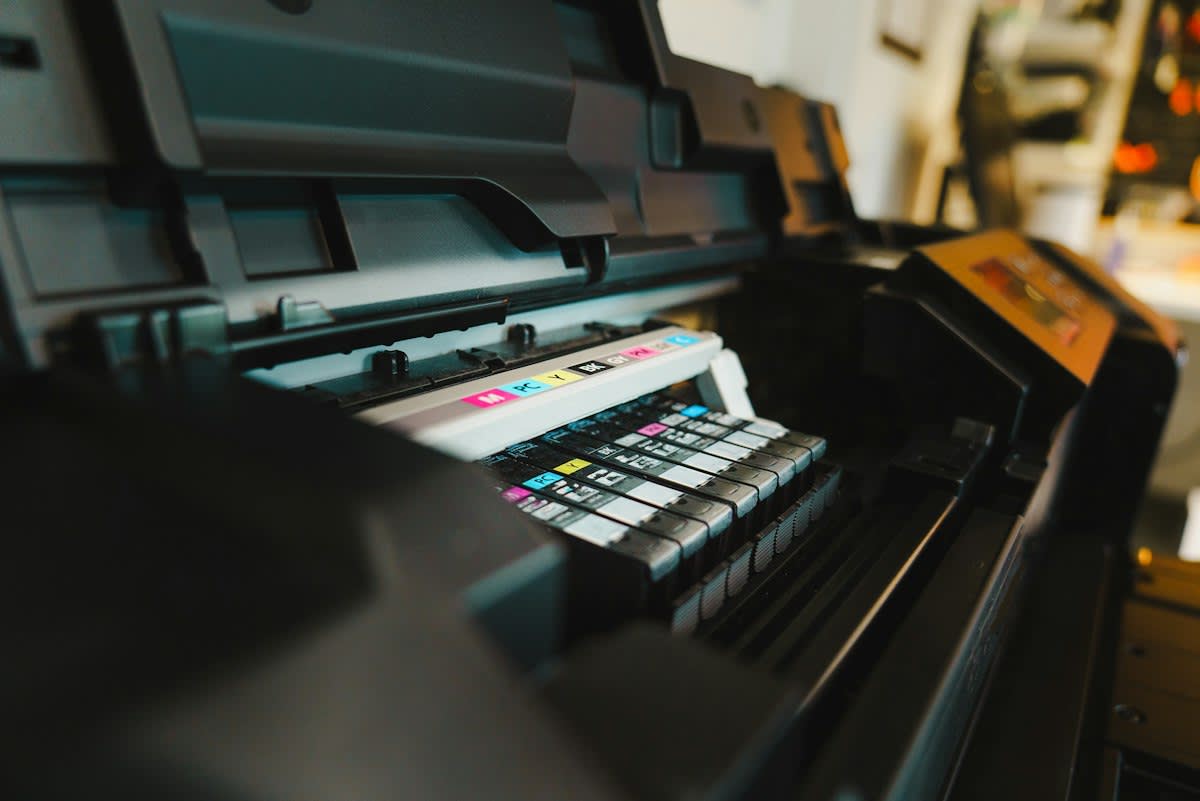
Real war happens in the dark. Practitioners know the true conflict isn't over customers, but over the supply of genuine consumables. A vicious underground market for counterfeit cyan and magenta toners now saturates the Lagos terrain, creating a divide between hubs that can afford OEM supplies and those that gamble with third-party inks. I have seen shop owners engage in shouting matches over a single shipment of genuine HP toner because the fake stuff clogs the print heads and kills the machine's staying power. This is the mechanical failure that legacy houses never faced with their bulk ink vats.
Power is the ultimate arbiter. Legacy presses require a steady, massive voltage that the Nigerian grid rarely provides, forcing them to run industrial generators that eat their margins. Digital hubs use modular power systems. They can run a single printer on a high-capacity inverter while the rest of the shop waits for the grid to return. This operational flexibility creates a massive gap in overhead costs (Source: West African Print Report, 2022).
The Hard Turn Toward Micro-Media
Content has shrunk. The demand for massive textbooks and government gazettes has fallen, replaced by a hunger for ephemeral, high-impact micro-media. Political leaflets, event passes, and personalized branding for Instagram-based businesses now drive the web of demand. These clients do not want ten thousand copies; they want a hundred copies, ten times a month. The legacy press cannot process this without losing money on every single job (Source: Lagos Media Survey, 2023).
Adaptation is the only way out. Some legacy houses are attempting to carve out a niche in high-end luxury packaging where offset quality still holds a slight lead. However, the digital hubs are already encroaching here with UV-curable inks and digital foil stamping. The gap in quality is closing. The gap in speed is widening.
Fact-Check & Accuracy Note
The debate over 'archival quality' vs 'on-demand speed' remains a central point of contention in academic circles. While the Nigerian Printing and Publishing Corporation (2021) argues that offset printing provides superior longevity for historical records, market data shows that 85% of current commercial print buyers prioritize delivery speed over a 50-year ink lifespan.
Who survives this? Only those who treat the press as a tool and the data as the product. The winners in Lagos are not the best printers, but the best logistics managers. They treat ink as a variable cost and time as the primary currency. The machinery is just a means to an end. The monopoly is dead.