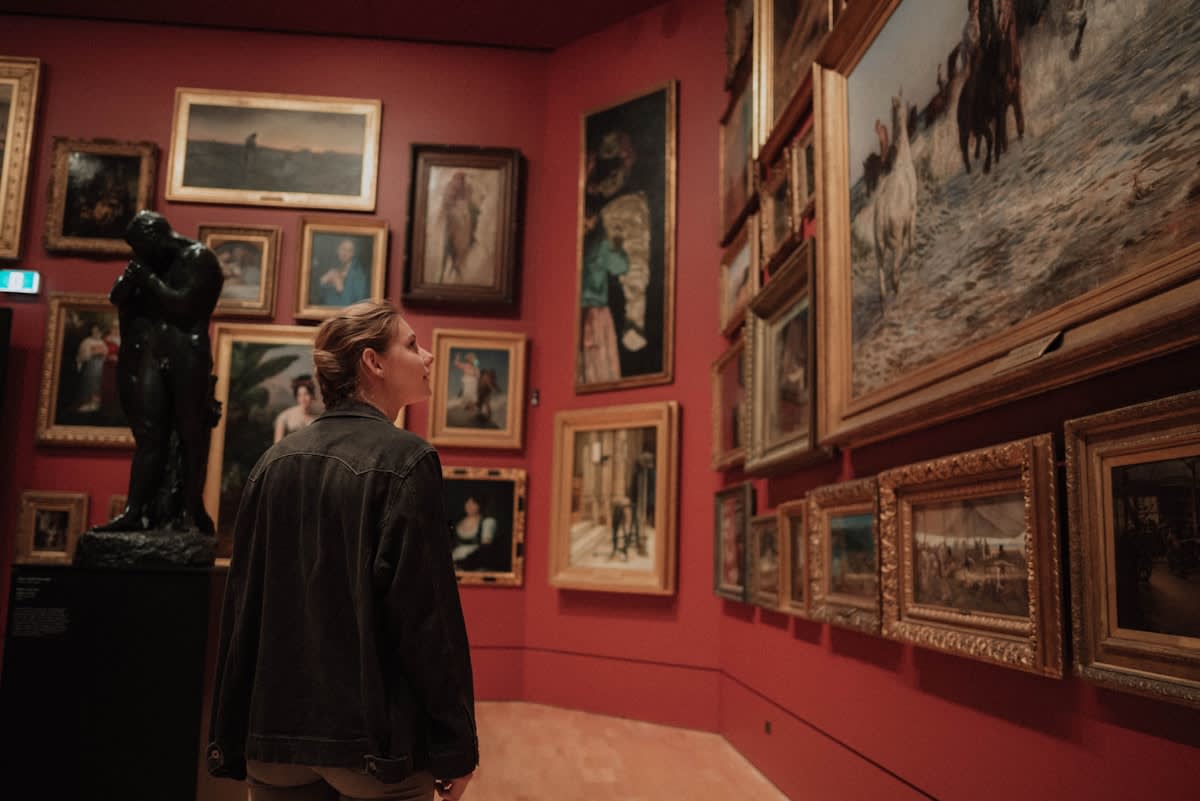
The current trajectory of the global art market suggests a violent correction against the digital. While the discourse around generative AI has focused on the democratization of creativity, the actual capital is flowing in the opposite direction. Christie's reported $2.7 billion in fine-art sales through June 2026, marking a 78 percent increase from the previous year. Sotheby's experienced an even more aggressive jump, rising 88 percent to $2.3 billion. This is not merely a recovery from a slump; it is a strategic migration of wealth toward assets that possess a physical history and a verifiable, non-synthetic lineage.
Why is the market suddenly obsessed with the tangible? The answer lies in the collapse of digital scarcity. When an image can be generated in seconds, the value of the visual output drops to zero. What remains valuable is the provenance—the record of who owned the piece, where it sat, and the physical struggle of its creation. This explains why Phillips, while seeing a solid 36.4 percent increase to $260 million, lagged significantly behind Christie's and Sotheby's. The differentiator was access to top-tier 20th-century material. The market is no longer buying aesthetics; it is buying the certainty of the object's existence in a physical timeline.
The Aura of the Original
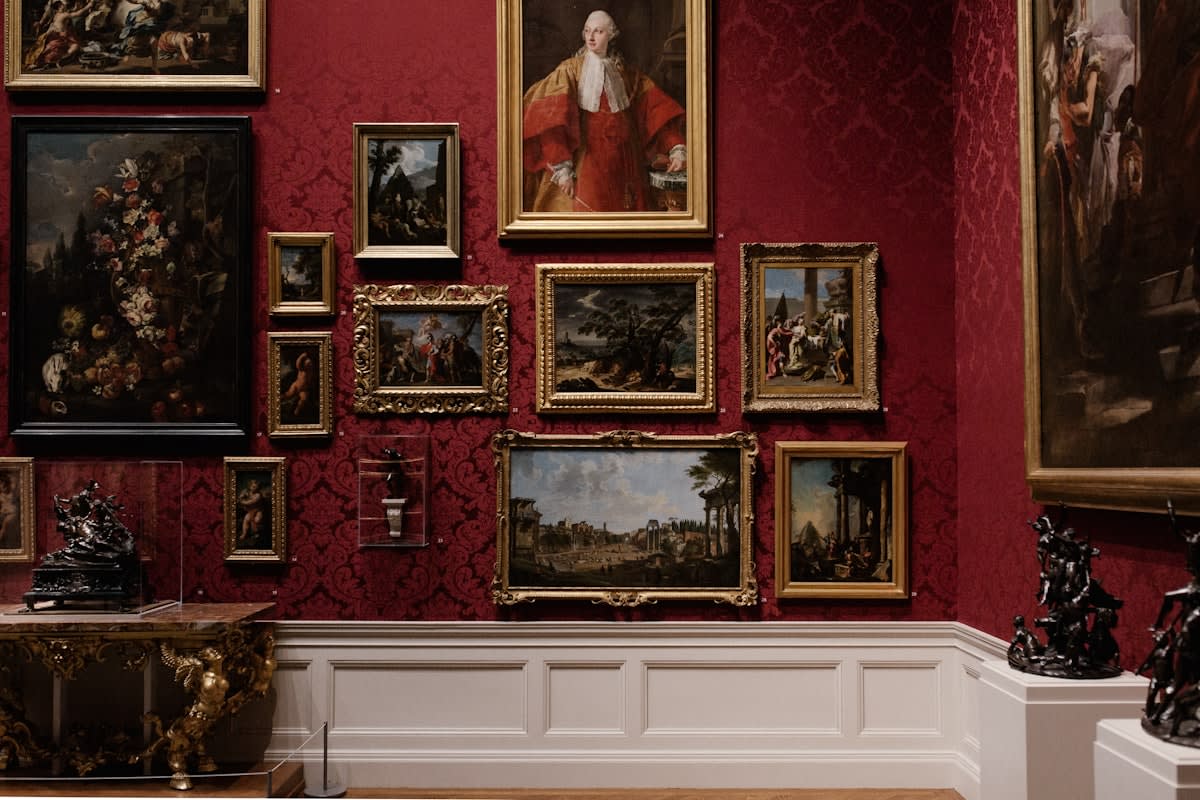
The psychological pull of the original is evidenced by the Metropolitan Museum of Art's recent exhibition, Sublime Poetry. The Raphael show became a post-pandemic blockbuster, attracting more than half a million visitors. In an age where high-resolution replicas are ubiquitous, the act of standing before a centuries-old canvas creates a visceral connection that no screen can replicate. This attraction is not about the image itself, but about the proximity to the artist's physical gesture. The crowd's reaction proves that the value of art is increasingly tied to its status as a relic.
This trend aligns with the theories of psychologist Adam Mastroianni, who suggests a grand unified theory of cultural stagnation. Mastroianni argues that risk-taking in art has declined because life has generally improved and become safer, leading people to avoid the volatility associated with truly avant-garde work. Synthetic art is the ultimate expression of this stagnation; it is an average of all existing data, devoid of risk. Consequently, the market is reacting by overvaluing the 'risky' physical history of the past—the works that were created in an era of genuine cultural volatility.
Market Divergence
The disparity between the $2.7 billion realized by Christie's and the $260 million at Phillips highlights a critical divide: the premium is now placed on 'deep provenance' over mere contemporary appeal.
| Auction House | Sales (Through June 2026) | Year-over-Year Growth |
|---|---|---|
| Christie's | $2.7 Billion | 78% |
| Sotheby's | $2.3 Billion | 88% |
| Phillips | $260 Million | 36.4% |
The hunger for the physical extends beyond the Western canon. In Honolulu, the Museum of Art is presenting Divine Disruption, a solo exhibition by Tsherin Sherpa. Sherpa's work is a masterclass in the fusion of the ancient and the contemporary, combining traditional Himalayan thangka painting with pop-culture influences. By rooting his work in a tradition that draws from Buddhist philosophy and millennia of visual sensibilities, Sherpa creates a layer of depth that synthetic art cannot simulate. The physical lineage of the thangka workshop provides a foundation of authenticity that makes the pop-culture elements feel intentional rather than derivative.
"Thangka painting is one of the rich traditional artforms of the Himalayan region that draws from Buddhist philosophy, lived experiences, and visual sensibilities of the region over millennia."— Tsherin Sherpa
Sherpa's journey from the sacred workshops of Nepal to the international stage underscores the value of apprenticeship and physical transmission of skill. This is the antithesis of the prompt-based creation process. The 'divine disruption' here is the realization that the most forward-looking art is often that which is most deeply anchored in physical tradition. When an artist can bridge the gap between a thousand-year-old spiritual practice and a 21st-century global trend, they create a product that is mathematically impossible for an AI to replicate because it requires a lived, physical experience of the sacred.

The Legal Weight of the Object
Provenance is not just a tool for valuation; it is a legal battlefield. New York investigators recently returned $600,000 worth of looted art, a reminder that the physical history of an object includes its thefts, its recoveries, and its rightful ownership. This 'messiness' is exactly what gives physical art its value. A digital file has no history of theft or recovery in the same sense; it is merely a copy of a copy. The fact that a piece of art can be looted and then returned via a legal process adds a layer of narrative weight that synthetic art can never possess.
Consider the contrast between the sterile perfection of a generated image and the raw physicality of Ryan McGinley's Night Shift at Jeffrey Deitch in SoHo. McGinley captured nude figures in nocturnal New York using long exposures. The resulting images are not just pictures of people; they are records of time, light, and physical presence in a specific geographic location. The 'grain' of the experience—the cold New York night, the vulnerability of the nude body—is embedded in the medium. This is the 'physical proof' that the market is now craving.
Does the rise of synthetic art actually help the physical market? Paradoxically, yes. By flooding the world with an infinite supply of 'perfect' images, AI has stripped the image of its power. We are seeing a return to the object as the primary unit of value. Whether it is a Raphael canvas at the Met or a Sherpa sculpture in Honolulu, the value is derived from the fact that the object exists in one place at one time. The scarcity is no longer about the image, but about the matter.
The systemic shift is clear: the art world is moving toward a bifurcated economy. On one side is the realm of synthetic content, which will be treated as a utility—fast, cheap, and disposable. On the other is the realm of physical provenance, which will be treated as a luxury hedge. The massive growth in auction sales is the first signal that the elite are repositioning their portfolios. They are moving away from the digital ether and back into the heavy, dusty, and verifiable world of oil, canvas, and stone.