
The Death of the Polished Surface
We have officially entered the era of the 'perfect' output. From hyper-realistic avatars to flawless prose, synthetic media has solved the problem of technical execution. But in solving it, AI has inadvertently commoditized perfection. When any operator can generate a visually stunning image or a grammatically impeccable essay in seconds, the market value of 'flawlessness' plummets to zero. We are witnessing a systemic inversion where the very things we once spent decades trying to eliminate—the smudge, the hesitation, the idiosyncratic distortion—are becoming the only reliable signals of human origin.
Look at the current state of digital publishing. As reported in August 2026, Amazon is reportedly flooded with AI-generated titles that are polished yet entirely soulless. These books possess the structural integrity of a novel but lack the visceral resonance of lived experience. This saturation is driving a counter-trend: a renewed reliance on known publishers as a proxy for human authorship. Readers are no longer searching for the best-written book; they are searching for the book that has been most clearly felt. When text becomes infinite, real authorship becomes the scarcest resource in the creative economy.
"In the AI era, flaw is not failure -- it's human signature."— The Economic Times
This shift isn't just a nostalgic whim; it is a strategic response to the erosion of trust. If a piece of media is too perfect, the sophisticated modern consumer instinctively asks: Who actually thought of this? The 'Provenance Paradox' suggests that as synthetic media becomes indistinguishable from reality, we will stop valuing the result and start obsessing over the process. The luxury of the future is not the finished product, but the documented struggle of its creation.
The Aesthetic of Distortion
Great art has always thrived on the rejection of accuracy. Consider the works of Picasso or the Indian artist MF Husain. Husain did not draw horses based on anatomical precision; his horses were restless, elongated, and full of motion. Their power derived specifically from their distortion, not their accuracy. AI, by contrast, defaults to a probabilistic average of 'correctness.' It can simulate a style, but it cannot simulate the intentional choice to be wrong for an emotional purpose. This distinction is where the new luxury market resides.
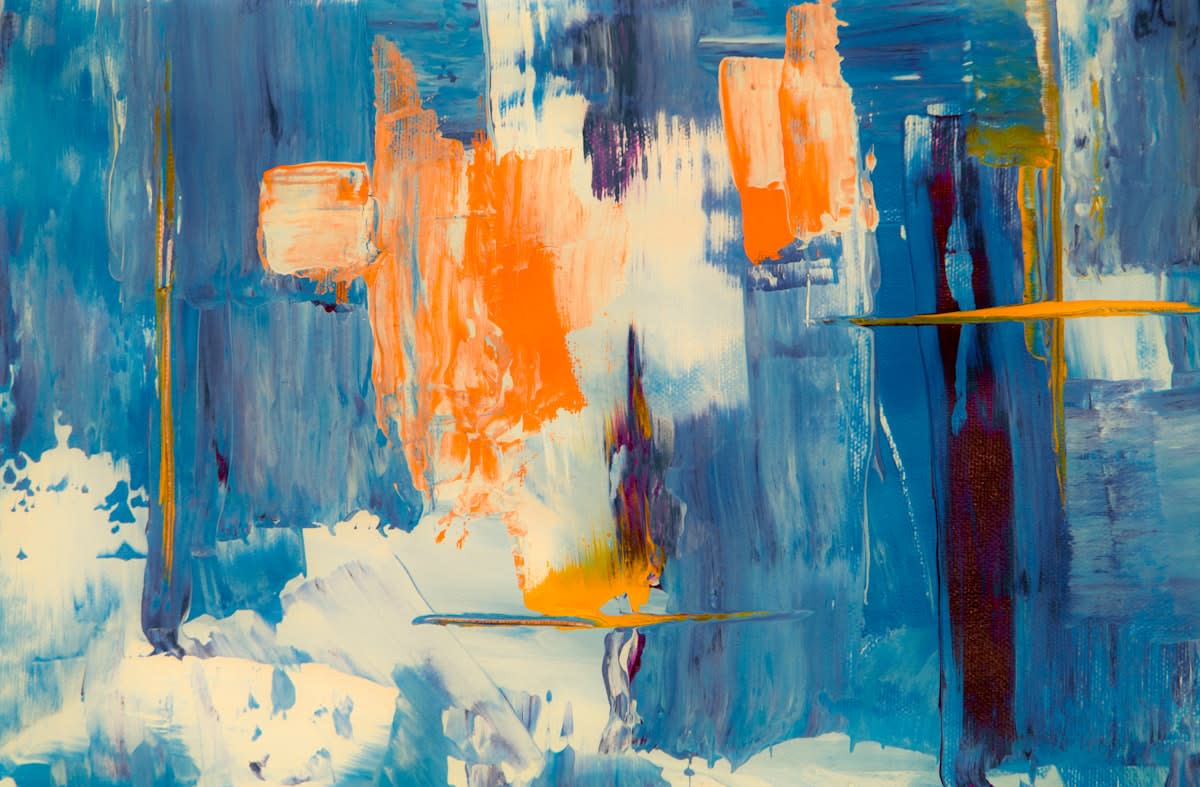
Why does this matter now? Because we are reaching a saturation point where the human eye is becoming fatigued by AI's 'uncanny valley' of perfection. We crave the grit. We crave the evidence of a hand that shook or a mind that leaped to an illogical but brilliant conclusion. This is not about a return to the primitive, but a sophisticated pivot toward 'Human Capital Resilience,' where the ability to apply subjective judgment outweighs the ability to execute a task.
This evolution is redefining the creative boundary. As Professor Ho Tu Bao noted in August 2026, AI can be a powerful tool, but it lacks a worldview or life experiences. The industry's most critical boundary is now the preservation of human vision. If the tool handles the execution, the human must provide the soul—the specific, often messy, perspective that an algorithm cannot synthesize because it has never lived a day in its life.
The Strategic Pivot: From Execution to Judgment
In the corporate world, the premium is shifting with equal velocity. For years, companies focused on digital transformation—the implementation of tools to increase efficiency. Now, the focus must shift to human transformation. The goal is no longer to find people who can use the tools, but people whose judgment is sharp enough to know when the tool is lying. This is the core of Human Capital Resilience: the ability to develop decision-making that evolves faster than the software.
| Dimension | The Synthetic Standard (Commodity) | The Human Luxury (Premium) |
|---|---|---|
| Primary Value | Execution and Speed | Judgment and Provenance |
| Quality Metric | Technical Flawlessness | Emotional Resonance/Intentionality |
| Output Nature | Probabilistic Average | Idiosyncratic Deviation |
| Risk Profile | Hallucination/Genericism | Human Error/Subjectivity |
| Market Signal | Efficiency | Authenticity |
Consider the operational impact. If an AI tool can save a professional three hours of repetitive work, the value is not found in those three saved hours, but in what the professional does with the cognitive surplus. The mistake many organizations make is assuming that because AI can complete the work, it should also complete the thinking. This is a dangerous fallacy. When the 'thinking' is outsourced, the organization loses its competitive edge, becoming a mirror of every other company using the same model.
The Law of Shifting Premiums
The internet made information available; smartphones made it instantaneous; AI makes execution commonplace. In every revolution, the premium shifts to whatever the technology cannot automate. Today, that is judgment.
This shift creates a new hierarchy of labor. The 'executor' is replaced by the 'curator' and the 'judge.' The ability to distinguish a subtle truth from a convincing synthetic lie is becoming the most valuable skill in the global economy. We are moving away from a world of 'how to do' and into a world of 'why this matters,' where the human ability to assign meaning is the only remaining moat.
The Security Crisis: When Trust is a Vulnerability
The paradox of perfection extends into the realm of security. We have long relied on sensory verification—seeing a face or hearing a voice—as a proxy for identity. Synthetic media has weaponized this familiarity. Deepfakes now bypass the very sensory cues that employees use to trust their colleagues, turning the human instinct for recognition into a critical vulnerability. In this environment, 'looking real' is no longer a sign of authenticity; it is a red flag.
The failure of human perception is absolute. Data indicates that finance professionals and HR personnel detect synthetic media no better than the general population. This means that training people to 'spot the fake' is a wasted effort. The only viable defense is the implementation of rigid, protocol-based verification that ignores the sensory input entirely. We are seeing the rise of a 'zero-trust' sensory environment.

This systemic risk is already impacting the insurance industry. Adjusters are facing a wave of deepfake-generated imagery depicting staged accidents or fabricated property damage. Because these images are visually perfect, adjusters lacking forensic tools often accept them as credible documentation. This is not a future threat; it is an active surface being probed daily by bad actors who understand that our brains are hardwired to trust a clear image.
- Hardening business processes to resist exploitation regardless of visual perfection.
- Implementing out-of-band callback protocols using pre-registered numbers.
- Deploying phishing-resistant MFA via FIDO2/WebAuthn across all authentication surfaces.
- Establishing a second verification channel for every high-value transaction.
The irony is that the only way to secure our digital future is to stop trusting our eyes and ears. By adopting these four layers of defense, organizations are essentially admitting that the human sensory experience is now an unreliable narrator. We are decoupling 'seeing' from 'believing,' a psychological shift that will redefine human interaction for the next century.
The New Luxury: The Human Watermark
So, where does this leave the creator, the professional, and the leader? It leaves them with the opportunity to lean into their imperfections. The 'Human Watermark' is the presence of subjectivity, the courage to be wrong, and the ability to provide context that doesn't fit a probabilistic model. The future belongs to those who can prove they are not an average of a dataset.
We are moving toward a world where 'hand-made' will not just refer to physical objects, but to thoughts, strategies, and art. The prestige will not be in the absence of error, but in the presence of a human who takes responsibility for that error. When perfection is free, the only thing with value is the risk taken by a human being.
The Value Shift in the AI Economy
Executive Insight
+18.4%
YTD Growth
Ultimately, the Provenance Paradox teaches us that our flaws are not failures; they are our signatures. In a sea of synthetic symmetry, the asymmetrical, the distorted, and the imperfect are the only things that can truly be called luxury. The challenge now is to stop polishing our work until it looks like AI and start embracing the edges that make us human.