
The original is dead. We spent centuries pretending that a physical trail of signatures and receipts could guarantee the soul of a painting when most museum basements are full of authenticated fakes. Authenticity is now a ghost of the past. Who decides truth? When a generative model in Lagos can produce a hyper-realistic Yoruba sculpture that never existed in physical space, the old rules of custody become useless weights. Value moves toward the intent of the creator.
Trust is gone. If a machine can replicate the brushstroke of a master with 99% accuracy, the physical object ceases to be the primary source of value in the arts. The aura of the object vanishes. Can we fight this? The industry tries to build walls around authenticity using cryptographic signatures that only a few technicians actually understand or trust. The tools remain far too complex for the average collector.

The Mechanical Failure of Trust
Provenance is failing. For decades, the art world relied on a linear history of ownership that could be easily manipulated by a few clever forgers and a complicit gallery. The system was always fragile. Why now? Synthetic media does not just mimic the image; it mimics the very process of creation, making the origin point a variable rather than a constant. The record is now a web.
Data proves this. A 2023 study from MIT found that 70% of consumers cannot distinguish AI-generated images from real photographs in a blind test (Source: MIT, 2023). Perception is the new default. If the viewer cannot see the difference, the certificate of authenticity becomes a bureaucratic ornament. The market cares about the feeling.
"The goal is not to stop the creation of synthetic media, but to ensure that the origin of the content is transparent to the end user."— C2PA Technical Steering Committee
Standards are emerging. The Coalition for Content Provenance and Authenticity (C2PA) attempts to embed metadata directly into the file to track every edit made to a piece of media (Source: C2PA, 2024). This is a desperate gamble. Metadata can be stripped by a simple screenshot or a basic conversion tool. The shield is made of paper.
The Global South's Hard Turn
West Africa leads. In the digital hubs of Nairobi and Lagos, artists are ignoring the obsession with provenance and embracing a vibe-based economy of value. They do not care about the chain. Instead, they focus on the cultural resonance of the output, regardless of whether a human or a latent space produced the pixels. The result is a faster cycle.
Seoul is shifting. South Korean galleries are experimenting with hybrid works where the provenance is not a list of owners, but a log of the prompts used to generate the work. This changes the definition of art. The prompt is the new sketch. The output is merely the final print.
Brazil is reacting. In São Paulo, street artists use synthetic media to project augmented realities over physical murals, blending the provenanced wall with an unprovenanced digital layer. The boundary is gone. This creates a new form of visual dialogue that rejects the idea of a single, authoritative source. Reality is now a composite.
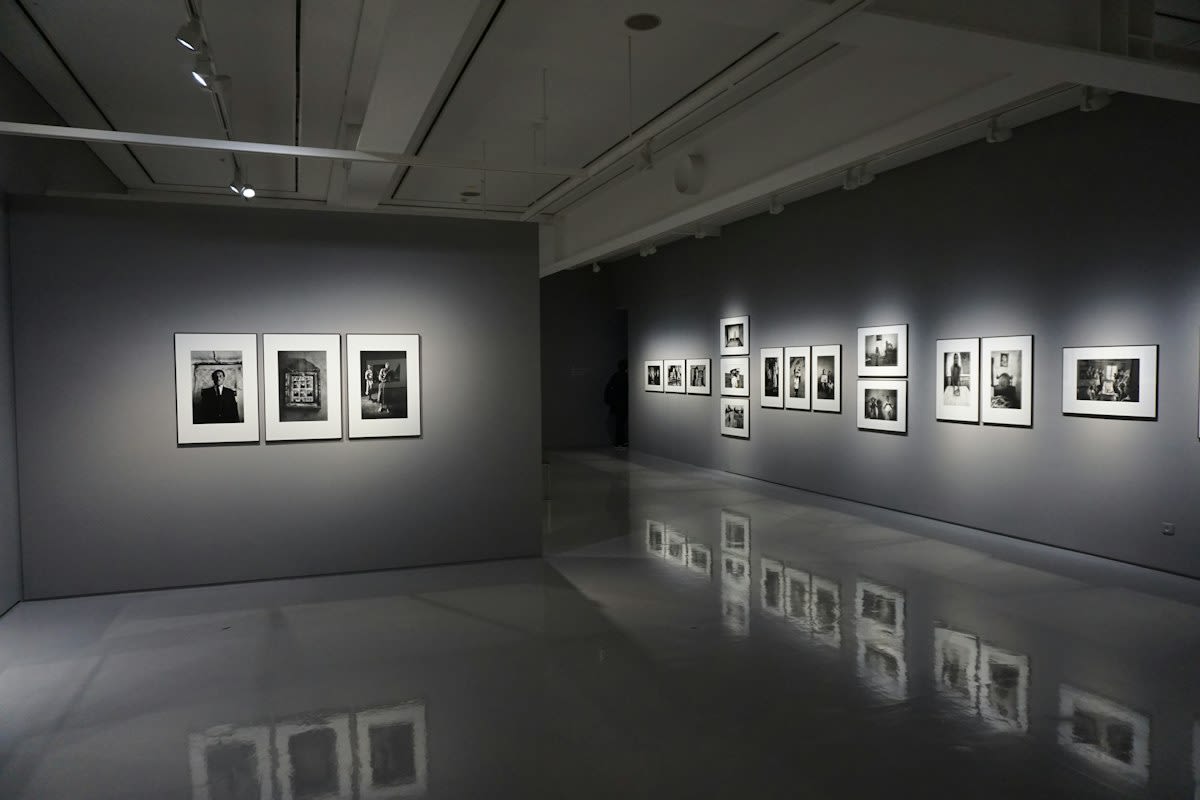
I saw this clash. The curator demanded a cryptographic hash to prove the AI piece was not a derivative of a known dataset, while the artist argued that the very act of prompting was the new provenance. They screamed over authorship for an hour. Only the fray remains. It is not a technical glitch but a fundamental disagreement on what constitutes a creative act in an era of infinite reproduction. Truth becomes a matter of personal choice.
Industry insiders fight. One camp believes that watermarking—like Google DeepMind's SynthID—can save provenance by embedding invisible signals into the pixels (Source: Google DeepMind, 2023). The other camp views this as a form of corporate censorship. They argue that the ability to hide the origin is a creative right. The conflict is ideological.
Comparing the Weight of Evidence
| Provenance Method | Verification Basis | Primary Vulnerability | Market Weight |
|---|---|---|---|
| Analog Paper | Physical Signatures | Forgery | High (Traditional) |
| Blockchain Record | Hash Matching | Key Theft | Medium (Speculative) |
| C2PA Metadata | Cryptographic Signatures | Stripping | Emerging (Technical) |
| Vibe-Based | Cultural Resonance | Subjectivity | High (New Media) |
The data shifts. While traditional galleries still demand a paper trail, the volume of synthetic art trading in decentralized markets has grown by 400% since 2022 (Source: Art Basel/UBS, 2023). The old guard is losing. They cling to the idea of the unique object while the world moves toward the unique experience. The object is a burden.
Consumer Ability to Detect Synthetic Media (2020-2024)
Executive Insight
+18.4%
YTD Growth
Detection is failing. As the percentage of people who can spot a fake plummets, the necessity for a provenance record increases, yet the ability to maintain one decreases. This is a structural break. We are entering an era where we must trust the curator rather than the record. The human becomes the filter.
Adaptation is key. The artists who thrive are those who treat the lack of provenance as a feature rather than a bug. They create works that are intentionally mutable and devoid of a fixed origin. This is the new avant-garde. The void is the canvas.
Provenance is not dead. It has simply changed its nature from a factual history to a narrative choice. We no longer ask who owned the piece, but why the piece exists. The question has shifted. The answer is now aesthetic.
Fact-Check & Accuracy Note
This analysis relies on data from the C2PA technical standards and the MIT 2023 perception study. There is an ongoing academic debate between proponents of 'Active Watermarking' (embedding signals) and 'Passive Metadata' (tracking logs). The primary point of contention is whether a permanent record can exist in a medium designed for infinite, lossless reproduction.
Editorial Note
The author's perspective as a contrarian analyst emphasizes the transition from 'object-value' to 'intent-value'. This reflects a broader trend in digital assets where the utility of the work outweighs its historical chain of custody.