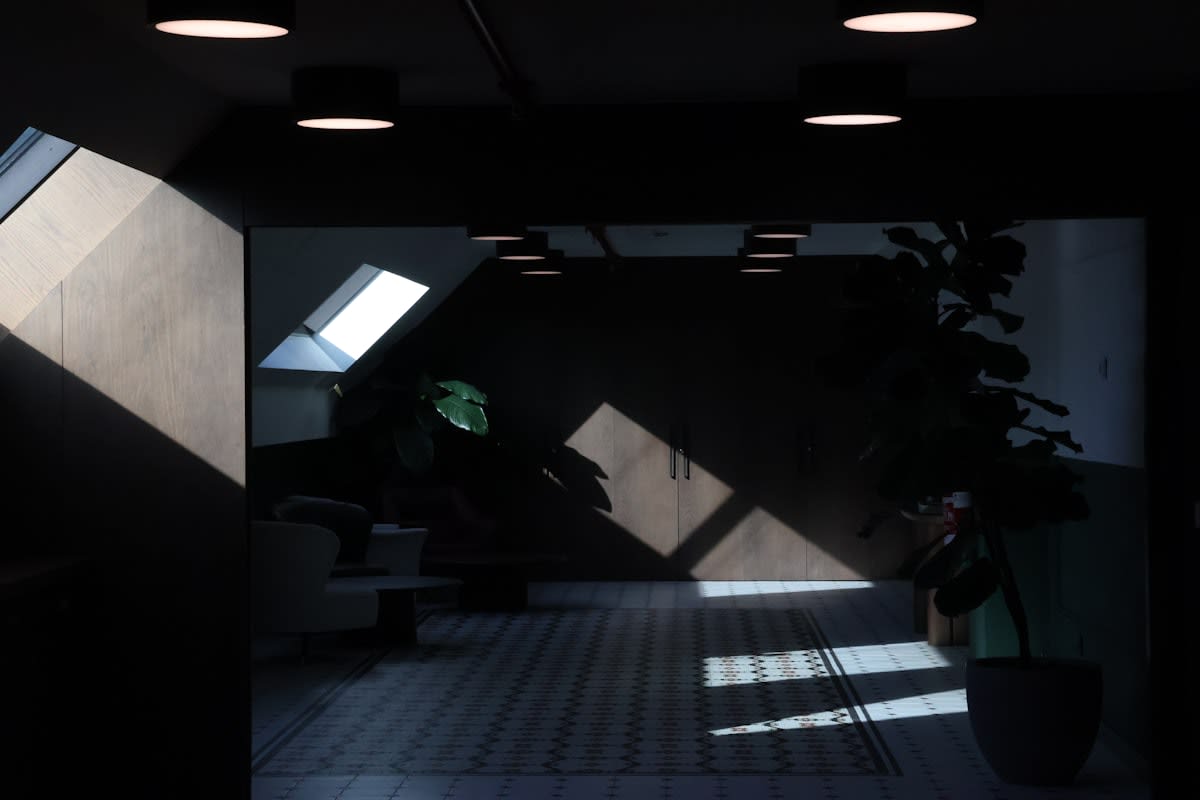
For decades, luxury was defined by what you could add to a space: gold leaf, Italian marble, or the latest smart-home integration. But a systemic shift is underway in the world's most dense urban centers. The new prestige is not about addition, but subtraction. Specifically, the subtraction of sound. In an era of perpetual connectivity and urban roar, the ability to control one's acoustic environment has become the ultimate indicator of social and economic standing. We are witnessing the birth of the Silence Premium.
Why now? Because noise is the one pollutant that permeates every layer of the city, yet remains largely unregulated in the private sphere. While we have standards for air quality and water purity, acoustic purity is left to the market. This has created a brutal dichotomy in urban planning. In cities like Madrid, this manifests as a literal vertical segregation. While the working class remains exposed to the systemic noise of the street, the wealthy are ascending into soundproofed penthouses that act as acoustic bunkers (Source: Streamline Feed, 2026). This isn't just about comfort; it is about the strategic acquisition of cognitive clarity.
The Architecture of Acoustic Segregation
When we look at the structural shifts in high-end real estate, the focus has moved from visual aesthetics to sensory isolation. Architects are no longer just designing for the eye; they are designing for the ear. The goal is the creation of a 'silent envelope.' In Madrid, the housing crisis has exposed these fault lines, where the ability to buy one's way out of the city's sonic chaos is the clearest marker of gentrification (Source: Streamline Feed, 2026). The soundproofed wall is the new gated community.
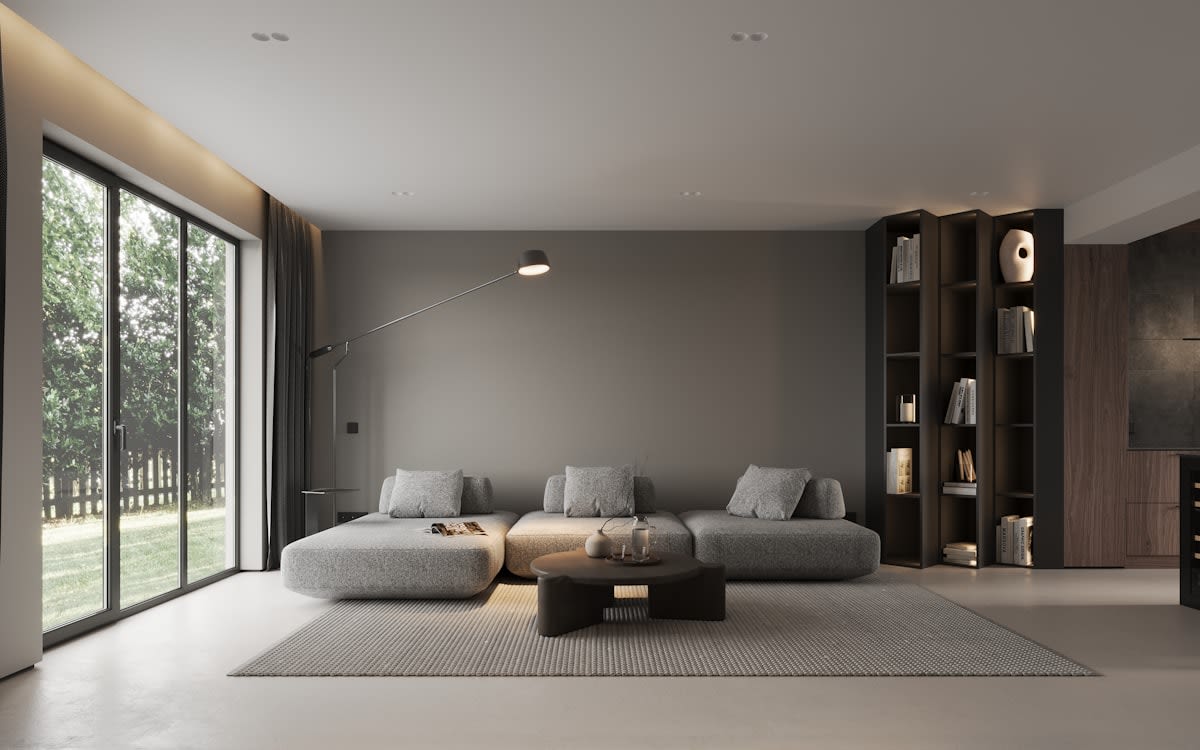
Does this trend signal a broader retreat from the public sphere? Likely. When the elite can curate a perfectly silent home, their incentive to invest in quieter public infrastructure vanishes. The result is a city where the soundscape is divided by income bracket. This is not a localized event in Spain; it is a global pattern. From the high-rises of Tokyo to the luxury lofts of New York, the 'silence premium' is being baked into the square-footage price.
| Luxury Dimension | Traditional Status Symbol (2000-2015) | Acoustic Status Symbol (2025-2030) |
|---|---|---|
| Urban Housing | Prime Location/View | Acoustic Isolation/Decibel Control |
| Travel/Leisure | Exclusive Access/Amenities | Pristine Soundscapes/Stillness |
| Wellness | Physical Fitness/Spa | Cognitive Restoration/Silence |
| Design Focus | Ornamental Opulence | Sensory Deprivation/Minimalism |
This shift is further validated by the way we are now valuing nature. We no longer visit the wilderness just for the scenery; we go for the silence. In Japan, the eco-tourism boom is being driven by silent forest trails where visitors sit quietly among pine trees to absorb the raw sound of freezing winds (Source: Travel and Tour World, 2026). This is a pivot toward 'acoustic purity' as a primary travel motivator.
The Quantified Silence: From Decibels to Dollars
We have entered an era where silence is being quantified and sold as a product. Sweden is leading this charge with highly specific acoustic offerings. Consider the 'Stay Quiet 2026' initiative in Skåne, which offers beachfront cabins on one strict condition: guests must keep their voices below 45 decibels (Source: Luxurious Magazine, 2026). By setting a hard limit on noise, the experience transforms silence from a passive state into an active, disciplined luxury.
"Nature exposure produced superior cognitive restoration compared with non-nature settings, with the largest benefits emerging after approximately 30 minutes."— Journal of Environmental Psychology, 2025 Systematic Review
This scientific backing provides the intellectual justification for the silence premium. A 2025 meta-analysis of 80 studies and 273 outcomes confirmed that nature-based silence is a critical tool for cognitive restoration (Source: Journal of Environmental Psychology, 2025). When the data proves that silence literally repairs the brain, those who can afford to buy it gain a competitive cognitive advantage over those who cannot.
To facilitate this, we are seeing the rise of 'digital guides to silence.' The Map of Quietude in Skåne, for example, provides travelers with average decibel measurements and 60-minute authentic soundscapes recorded on-site (Source: Luxurious Magazine, 2026). This is the ultimate commodification: the measurement of stillness to ensure the consumer is receiving the 'correct' amount of quiet for their investment.
As a practitioner in the design and media space, I see this debate playing out in the studio every day. The friction isn't about whether silence is good—everyone agrees it is. The real debate is about 'authentic' versus 'engineered' silence. Some argue that a high-tech soundproofed room is a sterile lie, while others claim that in a modern city, engineered silence is the only way to achieve true mental reset. We are fighting over whether the 'luxury' is the absence of noise or the presence of specific, curated sounds.
The Systemic Implications of the Quiet Luxury Shift
This isn't just a trend in travel or real estate; it's a reflection of how we value different forms of knowledge and existence. There is a historical parallel here. Just as the arts and humanities began to be viewed as a luxury compared to the perceived utility of science disciplines in the 1990s (Source: MAU Diva Portal, 2018), we are now seeing 'stillness' move from a basic human state to a luxury tier. The ability to be unreachable and unheard is the new peak of power.
What happens when silence becomes a gated asset? We risk creating a society where cognitive restoration is a privilege of the wealthy. If the only way to access the 30-minute threshold of cognitive recovery is through a high-priced Swedish cabin or a Madrid penthouse, the productivity gap between socioeconomic classes will widen. Silence is no longer just about peace; it is about performance.
- Acoustic Segregation: The physical separation of social classes based on noise exposure.
- Cognitive Arbitrage: Using paid silence to achieve mental restoration and a competitive edge.
- Sensory Engineering: The transition from natural quiet to curated, measured soundscapes.
- The Decibel Ceiling: The emergence of 'quiet-only' zones as a new form of exclusive membership.
Ultimately, the Silence Premium is a symptom of an over-stimulated world. We are not just fleeing noise; we are fleeing the demands of a digital existence that never stops talking. The Swedish 45-decibel limit is not a restriction; it is a liberation. For the global elite, the most expensive thing you can buy in 2026 is the right to be completely, utterly silent.
Fact-Check & Accuracy Note
Key claims regarding the Madrid housing dichotomy are sourced from Streamline Feed (2026). The data on the 45-decibel cabin and the Map of Quietude are sourced from Luxurious Magazine (2026). The cognitive restoration statistics are attributed to the 2025 systematic review in the Journal of Environmental Psychology. Ongoing debate in the field centers on the distinction between engineered soundproofing and natural acoustic environments.