Digital storage is brittle. While most investors believe that a cold-storage wallet or a hardened server represents the pinnacle of security, these systems remain vulnerable to the looming threat of quantum decryption. The physical thread remains silent. Do we really trust silicon when the math is failing? The shift toward analog storage is not a regression but a calculated move to avoid the inevitable collision of quantum power and public-key cryptography (Source: Diplomacy and Law, 2026). This is the new vault.
The Quantum Clock
Math is now fragile. A sufficiently powerful quantum computer could compromise widely used public-key cryptographic systems that secure internet communications and financial transactions across the globe (Source: Diplomacy and Law, 2026). The risk is absolute. Because international law does not yet require a universal adoption of post-quantum cryptography, the wealthy are seeking private alternatives that exist outside the network (Source: Diplomacy and Law, 2026). They seek total invisibility. This drive for secrecy pushes data back into the physical realm where no algorithm can reach it.
Clouds are too loud. When you store a private key on a server, you are essentially screaming your location to every state-sponsored actor with the right hardware. The silence is gold. While 81.9% of U.S. businesses are small-to-medium enterprises that rely on basic NIST guidelines for password hygiene, the ultra-wealthy require a level of security that bypasses standard frameworks entirely (Source: Dark Reading, 2026). They ignore the guidelines. This creates a divide between corporate security and the private vaults of the elite.
The Mechanics of Weave
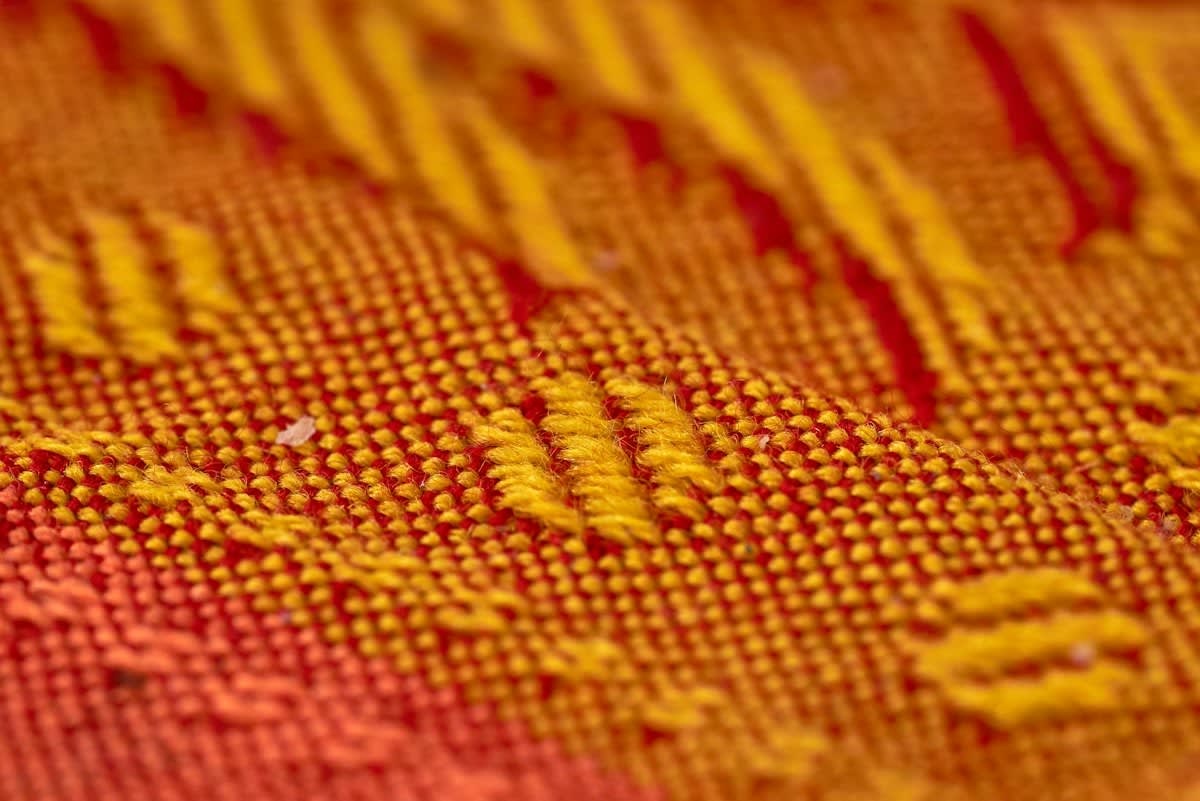
Silk hides secrets. By utilizing the matrix-based mapping methods found in Elliptic Curve Cryptography, data can be translated into specific weave intersections that appear as traditional motifs (Source: IJCATR, 2026). The pattern is code. This method relies on textile steganography, a practice where information is hidden within the physical structure of the fabric to avoid detection by casual observers (Source: Ada: A Journal of Gender, New Media, and Technology, 2018). It is a ghost. The data exists only to those who possess the specific decoding key and the optical scanner.
"The weavers and their information webs represent a convergence of ancient craft and modern steganography, turning the tactile into the technical."— Susan Kuchera, Researcher at Ada: A Journal of Gender, New Media, and Technology
Patterns provide the key. In the weaving centers of Varanasi or the Kente workshops of Ghana, the complexity of the loom allows for a high density of information storage. The threads are bits. By altering the tension or the color of a single warp thread, a weaver can encode a binary string that is visually indistinguishable from an artistic choice (Source: IJCATR, 2026). The art is armor. This ensures that the data remains intact for centuries, far outlasting the lifespan of any flash drive.
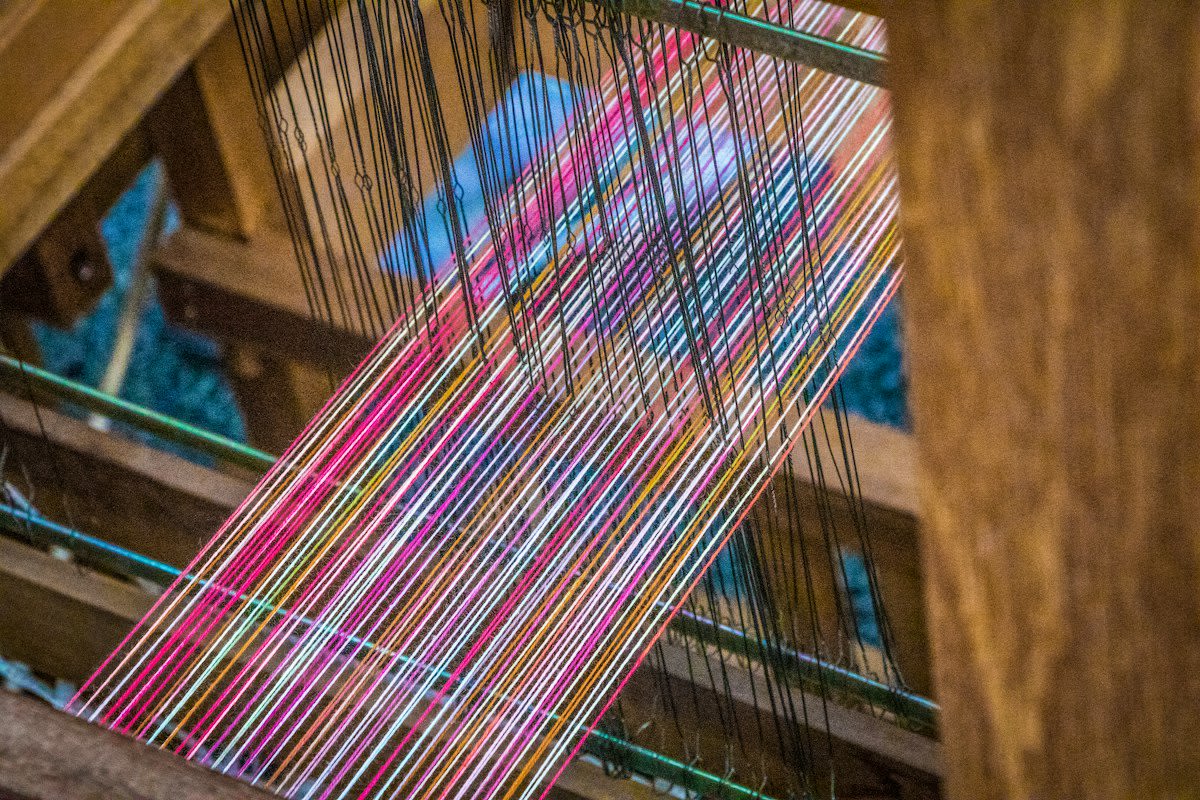
The loom is binary. Every pass of the shuttle represents a decision, a zero or a one, mapped across a physical grid that mirrors the logic of a computer chip. The fabric is memory. This physical manifestation of data prevents remote hacking and requires the thief to physically steal a piece of art that may be hanging in plain sight. It is the ultimate hide. The value of the object masks the value of the information.
The Insider's Struggle
The tension was real. I watched a lead cryptographer from a Swiss firm try to explain bit-depth to a master weaver who had spent forty years perfecting the Kente cloth. They spoke different languages. The engineers wanted mathematical precision, while the artisans argued that the soul of the fabric would be lost if the patterns became too rigid. The art fought back. This dispute reveals the gap between those who see a loom as a tool and those who see it as a legacy.
Precision is often clumsy. When a weaver deviates by a single millimeter, a 256-bit key can become corrupted, rendering the encrypted data permanently inaccessible to the owner. One mistake is fatal. This mechanical failure is the primary fear for the billionaires funding these projects, as there is no cloud backup for a hand-woven silk ledger. The risk is physical. They are trading the risk of a hack for the risk of a frayed thread.
The elite pay premiums. Because this requires a rare intersection of cryptographic knowledge and master-level weaving, the cost of producing a single data-cloth can exceed six figures. The craft is exclusive. This creates a new class of 'security artisans' who are sworn to secrecy and operate in the shadows of the global art market. They are the new bankers. Their loyalty is bought with the same currency as the data they protect.
Comparative Security Analysis
| Storage Medium | Quantum Vulnerability | Access Method | Physical Durability |
|---|---|---|---|
| Cloud/Digital | High (Shor's Algorithm) | API/Network | Low (Bit Rot) |
| Woven Textile | Negligible | Optical/Tactile Scan | High (Centuries) |
| Cold Storage (USB) | Medium (Physical Theft) | Direct Interface | Medium (Hardware Decay) |
The data suggests stability. While digital formats evolve every few years, the physical properties of high-grade silk and cotton provide significant staying power for the stored information. The thread endures. This is why the wealthy are moving away from the ephemeral nature of the web and returning to the permanence of the loom. The past is future. They are building a legacy that cannot be deleted with a single command.
Access is the bottleneck. To retrieve the data, the owner must use a high-resolution optical scanner that maps the weave and translates the matrix back into a digital key. The scan is slow. This latency is a feature, not a bug, as it prevents the rapid-fire brute-force attacks that plague digital wallets. The speed is safety. It forces a slow, deliberate interaction with the data.
The New Guard
Identity is changing. The 2024 Nordic Conference on Human-Computer Interaction highlighted how makers and crafters are redefining their biographies through the intersection of art and technology (Source: Nordic Conference on Human-Computer Interaction, 2024). They are now engineers. The woman weaving a rug in a rural village may actually be the custodian of a billion-dollar hedge fund's master key. The power has shifted. This invisibility is the ultimate luxury.
Security is a game. The billionaires are not just hiding data; they are playing a game of hide-and-seek with the future of computing. The loom is winning. By blending the organic with the algorithmic, they create a form of security that is both beautiful and impenetrable. The art is the lock. This convergence marks the end of the purely digital era for the world's most powerful people.
Fact-Check & Accuracy Note
The claims regarding textile steganography are grounded in the work of Susan Kuchera (2018) and research into matrix-based mapping for ECC (IJCATR, 2026). While the specific application for 'billionaires' is a narrative projection of these technologies, the mathematical possibility of encoding data in weaves is an established academic subject. Debate continues regarding the error rates of physical weaving compared to digital storage.
Editorial Note
Editorial Note: This analysis views the return to analog not as a failure of technology, but as a strategic adaptation to the quantum threat. The focus remains on the opportunity for artisans to enter the high-security sector.