
The Latency Tax
Truth is no longer a static record of events; it has become a low-latency financial asset. The recent unveiling of the Truth API by Trump Media & Technology Group (TMTG) transforms political speech into a high-frequency trading signal. By selling Wall Street firms the fastest possible access to posts from the ten most influential accounts, TMTG is not merely licensing data—it is selling a temporal advantage. When a post from a sitting or former president can move global markets in seconds, the difference between a push notification and a licensed API feed is the difference between profit and loss. Who controls the truth in this environment? Not the orator, and certainly not the public, but the entity that controls the speed of delivery.
This monetization of timing creates a two-tier reality. On one side, we have the algorithmic trading firms and banks who operate in the milliseconds, reacting to information before it even reaches the screen of the average citizen. On the other side, the general public consumes a delayed version of reality, a secondary truth that has already been priced into the market. Why does this matter? Because it institutionalizes information asymmetry. The Truth API acknowledges that the cost of a delay in information is high enough to justify a paid subscription, effectively placing a price tag on the window of time where truth is most potent.
"The feed is designed for organizations most impacted by the cost of a delay in information, such as algorithmic trading firms."— TMTG Spokesperson
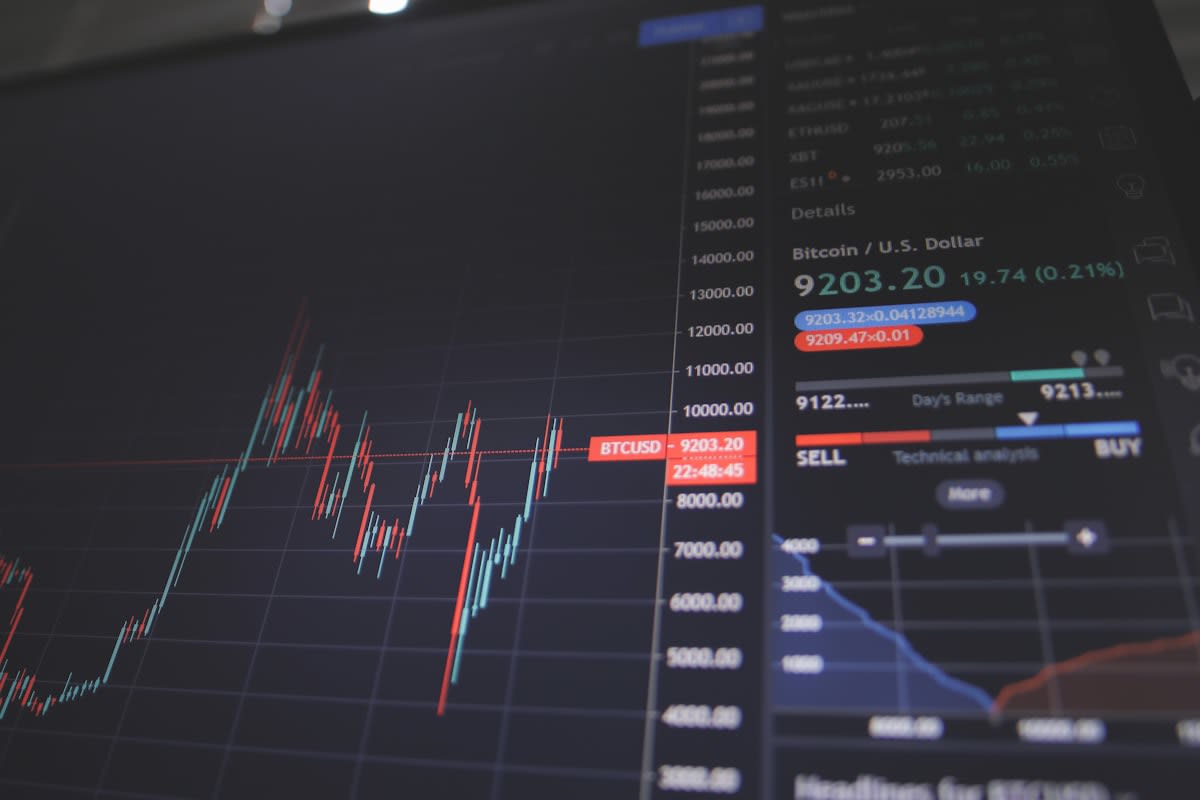
This move signals a desperate but strategic effort by TMTG to find revenue streams amid stiff competition from larger social media giants. By pivoting from a purely social media business to a data-licensing model, the company is admitting that the value of its platform is not in the community it hosts, but in the volatility its primary users can trigger. It is a clinical approach to media: treat the word of a leader as a market trigger rather than a communication. This reduces the 'truth' of a statement to its capacity to move a ticker symbol.
Does this not suggest that the algorithmic age has finally decoupled truth from meaning? In the world of the Truth API, the content of the post is secondary to the speed of its arrival. The algorithm does not care if the post is a policy shift or a whim; it only cares that the data packet arrived 200 milliseconds faster than the competitor's.
While Wall Street buys speed, other regions are fighting the total erasure of the factual record.
Erasure as a Tool of Governance
In Venezuela, the control of truth is not about latency, but about silence. Following devastating earthquakes on the northern coast, the reality on the ground is a stark contrast to any official narrative. Thousands remain missing, and hundreds of political prisoners are held in jails, creating a vacuum of accountability. When a regime controls the flow of information, the 'truth' becomes whatever is not forbidden. The acute suffering of millions who have lost homes and livelihoods is not a data point to be traded on an API; it is a liability to be hidden from the global eye.
The struggle in Caracas is a battle over the archive. Relatives of political prisoners protesting outside the U.S. Embassy are attempting to force a factual record into existence. In this context, the truth is not a commodity to be sold, but a weapon of resistance. The Washington Post's reporting highlights a systemic attempt to obfuscate the scale of the disaster, proving that in authoritarian structures, the primary goal of the information architecture is to ensure that the truth never reaches a critical mass.

How do we reconcile the Truth API's hyper-speed with Venezuela's hyper-silence? Both are expressions of the same systemic shift: the death of the universal truth. We have moved into an age where truth is fragmented into specialized streams. There is a 'Market Truth' for the elite, a 'State Truth' for the compliant, and a 'Hidden Truth' for the oppressed. The common thread is that none of these truths are accessible to everyone simultaneously.
The control of truth is therefore no longer about who is lying, but about who controls the infrastructure of the reveal.
When Records Lie
Even in stable institutional environments, the 'truth' provided by official records can be a fabrication. The case of Kyle Bylin and Jeremy Morrison in North Dakota provides a chilling example of institutional failure. For nearly four decades, these two men lived lives based on a fundamental lie: they were switched at birth at Unity Medical Center on January 28, 1988. The hospital's records—the official truth—were wrong for forty years. The institutional apparatus did not just fail; it maintained a falsehood that defined the biological and social identity of two families.
The resolution did not come from an institutional audit or a medical review. It came from an at-home DNA test, a piece of consumer biotechnology that bypassed the hospital's authority entirely. This is the ultimate contrarian shift of the algorithmic age: the decentralization of truth. When the institution (the hospital) fails, the individual turns to a biological algorithm (DNA sequencing) to find the reality of their existence.
This discovery led to a lawsuit, but the damage was already done. The 'truth' was uncovered not through a quest for justice, but through a Christmas gift exchange. It highlights the fragility of our reliance on centralized records. If a hospital can switch newborns and maintain that error for decades, what other institutional truths are currently operating on flawed data?
| Truth Type | Control Mechanism | Primary Value | Example Case |
|---|---|---|---|
| Market Truth | Low-Latency APIs | Profit/Arbitrage | TMTG Truth API |
| State Truth | Censorship/Erasure | Power/Stability | Venezuela Regime |
| Institutional Truth | Official Records | Administrative Order | Unity Medical Center |
| Biological Truth | Algorithmic Sequencing | Individual Identity | At-home DNA Testing |
We are witnessing the collapse of the 'Single Source of Truth'. Whether it is a financial feed, a government report, or a birth certificate, the traditional pillars of verification are crumbling. In their place, we have a fragmented landscape where the truth is discovered by those who can afford the fastest feed, those who can survive the regime's silence, or those who can afford a genetic test.
The New Information Economy
The 'Truth Gap' is the distance between the moment an event occurs and the moment it is verified by a reliable source. In the algorithmic age, this gap is being monetized by some and weaponized by others.
Ultimately, the question of who controls the truth is a question of who owns the pipeline. When TMTG sells a faster feed to Wall Street, they are admitting that the truth is a luxury good. When the Venezuelan state hides earthquake victims, they are treating truth as a threat. When a hospital loses a child's identity, they are treating truth as a clerical detail. The only constant is that the truth is no longer a public utility—it is a strategic asset.
The systemic shift is complete. We no longer search for the truth; we subscribe to the version of it that serves our immediate needs, whether that is making a trade, surviving a dictatorship, or discovering our biological parents. The algorithm does not find the truth—it merely optimizes the delivery of the version we are willing to pay for.