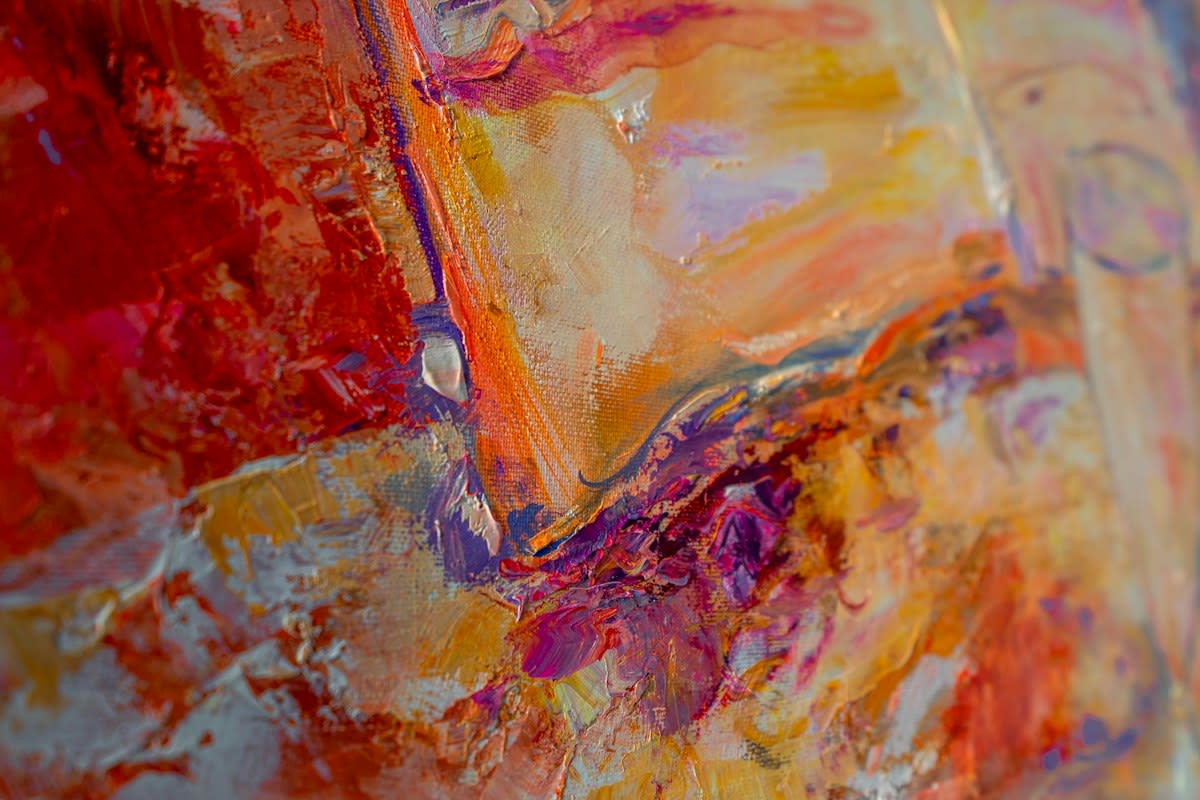
For decades, the high-end art world chased a ghost of technical perfection. We praised the seamless gradient, the invisible brushstroke, and the mathematical precision of composition. But that obsession was a mistake. In an era where AI can generate a flawless image in seconds, perfection has become a commodity—and commodities are cheap. The real value has migrated. Today, the primary driver of luxury value is tactile imperfection: the smudge, the ridge of oil paint, the grit of charcoal, and the irregular surface of hand-built clay. Why? Because these are the only things a machine cannot authentically replicate.
This isn't just a whim of a few galleries in London or New York. It is a systemic response to digital saturation. We are seeing a massive cultural pivot toward 'Analog'—a shift toward offline, tactile experiences designed to combat screen addiction and digital burnout (Source: Backbone Studios, 2026). This desire for the physical is bleeding out of the art world and into every luxury sector. When the top 10% of earners now account for nearly half of all consumer spending, their appetite for the 'real' becomes the market's new north star (Source: Backbone Studios, 2026).
Prerequisites for Tactile Valuation
Before you can accurately price or acquire a piece based on tactile value, you must strip away the traditional academic bias that views 'irregularity' as a lack of skill. You need a mindset that prioritizes the haptic over the visual. This requires an understanding of material resistance—how a medium fights the artist. If a work feels too 'easy' or too smooth, it likely lacks the tension that drives modern luxury value. You are no longer looking for the absence of error; you are looking for the presence of the human hand.
- A rejection of the 'pixel-perfect' aesthetic as a benchmark for quality.
- Knowledge of material-specific feedback (e.g., the difference between oil depth and acrylic flatness).
- An understanding of the 'Analog' macro-trend driving luxury consumer behavior.
- The ability to distinguish between accidental damage and intentional tactile markers.
The bridge between purely aesthetic appreciation and financial valuation lies in the material. To value imperfection, you must first understand the inherent properties of the media being used.
| Medium | Tactile Characteristic | Value Driver | Digital Counterpart |
|---|---|---|---|
| Oil Paints | Rich texture and depth | Blending complexity | Flat color fills |
| Charcoal | Spontaneity and grit | Tactile feedback | Clean vector lines |
| Watercolours | Transparency and fluidity | Layering unpredictability | Opacity layers |
| Hand-built Clay | Brushed/incised surfaces | Functional meaning | 3D Printed smoothness |
As noted in technical studio guidelines, natural media like oil paints allow for a richness of texture and depth that artificial media, such as acrylics, often struggle to replicate due to their faster drying times and limited blending capabilities (Source: Art and Design Studio, 2026). This technical friction is exactly where the value resides. The 'struggle' with the medium is the proof of authenticity.
How to Evaluate Tactile Value: A Step-by-Step Process
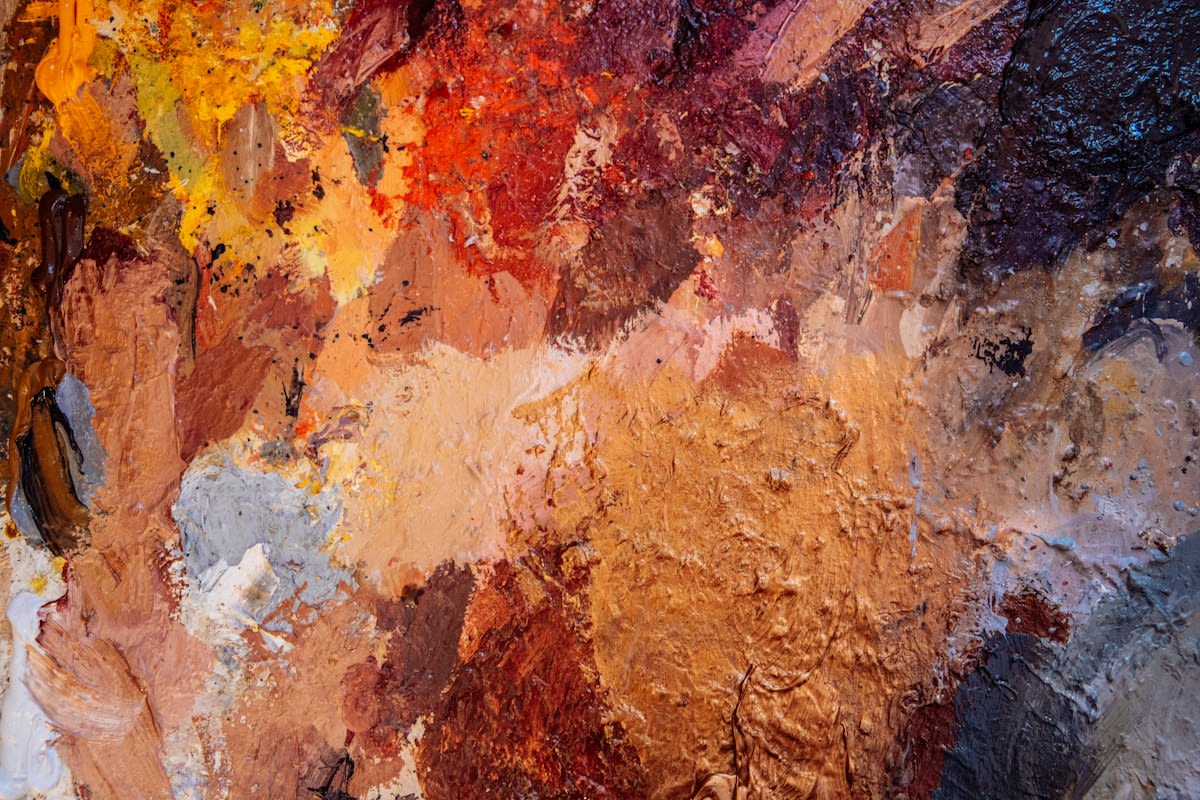
- Isolate the Material Feedback: Compare the work against its digital equivalent. Does the charcoal offer the spontaneity and tactile feedback that a digital drawing tool lacks? (Source: Art and Design Studio, 2026). If the answer is yes, you have identified the first layer of value.
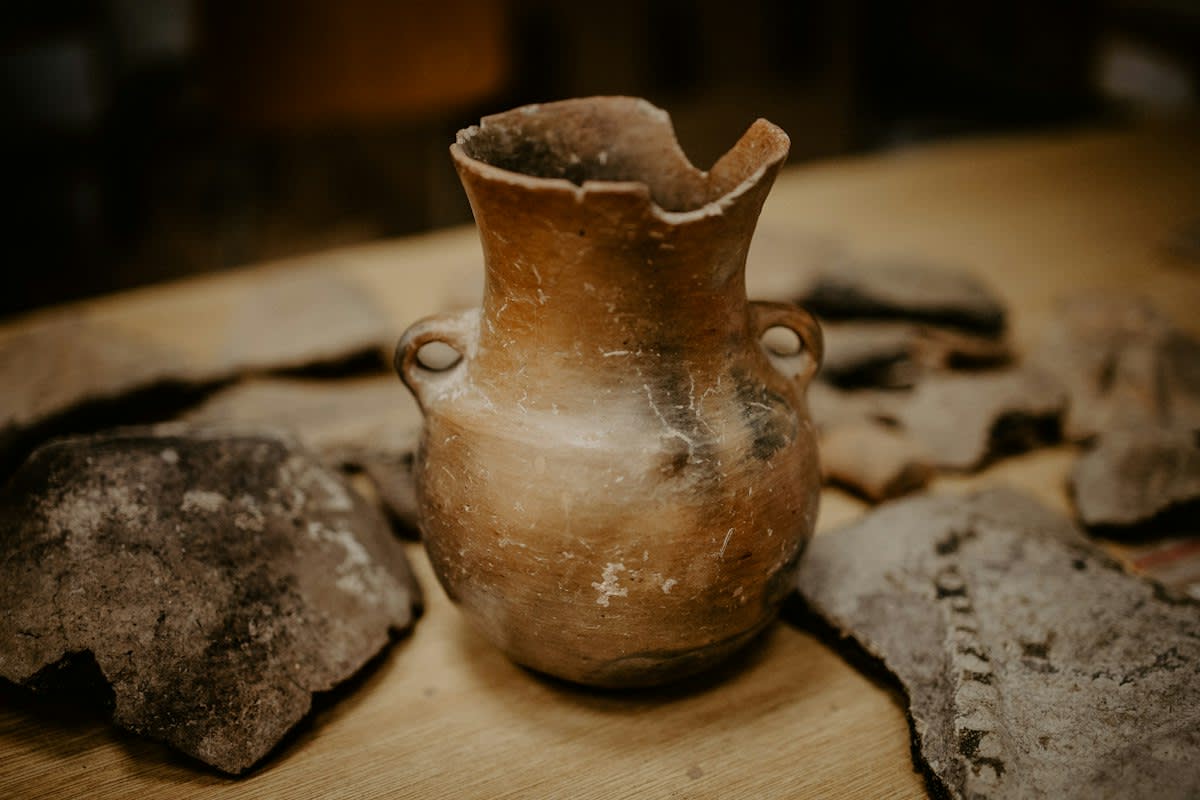
- Analyze the Surface Vocabulary: Look for 'meaningful texture.' In historical artifacts, such as shell-tempered and coil-built pottery, the brushed-and-incised surfaces were often more functional than ornamental, creating a regional vocabulary where texture and form carried as much meaning as the image itself (Source: AuctionZip, 2026). Apply this to contemporary work: does the texture tell a story of the process?
- Assess the 'Handling' Markers: Examine the piece for evidence of repeated contact. In high-end antiquities, texture across a body that reflects repeated handling—such as an adze or axe blade hafted into wood—increases its provenance and social significance (Source: AuctionZip, 2026). In modern art, look for the 'human touch' points where the artist's struggle with the medium is visible.
- Contextualize within the Analog Market: Evaluate the piece's appeal to the current luxury demographic. With the global luxury travel market projected to grow from $154 billion in 2024 to $369 billion by 2032, driven by a hunger for experiential and non-digital content, the demand for tactile art is tethered to this broader economic shift (Source: Backbone Studios, 2026).
- Determine the 'Imperfection Premium': Calculate the delta between a technically 'perfect' version of the work and this tactile version. The more the work resists digital replication, the higher the premium.
From my years in the trenches of gallery acquisitions, I can tell you that the most heated debates don't happen over the subject matter. They happen over the 'grit.' I've seen curators argue for hours over whether a specific drip in a painting is a clumsy mistake or a deliberate tactile marker. The friction arises because we are transitioning from a visual-first economy to a haptic-first economy. The 'insider' secret is that the more a piece looks like it could have been made by a human who was slightly tired, slightly frustrated, or deeply impulsive, the more the ultra-high-net-worth collectors want it.
"Non-Digital Content is scarce, which makes it much stronger. There is much debate online about whether or not ‘Analog‘ – the cultural shift toward offline, tactile experiences to combat digital burnout and screen addiction – is a true trend with real lasting ability, but it’s impact is undeniable in the luxury tourism space."— Backbone Studios, Luxury EcoTourism Report 2026
This scarcity is the engine of value. When digital precision is infinite, the finite nature of a hand-carved seal or a hand-thrown vessel becomes the ultimate luxury. Consider the hardstone seals of Lydia; their value wasn't just in the material, but in the decisive strokes that indicated animals in a compressed, linear idiom (Source: AuctionZip, 2026). The decisiveness—the risk of a permanent mistake—is what we are valuing today.
Common Pitfalls in Tactile Valuation
The biggest mistake practitioners make is confusing 'tactile imperfection' with 'poor craftsmanship.' There is a razor-thin line between a work that feels analog and a work that feels unfinished. A value-driving imperfection is an intentional or inevitable result of the medium's resistance. For example, the transparency and fluidity of watercolours are valued because they are difficult to control (Source: Art and Design Studio, 2026). If the 'imperfection' doesn't emerge from the nature of the medium, it's just a flaw.
Another pitfall is ignoring the macro-economic context. You cannot value tactile art in a vacuum. You must track the 'Analog' shift across other luxury sectors. When half of the luxury travel market is estimated to be 'experiential' (Source: Backbone Studios, 2026), it signals that the buyer is no longer purchasing an object, but a feeling of presence. If your valuation doesn't account for this psychological shift, you are pricing for the 2010s, not the 2030s.
Fact-Check & Accuracy Note
Key claims regarding the luxury travel market valuation ($1.59T to $3.04T) and the 'Analog' shift are sourced from the Backbone Studios Luxury EcoTourism Report 2026. Material comparisons between charcoal, oil, and digital tools are based on the Art and Design Studio curriculum (2026). The analysis of historical texture as social significance is sourced from AuctionZip (2026). The debate over whether the 'Analog' shift is a permanent trend or a temporary reaction to burnout remains an ongoing discussion among industry analysts.
Editorial Note
Editorial Note: This guide is designed for practitioners who are seeing a shift in collector behavior toward raw, tactile works. It emphasizes the economic link between the 'Analog' luxury trend and the valuation of physical art imperfections.